


Canonical chooses Linux-friendly Dragonboard 410c as Ubuntu Core on ARM 64-bit reference

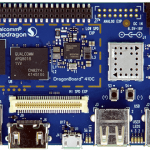
Linux is such a wonderful kernel for many reasons, but I find its adaptability to be the tops. You can get an operating system based on the kernel running on such a broad range of hardware -- something Microsoft can only dream about with its venerable Windows.
Even though Linux can run on damn-near anything, it is beneficial for developers to have a reference platform to use for creating. Of course, they can always expand from that jumping point. Today, Canonical announces that the Dragonboard 410c hardware will be the reference platform for Ubuntu Core on ARM 64-bit.
SanDisk announces 'world's fastest' Extreme PRO microSDXC UHS-II card
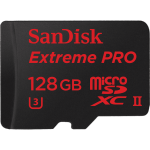
When it comes to microSD cards, they are plenty small enough. We are at a point where making storage cards any smaller would be downright ridiculous -- they are too easily lost as-is. With that said, how can companies continue to push the envelope? Speed.
SanDisk is one of the leaders for storage like cards and flash drives; its cards are reliable and fast. Quite frankly, I only trust my photos to its cards, but I digress. The company is making its microSD lineup even better, with the all new Extreme PRO microSDXC UHS-II, which it claims is the world's fastest such card.
Fiat Chrysler leverages Google's Android-powered Project Tango to improve car shopping

I love cars, but hate shopping for them. My vehicle is a meager Ford Focus, but it took me a year to buy it. Why? Some car salespeople can be very high-pressure, but worst of all, negotiating a price is an exercise in frustration -- it took me a long time to find the right car at the right price.
Why is it that buying a car can't be more straightforward? Well, Fiat Chrysler may have part of the solution to that problem. By leveraging Project Tango, Google's Android-powered augmented reality solution, consumers will soon be able to experience the vehicle of their desires without entering a showroom.
Snapchat gets 'On-Demand Geofilters'

As a dude in his 30's, I am a bit lost when it comes to Snapchat. Believe it or not, I have created a profile on the social network, and even managed to get a good number of folks to follow me. Unfortunately, I find the entire affair ponderous -- it is not particularly rewarding, nor fun for me. Snapchat is seemingly an unorganized mess. Maybe I just need to give it more time, but I digress.
One of the best features of the curious service, however, are the Geofilters. If you aren't familiar, by leveraging GPS, Snapchat can provide overlays for your images based on location. Today, the company is taking it a step further with really cool 'On-Demand Geofilters'.
Ballistic unveils six-sided protection cases for Samsung Galaxy S7 and S7 edge smartphones
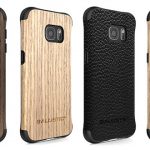
If you are a fan of the Android operating system, Samsung smartphones and tablets are some of the best. The company's devices are beautiful, well-built and full of features. More importantly, the company is reliable for support; sure, OS updates aren't as frequent or timely as a Nexus device, but Galaxy phones aren't abandoned like some others.
If you plan on buying the latest Samsung flagships, either the Galaxy S7 or S7 edge, you will probably want to protect your investment. Don't worry, Ballistic has you covered. The company announced new cases for those phones, with six-sided protection, that are absolutely gorgeous too.
SanDisk unveils Ultra USB Type-C Flash Drive
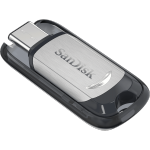
When USB flash drives hit the mainstream, many consumers -- including myself -- were shocked by the small dimensions. I remember staring in amazement, thinking of how many floppy disks would fit on one.
In 2016, however, flash drives are no longer impressive. Many young tech users have never seen a floppy, and the concept of a flash drive could be seen as a dinosaur, because, you know -- the cloud. Today, SanDisk announces a new such drive, the Ultra USB Type-C Flash Drive. Fairly fast, rather pretty, and using the latest USB connection type, it injects some excitement into an -- arguably -- dying medium. Unfortunately, the quoted "USB 3.1" is a bit misleading.
Microsoft forms IoT-focused Open Connectivity Foundation with Intel, Samsung, and others

As someone who is historically an early adopter of technology, I surprised myself when I didn't jump head-first into the Internet of Things. Don't get me wrong, I love the IoT concepts of the connected home and smart appliances, but a lack of standards make me hesitant. As of now, my house has but one such device -- a WeMo smart outlet so I can turn on a lamp with an Amazon Echo.
A lack of standards for IoT is extremely problematic, but luckily, companies are realizing this dilemma. In fact, Microsoft announces the IoT-focused Open Connectivity Foundation with partners Intel, Samsung, Cisco and more. While this coalition is a step in the right direction, I am sure there will be many competing groups vying for adoption; the fight could last many years.
Canonical to release Snappy Ubuntu Core Linux image for Samsung ARTIK IoT platform

Ah, Linux. What can't the open source kernel do? For many projects, operating systems based on it have proven remarkably adaptable -- being made to work with countless hardware configurations. While Windows may remain king of the desktop -- for now -- Linux has its fingers in many pies for which Microsoft's offering is just too bloated. It remains to be seen if Windows 10 IoT will be embraced.
Today, Canonical announces that it will be releasing an Ubuntu Core image for Samsung's IoT-focused ARTIK platform (5 and 10 modules). What does this mean? Well, developers can now leverage one of the most popular Linux distributions on this hardware. This creates amazing potential for ARTIK.
Samsung bringing Gear S2 classic 3G/4G smartwatch to Verizon, AT&T, and T-Mobile

Modern smartwatches are hardly must-have devices. Most are simply extensions of smartphones, serving as nothing more than expensive accessories. In other words, many smartwatches aren't very useful on their own.
Some of these watches, however, have cellular radios, making them useful as a standalone experience. Heck, they could even replace smartphones for those with limited needs. Today, Samsung announces that it is bringing its standalone-ready Gear S2 classic 3G/4G smartwatch to Verizon, AT&T, and T-Mobile.
Linksys EA7500 MAX-STREAM AC1900 MU-MIMO 802.11ac gigabit router now available

When friends or family ask me to help with their Wi-Fi woes, I often discover the same thing -- low-cost and aging routers. Understandably, people are always looking to save a buck, but a router is not the place to do so. A quality router is worth the money -- dropped connections and necessary reboots are a scourge.
Today, Linksys announces that its EA7500 MAX-STREAM AC1900 MU-MIMO 802.11ac gigabit router is available for pre-order. Not only is it fast and chock-full of features, but it is reasonably priced too.
Canonical announces premium Linux-powered Meizu PRO 5 Ubuntu Edition smartphone
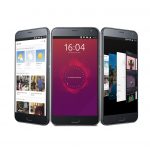
While I love iOS when it comes to mobile devices, Linux is my true love on the desktop. Android used to be my choice for mobile, but I jumped ship due to scary exploits and untimely (or nonexistent) OS updates. Linux should be synonymous with security, but Google's mobile OS has tainted that, sending me into Apple's loving arms.
Luckily, Google is not the only Linux player with mobile -- Canonical is still moving ahead with Ubuntu. True, it is a long shot to ever meet or exceed iOS or Android in market share, but fans of Linux and other open source software should pay attention. Today, Canonical announces the Meizu PRO 5 Ubuntu Edition -- a premium and luxurious smartphone.
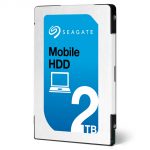
Seagate announces 'world’s slimmest and fastest' 2TB mobile HDD
Almond Joy and Mounds are two fairly popular candy bars -- I see them often in most convenience stores. Both feature coconut and chocolate, but only the former features nuts. There was quite the popular marketing campaign years ago, with the jingle of "sometimes you feel like a nut, sometimes you don't". The same can be said of technology. Sometimes you feel like a solid state drive, sometimes you don't. But why would you ever prefer a mechanical hard drive?
Capacity. True, SSDs are faster, but HDDs typically offer higher capacities at lower prices. If cost and capacity are your focus -- speed be damned -- a hard disk drive could be what you need. Today, Seagate releases what it claims is the "world's slimmest and fastest" 2TB mobile hard drive. Oh my.
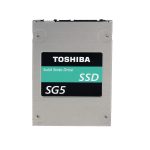
Toshiba 15nm TLC SG5 SSD has up to 1TB capacity and either 2.5 inch or M.2 form factor
If your desktop or laptop doesn't have an SSD, you are missing out on something wonderful. If you think your mechanical hard disk drive is "good enough", please know that a solid state upgrade can reduce noise, increase battery life, and most importantly, dramatically improve performance. Even if you are adverse to spending money, there are plenty of affordable drives nowadays.
Today, Toshiba announces a new series of SSD with the 'SG5' designation. These solid state drives have capacities up to 1TB and feature 15nm fabricated TLC nand chips. To meet the needs of most consumers, the drives will come in either 2.5 inch or M.2 form factors. Unfortunately, the drives -- including the M.2 variant -- utilize the SATA interface, so speeds will not be mind-blowing like a PCIe SSD.
Eternal 5D nanostructured glass optical discs hold 360TB of data and last billions of years

Storing data is extremely important for many situations. Businesses often need to retain information for legal purposes, while home users cherish things like family photos and heirloom recipes. For many people, utilizing flash drives, optical media, or the cloud is sufficient. I prefer redundancy -- cloud and local data.
What if you need to store a lot of data? I'm talking, like, a lot of friggin' data. Well, your needs may be met by a new invention from the University of Southampton. Not only can its newly announced Eternal 5D nanostructured glass discs hold 360TB of data, but they can last billions of years too. Hell, these discs could possibly outlive the Earth and its sun!
Mozilla wants to educate us all on encryption

Terrorists use encryption. They also breathe air, drive cars, and drink water. What do I mean by saying this? Well, just because a bad person uses something, doesn't make the thing they use evil. In fact, encryption is not evil at all -- it is a tool to protect the privacy and communications of all people.
Sadly, not everybody understands encryption. There is nothing wrong with being ignorant on a subject -- not everyone can be knowledgeable about everything. With that said, some politicians and other decision-makers could enact policy about encryption due to knee-jerk reactions to things they don't understand. Luckily, Mozilla has a new initiative aimed at educating people as to what encryption actually is.
Brian's Bio
Staff Journalist
Ethics Statement© 1998-2026 BetaNews, Inc. All Rights Reserved. Privacy Policy - Cookie Policy.