


Motorola announces a trio of flagship Android smartphones


In the classic children’s story "Goldilocks and the Three Bears", the protagonist encounters a family of three bears. The three are distinctly different and are described as a father, mother and baby. Yesterday, Motorola and Verizon followed in Goldilocks’ shoes and announced a family of new Android phones for the famous "Droid" line -- Droid Maxx (father), Droid Ultra (mother) and Droid Mini (baby).
By offering three different devices, Motorola hopes that much like Goldilocks, the consumer will find one that is "just right".
Flipboard magazines flip to web browsers
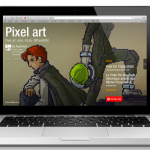
If you are unfamiliar with Flipboard, it is a service which aggregates your favorite online news sources and social media accounts. It then displays the data in a magazine-like layout, including page-turning animations. In addition to personal use, Flipboard also allows users to create "magazines" which can be shared publicly with the world. These are an aggregate of various sources on a specific topic (skiing, cats, technology, and more). Unfortunately, people with whom you shared your magazines were required to have a Flipboard account and access the mobile app -- until today.
Flipboard announces that magazines can now be shared with anyone using a modern browser (an account is not required). "The Web magazines are supported in desktop browsers IE9+, Safari, Chrome and Firefox in 11 languages, including English, Japanese, Chinese, French and German", according to the company. Is this worth flipping out over?
Canonical begs Linux users to fund Ubuntu Edge smartphone

The Linux community has been clamoring for a truly open-source Linux-based smartphone. While Android is a Linux based operating system, core Google apps are not open-source. And so, Canonical started development of a mobile operating system to meet the needs of the Linux community -- Ubuntu Touch. Ubuntu Touch (sometimes called "Ubuntu Mobile" or "Ubuntu for Phones") has been available as a preview to testers. It has successfully been installed on devices such as the Nexus 7 and Galaxy Nexus.
Unfortunately, Canonical is very limited in what devices can run its mobile OS -- most devices have locked bootloaders which prevent alternative operating systems. A locked-down phone is also in conflict with Linux-ideology. Today, Canonical officially launches a crowd-funding effort on Indiegogo to create its own phone without those roadblocks called Ubuntu Edge. There is only one problem -- it needs (in Dr. Evil’s voice) $32,000,000!
Google releases Chrome App Launcher for Microsoft Windows 7 and 8
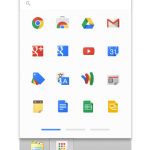
I am a big fan of Google’s Chrome OS. However, even though I use my Chromebook all the time, I am the first to admit that it is really just a glorified web browser. Truth be told, the operating system’s web apps are nothing more than links to web pages. However, packaged apps which resemble native apps (such as the great IRC client CIRC) are slowly increasing in quantity and quality.
Today, Google officially releases Chrome App Launcher for Windows. The launcher was previously available for the beta and dev versions of Google Chrome but it is now available for the stable build too. The launcher mirrors the one found in Chrome OS. In installing it, Windows users gain some of the same functionality as Google’s browser-based OS.
Halo Spartan Assault -- Windows Phone 8 gaming gets real

The Halo game franchise is wildly popular, having generated well over a billion dollars. There have been Halo licensed toys, clothing, and Mountain Dew soft-drinks. Heck, even the great Steven Spielberg is producing a Halo TV series. While the initial version of the game was released as an Xbox exclusive, there have been ports for Windows and Mac OS X. However, Halo is still viewed as largely synonymous with Microsoft and Xbox by the gaming world.
While Microsoft has had massive gaming success with both Xbox and Windows, one of its platforms is lacking in the gaming department -- Windows Phone 8. And so, Microsoft has turned to its successful franchise to boost the gaming credibility of the mobile platform. Today, Microsoft releases Halo Spartan Assault and it is a game changer -- Android and iPhone are officially on notice.
Google Glass successfully hacked -- right in front of your eyes

Google Glass may not have been officially released to the public yet (it is currently only available to testers dubbed "Glass Explorers" by Google), but mobile security juggernaut Lookout has already found a security vulnerability that makes it possible to hack the wearable computer for potentially dangerous and malicious purposes.
The vulnerability impacting Google Glass is initiated through QR codes -- basically advanced barcodes. By design, a Glass user can scan these barcodes with the device's camera to do things such as perform an action or change a setting. While this provides beneficial functionality to the user, it also offers a new gateway for malicious hackers.
Microsoft brings Outlook to iPhone and iPad
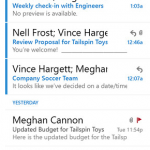
When Microsoft released Office for iPhone, the sentiment among users was mixed. Some customers complained that it could be signaling defeat for Microsoft’s Windows Phone 8, while others praised it as a good business move -- it was a mixed bag of emotions. The biggest backlash was the Office 365 subscription requirement which left paying standard Office users (non-subscription) out in the cold. Today, Microsoft continues its trend of supporting the mobile operating system, as it releases Outlook Web App (OWA) for iOS.
Unlike Office for iPhone, Outlook Web App supports the iPad as well. Slate support is essential as many business users are trading their laptops for the Apple tablet to get work done. Unfortunately, the Office 365 subscription requirement also applies here. This is very frustrating, as many large businesses and enterprise users without 365 subscriptions would hugely benefit from this particular app. These customers will be forced to use Webmail in a browser or use a 3rd party app such as the much maligned Good for Enterprise.
Childish names are becoming a real problem for Linux

Linux creator Linus Torvalds is an interesting fellow. He is notorious for speaking his mind, demeaning developers and using profanity -- behavior which is appreciated by some members of the Linux community. On July 14, the RC-1 of Linux Kernel 3.11 was announced. Continuing his quirky behavior, Mr. Torvalds has named it "Linux for Workgroups".
While some may view this as a fun, tongue-in-cheek spoof of Windows for Workgroups 3.11, I find it to be childish and damaging to the overall Linux cause. Silly names are becoming a real problem for the Linux community. Below are some examples.
Acer Iconia W3 -- a small Windows 8 tablet with even smaller value
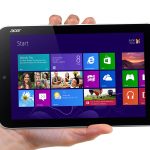
I love both Windows 8 and the 8-inch tablet form factor. So, when I was given the opportunity to test and review the Acer Iconia W3, I was very excited. Acer has a good reputation for quality hardware, so I expected a real home-run result. Unfortunately, this device is more of a foul-ball.
Upon opening the box, I was presented with an attractive white tablet. However, handling the product revealed a different story -- it is made of a very cheap-feeling plastic. I don’t mind plastic; I recently bought the Samsung Galaxy Tab 3 8.0 which is made of the material. However, not all plastic is created equal -- the Acer tablet feels low quality which lessens the user experience. On the back of the tablet are stickers for "Windows 8" and "Intel Inside" which are unnecessary.
Samsung Galaxy Tab 3 8.0 -- champagne tablet experience at beer price
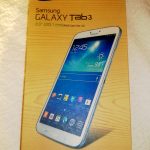
Last month, I sold my Nexus 7 and declared that I didn’t miss it. At first, the declaration was true. However, as time marched on, I began to long for a tablet. When lying in bed, I tried using my Chromebook but it just wasn’t comfortable. And so, I began to search for a new tablet.
I considered the iPad (full size and mini), Android tablets, and even the Surface RT; I was open to anything. However, as my research continued, I decided to stick with Android. I like iOS and Windows RT but I have too much money invested in the Android ecosystem. I really liked the Samsung Galaxy Note 8.0 but was turned off to the high price tag ($399.99). Luckily, Samsung has released a tablet that is similar to the Note 8.0 but for $100 less -- The Samsung Galaxy Tab 3 8.0.
PC World magazine ends print version -- will focus on digital

Print media is dying; some may argue it is already dead. With the launch of the iPad and the current industry trend of tablet media consumption, consumers don’t want to clutter their homes with stacks of paper magazines and newspapers. Not to mention, there is the trend of "going green" which is in conflict with the destruction of trees necessary to make print magazines.
Following these trends, PC World announces it is exiting the print magazine business to focus on digital editions. To be honest, it is surprising that a technology-focused publication even lasted this long in the print world.
Microsoft Sculpt Comfort Mouse for Windows 8 [Review]
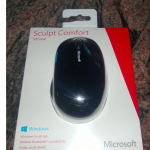
Windows 8.1 has been designed to fix some of the apparent shortcomings of its predecessor, but unless you're using the Preview version you'll have to wait until August to get your hands on it. In the meantime the software giant has released a new peripheral which aims to provide a more immediate fix to the problem of using Windows 8 with a mouse.
The concept of the Microsoft Sculpt Comfort Mouse is simple -- you rub your thumb up and down on a touch sensitive, blue-colored button located on the left side of the mouse (sorry lefties!) to navigate apps. Clicking that blue button brings up the Start screen. This should make navigating Windows 8 much easier, and sounds great, but how does it perform in actual use? I purchased the mouse to find out.
How I inspired rapper Jay-Z to go Twitter-crazy

When I tweeted to legendary rapper Jay-Z on July 7th, I never expected to spark the Twitter insanity that was to follow. The tweet was simple enough -- I wrote the following: "@S_C_ Why do I care that you wear Tom Ford? I wear Hanes pocket t-shirts...should I write a song about it?". I was responding to the song "Tom Ford" in which Jay-Z boasts about wearing the fashion designer's expensive clothes. This song is from Jay-Z's new album, "Magna Carta Holy Grail".
I'm a Jay-Z fan but the song caused me to have a moment of clarity. I began to wonder why he was rapping about a trendy clothes designer and more importantly -- why was I listening to it? I am by no means a wealthy person and generally wear plain pocket t-shirts -- I was not relating to Jay-Z on this song. I happened to be at my computer and on Twitter, so I googled Jay-Z's Twitter handle and sent the tweet -- playfully mocking the rapper's bragging. I never expected him to read it or respond to it. And so, I went to bed expecting nothing. How wrong I was.
Fedora 19 -- Schrodinger's Cat seeks Linux purr-fection

Fedora Linux is not the most popular Linux distribution -- its popularity is currently ranked number five on distrowatch.com (Linux Mint is number one). However, as the distribution of choice by Linux founder Linus Torvalds, the Linux community takes notice when a new version is released. On July 2, 2013, version 19 of the operating system -- dubbed Schrödinger's Cat -- was released.
Fedora is my go-to distro for many reasons. Most notably, it is very stable while at the same time being relatively bleeding edge. Kernel updates are constant and up to date while packages are kept fresh and modern. I consider myself a Gnome 3 fan and enthusiast. Fedora is the best operating system for the Gnome 3 community -- the Gnome 3 experience is pure and untouched.
Microsoft should release Windows 8.1 RTM on August 1

Today, at the Worldwide Partner Conference, Microsoft announces what many suspected -- Windows 8.1 RTM is coming in August. However, what we didn't know before the announcement is that it is to be released in late August. Unfortunately, "Late August" is just too…late. Microsoft has squandered a golden marketing opportunity -- to release Windows 8.1 RTM on August 1. You see, in the United States, dates are represented by "mm/dd" format. August 1 is represented as 8/1.
To release Windows 8.1 on "8/1" would have been genius with unlimited marketing potential. However, Microsoft failing to capitalize on opportunity is nothing new lately. After all, Windows 8.1 is designed to right the perceived wrongs of Windows 8. Not to mention, the Xbox One launch has been especially fraught with wrong turns -- the console's reputation has suffered a hit from bad publicity.
Brian's Bio
Staff Journalist
Ethics Statement© 1998-2026 BetaNews, Inc. All Rights Reserved. Privacy Policy - Cookie Policy.