


Organizations not effective at getting value from their data


Businesses increasingly understand that staying competitive means making smart use of their data. But a new survey from Syncsort finds that just nine percent of respondents say their organization is 'very effective' at getting value from data while 48 percent responded 'somewhat effective'.
Making data accessible to users across the enterprise is the third most cited IT challenge and only half call their organization effective in getting data insights to business users.
How edge computing is making 5G possible [Q&A]

This month, Verizon announced its intention to increase its use of edge computing technology, having tested edge functions in its 5G network in Houston resulting in massively decreased network latency.
This move is another example of how new technologies will enable and extend digital transformation projects at the edge, and this is only the beginning.
Addressing the skills gap with advanced web attack training now available online

There is a shortage of cybersecurity professionals and coupled with the exponential growth in web applications used within businesses and by consumers around the world, there's a growing risk of flaws being exploited.
To combat this problem penetration testing specialist Offensive Security is making its Advanced Web Attacks and Exploitation (AWAE) training available as an online course.
Gearbest issues response to data breach

Following on from yesterday's story about eCommerce site Gearbest leaking customer data the company has issued an official response to ethical hacker Noam Rotem’s report.
It says that its own servers are secure but that, "external tools we use to temporarily store data" may have been accessed by others leading to security having been compromised.
A fifth of Americans don't trust anyone to protect their data

Around 20 percent of Americans suffer from security fatigue and don’t trust anyone to protect their personal data according to a new study.
The research from hardware security company nCipher Security reveals that many people want more control over their personal data privacy and most want tighter controls on how others handle and safeguard their personal data.
Zippyshare mysteriously blocked in the UK

The Zippyshare file hosting service is currently blocked for users in the UK. Anyone visiting the site will be presented with a '403: Forbidden' message when they try to access the site.
Users on a number of ISP forums are asking whether this is due to some blocking action on the part of service providers, but it appears that for some reason the site is blocking itself from UK IP addresses.
Gearbest security flaw leaks millions of order and user details

A badly configured server at Gearbest, the Chinese purveyor of technology and other stuff online, has leaked millions of user profiles and order details.
White hat hacker Noam Rotem discovered an Elasticsearch server that was -- indeed still is at the time of writing -- leaking millions of records each week. These include customer data, orders, and payment records. The server wasn't protected with a password, potentially allowing anyone to search its data.
Businesses plan to use more AI and machine learning in cybersecurity this year -- even though they don't understand it

The use of more artificial intelligence to improve security has been touted for a while. New research from Webroot reveals that a majority of business are now actively exploring the technology.
It finds 71 percent of businesses surveyed in the United States plan to use more artificial intelligence and machine learning in their cybersecurity tools this year. However, a worrying 58 percent say that aren't sure what that technology really does.
Analysis of Remote Access Trojans helps understand third-party business risk
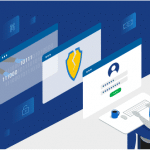
Remote Access Trojans (RATs) are often used to steal information from enterprise networks. By looking at network metadata, analysts at threat intelligence firm Recorded Future have been able to identify RAT command-and-control (C2) servers, and more crucially, which corporate networks are communicating to those controllers.
This offers insight about third-party organizations that Recorded Future clients can use to get a better understanding of potential third-party risk to their own data.
Brits are more scared of spiders than cybercrime

Cybercrime and hacking has overtaken flying, dogs and clowns in the top 10 list of things the British are most scared of, but still only ranks in sixth place behind spiders, heights, snakes, dentists and small spaces.
Arachnids top the list despite there being less than a one-in-a-million chance of being bitten by a spider badly enough to warrant going to hospital in the UK.
Stricter payment requirements in Europe could drive fraud elsewhere

From September this year the second Payment Services Directive (PSD2) comes into force across the EU. This will require payment service providers to offer strong customer authentication (SCA) and third-party access to bank accounts or risk losing their their payment provider license.
But a new report today from fraud prevention company iovation suggests that stricter requirements for fraud prevention in Europe will drive fraud to other regions such as the US.
Researchers find two Android malware campaigns with over 250 million downloads

Check Point Research has uncovered two massive mobile adware and data stealing campaigns, which have already had a combined total of over 250 million downloads globally.
Both target mobiles using Android, and exploit the mobile app development supply chain to infect devices and perform malicious actions.
New platform helps enterprises to deploy and manage microservices networking

More and more organizations are moving to a cloud-native, microservices architecture. But doing this at scale can be challenging as businesses lose the ability to trace, debug, and ultimately manage rapidly proliferating services.
New company Tetrate is aiming to shake up the microservices networking market by combining the best of open source technologies with enterprise-grade extensibility, scalability, and performance.
Two-thirds of Android antivirus apps block less than 30 percent of threats

In one of the biggest tests of Android antivirus software ever conducted, out of 250 apps tested the majority proved to be dubious, unsafe or ineffective.
Independent testing organization AV-Comparatives put the apps to the test against an array of common threats and found that some are not properly protecting users.
Continuous Delivery Foundation aims to boost success of open source projects

An industry group made up of 22 members is launching a Continuous Delivery Foundation (CDF) to develop, nurture and promote open source projects, best practices and industry specifications related to continuous delivery.
Founding members of the CDF include the Linux Foundation, Google, Microsoft, Netflix, Red Hat, CloudBees and the Jenkins Community
Ian's Bio
Ian spent almost 20 years working with computers before he discovered that writing about them was easier than fixing them. Since then he's written for a number of computer magazines and is a former editor of PC Utilities. Follow him on Mastodon
© 1998-2026 BetaNews, Inc. All Rights Reserved. Privacy Policy - Cookie Policy.