


Two-thirds of Americans think internet access is a privilege


President Trump's signing of bill overturning the FCC's planned internet privacy protections, allowing ISPs to track and sell consumers' online information to third parties with greater ease has generated a storm among privacy advocates.
It also prompted AnchorFree, the company behind the Hotspot Shield VPN, to carry out a survey of over 2,000 US consumers to gauge sentiment toward the internet and privacy.
Consumer tips for World Password Day

Almost everything has its own day these days and May 4th is -- along with all the Star Wars puns -- World Password Day.
Cyber security firm Kaspersky Lab is keen to help people avoid common password problems and is calling for a standardization of password criteria.
Cyber squatters target UK bank domains

Part of the art of making a phishing attack successful is having a domain name that looks sufficiently similar to a legitimate one not to arouse suspicion in the target.
Research by threat intelligence specialist DomainTools has uncovered over 300 registered domains using the names of five of the UK's top high street banks.
Healthcare breaches down following 2016 peak

Healthcare data breaches hit an all-time high in 2016 resulting in the records of almost 16.6 million Americans being exposed as a result of hacks, lost or stolen devices, and unauthorized disclosure.
But the latest Healthcare Breach Report from data protection company Bitglass shows a sharp decline in breaches over the first quarter of 2017.
Assembly line robots vulnerable to hacking

Industrial robots make many of the things that we use in our everyday lives, from cars to domestic appliances.
If the world isn't to descend into chaos therefore, it's imperative that robots follow their programming. But a new report from the TrendLabs research arm of cyber security company Trend Micro reveals just how easily industrial robots can be hacked.
Free tool allows Active Directory users to test for weak passwords
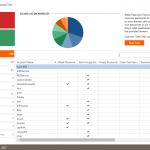
While security is still heavily reliant on passwords, they represent a target for hackers and weak or reused choices offer an easy way into systems.
Security awareness training company KnowBe4 is releasing a free Weak Password Test (WPT) tool for organizations that use Active Directory, allowing them to check for multiple types of threats related to weak passwords.
IBM ships malware infected flash drives to Storwize customers

IBM is warning customers of its Storwize hybrid enterprise storage solutions that it has accidentally sent out some malware infected USB sticks.
Companies ordering the Storwize V3500, V3700 and V5000 Gen 1 flash storage solutions may have been sent the infected sticks. The malware is contained in the directory for the initialization tool and when the tool is run it gets copied to a temporary directory on the computer’s hard drive.
New integration delivers improved security analytics for mainframe users

Many enterprises still rely on logs and data from a range of different security products to get a picture of user behavior, particularly where legacy mainframe systems are involved.
A collaboration between data analytics company Syncsort and application audit specialist Compuware is aimed at improving an organization's ability to detect threats against critical mainframe data, correlate them with related information and events and satisfy compliance requirements.
ESET launches free security awareness training

Cyber attacks are a big problem for businesses and since many of them are caused by human error training employees to spot the signs of an attack is vital.
Yet many companies lack the resources to carry out the level of education needed, which is why security software company ESET is launching a new, free cyber security awareness training program.
Security skills need to evolve to cope with cyber threats

Securing systems is essential, but many businesses continue to take a reactive approach to protection using dated tools and techniques.
A new report by technology trade association CompTIA highlights the need for companies to adopt proactive measures to identify weak links before they are exploited, broaden the security skills of their technology professionals, and implement top to bottom security training throughout the organization.
34 percent of US government agencies have had data breaches in the last year

According to a new report from systems security specialist Thales e-Security and 451 Research, US federal agencies are facing threats caused by legacy systems, spending and staffing issues.
65 percent have experienced a data breach at some stage in the past with 34 percent having one in the last year. Almost all agencies (96 percent) consider themselves 'vulnerable', with half (48 percent) stating they are 'very' or 'extremely' vulnerable. This number is higher than any other US sector polled for the 2017 Data Threat Report.
New approach protects IoT devices via a secure network

Up to now the security model for protecting IoT devices has been similar to that used for PCs, relying on patches which need to be installed by the user.
Now though internet security and performance company Cloudflare is launching a new service called Orbit which streamlines patching and adds an additional layer of security thanks to the use of a secure global network.
Attackers shift away from file-based techniques

Cyber attack methods are becoming more sophisticated in order to bypass traditional file-scanning protection systems according to a new study.
Endpoint protection specialist SentinelOne has used filtered data from more than one million SentinelOne Enterprise Platform agents deployed worldwide to carry out behavioral analysis of malware programs that bypassed firewalls and network controls to infect devices.
Uncontrolled user access is a weak link in corporate governance

Correct handling of corporate data is important not just to guard against security threats and data breaches, but to avoid the risk of regulatory fines and lawsuits too.
But a new report from secure erasing specialist Blancco Technology Group shows the two weakest links in a company's data governance program are uncontrolled user access to data (53 percent) and managing where data is stored (43 percent).
New developer kit helps secure IoT devices

The rapid growth in numbers of IoT devices has seen them become a favored attack route for cyber criminals. This has left companies looking for a way to integrate strong security into millions of devices.
To address this problem, security platform Mocana is launching a new developer kit that provides businesses, who may not have deep cybersecurity or cryptography expertise, with a way to simplify the integration of hardware-based security features into IoT devices.
Ian's Bio
Ian spent almost 20 years working with computers before he discovered that writing about them was easier than fixing them. Since then he's written for a number of computer magazines and is a former editor of PC Utilities. Follow him on Mastodon
© 1998-2026 BetaNews, Inc. All Rights Reserved. Privacy Policy - Cookie Policy.