


New dedicated tool makes for easier Spark monitoring


The Apache Spark framework is a popular add on to Hadoop for handling big data, particularly for building machine learning algorithms.
Until now though it's been hard to effectively monitor Spark performance. That's about to change as Brooklyn-based performance management company Sematext is launching its SPM for Spark.
New partnership makes it easier for merchants to accept bitcoin payments

Whilst virtual currency bitcoin has soared in popularity in recent times it still isn't an option when it comes to buying goods and services from many mainstream merchants.
That could be about to change thanks to a new partnership between SaaS mobile marketing and customer service provider Acromobile and ecommerce platform Bitnet.
Cloud-based management allows parental control of multiple devices

As we saw last week, parental control products are a bit of a mixed bag and are only part of a protection strategy that includes effective education.
If you have several different devices in the family you may also end up using multiple products to protect them. That is unless you use the latest version of Remo Software's MORE which offers cloud-based management across multiple platforms.
Prelert cuts big data down to size for real-time analysis

Identifying complex anomalies that show up the presence of a persistent threat or pinpoint the cause of network and IT performance problems is the sort of thing big data analysis was made for.
The problem though is that big data is often just too big. This means it's usually necessary to transfer the information before doing any work on it which makes real-time analysis impossible and means valuable insights aren't available when they're most needed.
Security risk is the main reason for banning BYOPC

According to a survey of IT decision makers commissioned by efficiency software specialist 1E and carried out by Vanson Bourne 86 percent of companies that ban employees from using their own PCs do so because of security concerns.
To address these fears 1E is launching its new MyWorkNow solution, a client-hosted virtual desktop (CHVD) to offer a fast, low-cost way of mobilizing workforces using their own PCs.
Using mobile messaging to deliver better customer service

As mobile devices become almost ubiquitous, their attractiveness as a channel for businesses to interact with their customers becomes greater.
According to last year's ICMI mobile customer service strategy survey, 68 percent of experts believe mobile can improve the customer experience. To help companies take advantage of the opportunities mobile offers, enterprise mobile specialist OpenMarket is launching its latest Mobile Engagement Platform. It's a SaaS-based solution, allowing enterprises to easily create and deploy smart, interactive mobile engagement services worldwide with connectivity to over 200 countries.
Shellshock -- we ain't seen nothing yet

It's now just over a week since news of the Shellshock bug broke and analysts are still trying to work out just how much of an impact it could have.
Security specialist Incapsula has been tracking the vulnerability to get an idea of its magnitude, looking at the number of sites attacked and the damage caused.
Increase in unpatched browsers and operating systems leads to security concerns

October is National Cyber Security Awareness Month (NCSAM) in the US and security company Secunia has marked this by issuing its latest Country Report assessing the state of security among PC users.
Key findings include that Microsoft’s Internet Explorer, with a market share of 73 percent, had 218 vulnerabilities with 11 percent of installed programs being unpatched and vulnerable. The percentage of users running unpatched operating systems has increased to 12.6 percent, from 11.1 percent in the previous quarter.
NoSpyProxy wants to put your data and identity out of reach of the NSA

Since the Edward Snowden revelations that governments as well as hackers were likely to be snooping on your internet activity it's been widely assumed that there's no such thing as safe online access.
VPN specialist CyberGhost has other ideas and has been seeking funding via Indiegogo for what it calls a NoSpyProxy. The company's VPN already uses AES256 military-grade encryption to protect passwords, bank accounts and other details as well as obscuring locations and IP addresses. It now aims to make things even more secure by placing the data center hardware under the control of an additional layer of security. This will put CyberGhost in control of the whole process from login through encryption protocol, key management and finally also the server itself.
Just how effective are parental control products?

Parents are keen to ensure that their offspring don't access inappropriate material on the web and for that reason most security software providers now offer parental control products, whether as a standalone product or part of an internet security package.
In a study commissioned for a German magazine, AV-Comparatives has looked at the leading products for Windows and mobile platforms to assess which are the most effective.
'Grandroid' smartphone designed to meet the needs of the elderly
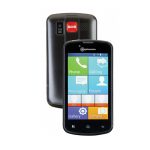
As increasing numbers of government and other services go online, internet access becomes more important and mobile devices play a big part in that.
Yet according to charity Age UK there are 10.8 million people aged 65 or over in the UK but only three percent of them own a smartphone which could mean they're missing out on 'digital inclusion'. In order to make smartphones more accessible to older users, the new Amplicomms M9000 has all the benefits of an Android touch screen phone but with hardware and software specially adapted for the less technically adept.
Most businesses waste money on 'shelfware' that’s never used

Almost two-thirds of companies plan on freezing or shrinking their software spend and 96 percent of organizations report that they're wasting money on software that is unused.
These are among the findings of a new report by Flexera Software in conjunction with IDC which looks at pricing and licensing. The biggest concern is that almost all businesses have "shelfware" that is never used.
Another data breach... Yeah, yeah, whatever

It seems like data breaches are seldom out of the news these days, but whilst that means we're more likely to be aware of their existence it also means there's a risk that individual threats begin to fade into the general day-to-day techy chatter and we don't give them the attention they deserve.
The growing number of breaches -- up 10 percent over last year according to a recent study by the Ponemon institute -- means they're less likely to catch our attention. Security training firm KnowBe4 refers to this phenomenon as "breach fatigue" and warns that it may be placing companies at risk.
Simpler, faster, more secure file transfers with Send Anywhere 2.0

Sending files to someone else has always been a bit of a problem. Often they’re too big for email, sharing via public cloud services raises security concerns and of course flash drives and DVDs can fall into the wrong hands.
Korea-based startup Send Anywhere has an answer to making file transfers easily and safely in the form of an updated version of its iOS app and a new app for Windows Phone.
Weak passwords are still a major problem for business security

According to data released by security company Trustwave which has analyzed evidence from almost 700 security breaches that took place in 2013, retail is the most compromised industry, accounting for 35 percent of attacks investigated.
The food and drink industry ranks second on 18 percent followed by hospitality on 11 percent. Perhaps not surprisingly e-commerce is most at risk, making up 54 percent of assets targeted whilst data centers account for only 10 percent. Point of sale breaches made up 33 percent of Trustwave’s investigations.
Ian's Bio
Ian spent almost 20 years working with computers before he discovered that writing about them was easier than fixing them. Since then he's written for a number of computer magazines and is a former editor of PC Utilities. Follow him on Mastodon
© 1998-2026 BetaNews, Inc. All Rights Reserved. Privacy Policy - Cookie Policy.