


Norton warns of summer festival smartphone risks


A new survey by Symantec reveals that people are more and more reliant on their smartphones at concerts, events and music festivals. But as usage of phones increases so do the security risks.
According to the research when people are out at live events phones are now more common than lighters (only 7 percent carry those anymore) and cameras (42 percent). This has led to the rise of some new phenomena such as "phone hogging" where audience members hold phones above their heads to take photos and video. Some 51 percent send texts or make calls to brag about the show and 38 percent take to social media to do the same.
McAfee Mobile Innovations helps you hang onto your devices

The public beta of McAfee's newest mobile security app becomes available to download for Android devices today. Its leading feature is something called Smart Perimeter which addresses one of the key concerns of users, losing your device.
Smart Perimeter works by allowing devices to track each other and alert the user if they stray more than 30 feet apart. If a device goes outside the perimeter an alarm sounds and it's also locked so you have to enter a PIN to re-enable it.
Sourcefire boosts network security with greater FirePOWER

Security specialist Sourcefire has announced enhancements to its FirePOWER network security platform. It provides a firewall, intrusion prevention, and an anti-malware solution in a single hardware-based package that aims to deliver protection without harming performance.
This separate-box approach makes it simple to add protection to an existing network and is easily scalable to adapt to various sizes of organizations. Enhancements in the latest version include firewall and intrusion prevention systems that have better IPv6 support and product awareness. Network address translation (NAT) policy can now be set centrally rather than by device, allowing for a consistent approach across the organization. The product's threat protection uses cloud intelligence in order to stay up to date.
Trojans continue to top virus chart

Dr Web Anti-virus has released its latest report on malware activity showing that Trojans continue to be the most common threat.
New threats found in May include Trojan.Mods.1 which replaces the contents of webpages loaded in a browser. This is part of a premium rate SMS fraud that puts up a page asking for a mobile number and then sends a text message asking for a reply. Almost 16,000 copies of this Trojan were detected by Dr Web during the month of May.
Sales of external server disk storage down for the first time since 2009

Across the globe sales of external server storage have dropped for the first time since 2009 according to research company IDC. Its Worldwide Quarterly Disk Storage Systems Tracker reveals that revenues in the first quarter of 2013 showed a 0.9 percent decline over the same period last year.
Total storage sales for servers, including the smaller market for disks internal to server cabinets, slipped by 3.2 percent over the same period. EMC maintains its lead in the server storage field with a 30.4 percent revenue share, followed by NetApp with 14.9 and IBM at 10.4 percent. If you look at the market by all server storage not just external disks, EMC still leads with 23.2 percent ahead of HP which has 15.5 and Dell with 13.9 percent.
SDL launches free online translation

If you want a guaranteed way of mangling a piece of text, feed it into an online translator, switch it to a foreign language, then translate it back again. Mostly the finished result will bear little resemblance to the original and in many cases won’t make much sense at all.
A new translation service then is something we always approach with a healthy degree of skepticism. SDL's new service www.freetranslation.com, however, proves to be rather good. We took some samples of English text, translated them to other languages and back again, and whilst the results weren't perfect they weren't a million miles away from the original either.
Enterprises warned BYOD is here to stay

Global industry analyst Ovum has revealed the results of its 2013 BYOX (Bring Your Own Anything) employee survey which reveals that 70 percent of employees use their own devices to access corporate data.
Launching the research at the start of the BYOX World Forum today in London, Ovum revealed that BYOD shows no signs of going away. More to the point it will continue whether the IT department wants it to or not. The study shows that 67.8 percent of smartphone-owning employees bring their own smartphone to work, and 15.4 percent of these do so without the IT department's knowledge, with 20.9 percent of corporate rebels doing so in spite of an anti-BYOD policy.
Microsoft and FBI take down major botnet

Working with the FBI and authorities in 80 other countries, Microsoft's Digital Crimes Unit has disrupted a major cybercrime ring. The operation has targeted 1,400 systems involved in running the Citadel botnet.
Citadel is thought to have infected as many as 5 million PCs worldwide and has been used to steal from major financial institutions including American Express, Bank of America and PayPal, accounting for losses of up to half a billion dollars to companies and individuals worldwide. The Citadel botnet is hosted using pirated versions of XP. Once the virus -- which first appeared in early 2012 -- infects a user's machine it blocks access to legitimate antivirus sites and disables installed antivirus applications making it hard to detect and remove.
Around the world in 5 types of mobile threat

Mobile security company Lookout has released a report breaking down the types of threat encountered by users around the world. It takes data from the Lookout app in the US, UK, Germany, India and Japan to spot the key dangers in each region.
Threats are broken down into five categories -- adware, chargeware, spyware, surveillance and Trojans. Adware dominates around the world thanks to grey areas surrounding what's acceptable in mobile advertising. However, users in India are almost four times more likely to encounter mobile adware than those in the US. Indian users have a greater chance of encountering any kind of threat with a 5.49 percent likelihood of infection compared to only 1.66 percent in the US and 2.16 percent in the UK.
Why can't anyone get email services right?

Email is often cited as the killer application that turned the Internet from a novelty for geeks into a serious business tool. Why then is it so hard to get right? The recent changes to Gmail and Yahoo Mail sparked a bit of debate amongst the BetaNews team as to what makes a good email service. What are the features we really want and what can we happily live without?
Until around 12 years ago you were most likely to access your email via a client program, downloading messages from the server and dealing with them on your PC. This was mostly down to slow dial-up connections which meant that you weren’t online all the time. Since then -- for personal mail at least -- there’s been a shift towards webmail services. Mainly this is thanks to broadband connections and ever increasing storage allowances which mean that you never have to throw anything away. But despite this shift a whole generation of mail users still think of Outlook Express, with its classic three-pane view, as the way email should be.
Mistakes cost millions says data breach report

Symantec in conjunction with the Ponemon Institute has released a new study into the cost of data breaches. What it reveals is that whilst most of us worry about malware and hackers, it’s actually mistakes and system errors that cause the majority of breaches.
According to the survey, glitches and negligence between them accounted for 64 percent of last year’s data breaches. This includes employees leaking or mishandling information, violation of regulations, accidental data dumps and stolen or lost laptops.
Faster, cooler, longer -- Intel launches its new Haswell chip
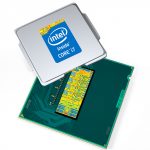
Into a PC processor market that’s declining thanks to competition from tablets and smartphones, Intel has launched its new Haswell chip. Announced at Computex in Taiwan, the fourth generation of Intel's Core series of processors, the Haswell will allow laptops and laptop/tablet hybrids to become thinner and run for longer between battery charges.
Intel says that the low power usage of the new chip -- as low as 6 watts -- will allow it to be used in fanless designs. Contrast this with the previous generation Ivy Bridge chip which needs two fans to keep the Microsoft Surface Pro cool.
Windows 8.1 sets out to woo the enterprise

Microsoft used the TechEd North America conference in New Orleans to unveil a raft of new and updated Windows 8.1 features aimed at businesses. Many of these are targeted at the world of cloud computing and connected devices, with enhancements for bring your own device (BYOD) connectivity, enhanced mobility features and security enhancements.
Key features include Workplace Join, allowing administrators to control access to corporate data even if employees are using their own devices. This goes hand-in-hand with Work Folders, allowing users to sync their device with a folder in a data center. Mobile Device management will let administrators create a company portal to give all users a consistent interface without the need to install a separate client management package.
Cybercriminals party like it’s 2008 as retro-threats make a comeback

Antivirus company McAfee's latest threat report, covering the first quarter of 2013, highlights comebacks for a number of older threats as the growth of newer malware goes into decline. Recent trends towards Android malware, and ransomware are slowing with growth rates slipping back, although actual numbers still show a slight increase. The number of fake antivirus products detected also shows a decline in growth over the previous quarter.
Instead it seems the cybercrime community has served up a blast from the past by resurrecting some old friends. The report shows a global increase in spam volume for the first time in three years. It’s a big increase too with spam volume almost doubling globally in the first quarter of this year. There’s a twist to this though as spammers seem to be targeting specific regions in the hope of snaring new victims. Popular spam topics in this new wave are pump-and-dump stock schemes and growth hormone drugs.
BT parts company with Yahoo

After ten years with Yahoo as its mail and news provider, UK internet company BT is switching to a different service. Starting in June it will begin migrating its customers to a new service named BT Mail which will be run by California-based Critical Path.
Nick Wong, director of online for BT's consumer division says, "We will be switching customers' email over to BT Mail, which will include the features and functions they expect from a modern email service. We will be keeping our customers fully informed about what changes to expect and when they will be able to enjoy the new services."
Ian's Bio
Ian spent almost 20 years working with computers before he discovered that writing about them was easier than fixing them. Since then he's written for a number of computer magazines and is a former editor of PC Utilities. Follow him on Mastodon
© 1998-2026 BetaNews, Inc. All Rights Reserved. Privacy Policy - Cookie Policy.