

Apple responds to iPhone X Face ID privacy concerns but dodges law enforcement request query

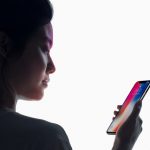
One of the undeniable highlights of Apple's iPhone X is Face ID -- the face recognition technology that makes it possible to unlock a phone with a glance. While exciting and impressive, many people have security and privacy concerns about the feature, and last month Senator Al Franken wrote to Apple asking a series of questions and outlining his worries.
Apple has now responded to Franken, just ahead of the launch of the iPhone X in a little over two weeks. The company points to a series of documents that have already been made public, but also goes on to provide some detail about how Face ID data is stored and used.
Google Calendar for the web finally gets a redesign and new enterprise features

After years of little more than minor tweaks here and there, Google Calendar for the web is finally getting a long-overdue update. Inspired by the mobile app Google has developed, the revamped online version of Calendar gains a new color palette, as well as a layout rejig and a few new features.
The new look uses Google's Material Design scheme, and the update means that Calendar now intelligently resizes for different screen and browser window sizes. There are various new features for enterprise users, but there are also new views, and a focus on displaying more useful information than before.
Google offers its strongest ever security with new Advanced Protection Program
As part of Cybersecurity Awareness Month, Google has announced numerous security-related updates including revamped phishing protection. Now the company has also announced what it is referring to as its "strongest security, for those who need it most."
Aimed at protecting people who are most likely to find themselves the target of attacks -- Google suggests journalists and human rights workers as examples -- the new Advanced Protection Program is being made available to anyone who wants to use it. It will protect Gmail, Google Drive and YouTube data with a variety of measures including a physical authentication key.
Google Wifi update brings site blocking to parental controls
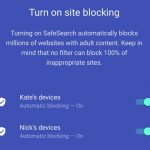
An update is rolling out to the Google Wifi app which gives parents greater control over the websites their children can visit.
The update adds Site Blocking to Google Wifi's family controls, making it possible to block more than 8 million sites at the flick of a switch. These are sites that Google has determined are inappropriate for children.
Google Maps to lose controversial cupcakes and calorie counting feature in iOS

Google has announced that it is removing a feature from the iOS version of Google Maps that estimated how many calories could be burned off by walking a particular route. Based on "strong user feedback" Google took the decision to remove the feature that had been rolled out to a number of users.
Google faced an online backlash when the feature launched as it used pink mini cupcakes as a measure of calorie burning -- a 2 kilometer walk, Google Maps informed users, would burn 112 calories, or one mini cupcake. The feature was criticized for being a possible trigger for people with eating disorders.
Teen image sharing site We Heart It reveals historic security breach affecting over 8 million accounts

We Heart It -- the image sharing service used by at least 40 million teenagers -- suffered a "possible security breach" several years ago. The breach affects more than 8 million accounts that were created between 2008 and November 2013.
Although this is a historic data breach, in which information from the user account database was leaked, We Heart It was only notified about it on October 11. The company says that email addresses, usernames, and encrypted passwords were accessed, and it recommends that users now change their passwords as they are not secure.
Microsoft suffered an internal bug database hack in 2013 and didn't tell anyone
Four and a half years ago, an internal bug-tracking database at Microsoft was breached by a "highly sophisticated hacking group," according to five former employees of the company. The hack of the secret database was never made public.
It is believed that this is only the second time such a corporate database has been breached. US officials were alarmed to learn of the hack which could have exposed software vulnerabilities to the attackers, reports Reuters.
Google launches personalized phishing protection and updated Security Checkup tool
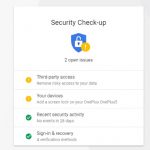
We're in the middle of Cybersecurity Awareness Month and Google is taking part. The company has launched two updated protection tools to help keep internet users safe online.
While Google refers to "two new protections," these are really updates rather than completely new offerings. Both the Security Checkup tool and Google Safe Browsing have been updated to make them more personal, and both of them will adapt over time to protect against new threats.
Facebook taps into teen market with acquisition of anonymous feedback app tbh
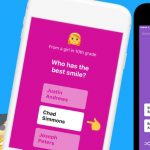
Facebook's desperation to appeal to the teenage market is well known, and its latest attempt to tap into it sees the social network acquiring tbh. The anonymous feedback app has proved to be a huge hit on iOS since its launch in August. An Android version is still in the pipeline.
With tbh, despite the anonymity, there's a strong focus on positive polls -- questions like "who has the best smile?" crop up, for instance -- and over a billion pieces of feedback have been given in a matter of weeks. It's not clear whether Facebook will keep the service truly anonymous, or will make use of the data it could undoubtedly gather through the app.
Google rolls out Chrome Cleanup to help secure its web browser

With so much time now spent online, and with so many cloud-based tools now in use every day, we're all spending more time than ever in our web browsers. To ensure that this is as secure an experience as possible, Google is rolling out a trio of important changes to Chrome -- for Windows users, at least.
At the heart of these changes is Chrome Cleanup. This feature detects unwanted software that might be bundled with downloads, and provides help with removing it -- but Mac and Linux users miss out.
[Updated] Microsoft has patched Windows against the KRACK Wi-Fi vulnerability -- Google will secure Android soon

Earlier today, news broke about the KRACK vulnerability that affects the WPA2 protocol. Security researchers have warned that the problem affects millions of devices running everything from Windows to Android and Linux.
Microsoft has announced that it has already released a security patch to fix the vulnerability in Windows. Google says that a patch for affected Android devices will be released "in the coming weeks."
PureVPN scrambles to defend itself against accusations of logging users

Last week it transpired that PureVPN had helped the FBI track down a cyberstalker from Massachusetts. This came as something of a surprise to other PureVPN users who were under the impression that using the service made them completely anonymous -- a belief strengthened by the company's assertion "We do NOT keep any logs that can identify or help in monitoring a user's activity."
Strictly speaking, this is true, but that's not to say that the company doesn’t maintain IP logs that can be used to identify users. The company does exactly this, logging IP addresses and timestamps, and this is how it helped the FBI. In a blog post, the company tries to explain this as it attempts to convince concerned users that it is not logging their activities.
Android: DoubleLocker ransomware encrypts data and changes PINs

A new breed of Android ransomware has been discovered that hits victims with a double whammy. DoubleLocker not only encrypts data as all ransomware does, it also changes the PIN on the target device.
DoubleLocker was discovered by security researchers at ESET. They say that the ransomware abuses Android accessibility settings, and is the first to use a double-lock approach. Based on previously released banking malware, it is though that a test version of DoubleLocker could have been in the wild since as early as May.
KRACK warning: Severe WPA2 security vulnerability leaves millions of devices open to attack

A severe security warning has been issued after Belgium researchers managed to exploit a serious vulnerability in the WPA2 wireless protocol.
Known as KRACK (Key Reinstallation Attacks), the vulnerability makes it possible to eavesdrop on Wi-Fi traffic. Millions and millions of devices are at risk -- Windows, Linux, Android and more -- but it is not known whether there is an active exploit in the wild yet. Details about the vulnerability were due to be released at 8:00AM ET (1:00PM BST), but the research paper has now been published early after someone leaked a draft version.
Twitter vows to take a more aggressive approach to unwanted sexual advances, abuse and more

Jack Dorsey has promised that Twitter will take a more aggressive stance in applying its rules. The announcement came after the #WomenBoycottTwitter protest was used to draw attention to women being silenced.
The Twitter CEO also said that new rules will be introduced to try to counter "unwanted sexual advances, non-consensual nudity, hate symbols, violent groups, and tweets that glorifies violence."
Sofia Elizabella's Bio
Sofia Wyciślik-Wilson is a queer, transgender journalist based in Poland. She has been writing about technology for more than two decades, and after years working for magazines, her writing moved online. She is fueled by literature, music, nature, and vegetables. You can find her on Bluesky and Mastodon. If you like what you read, you can Buy her a Coffee!
© 1998-2026 BetaNews, Inc. All Rights Reserved. Privacy Policy - Cookie Policy.