

Amazon Echo owners can now make free phone calls in US, Mexico and Canada


Amazon has been gradually expanding its range of Echo devices, and it has been possible to make free calls between Alexa-enabled devices for a few months -- now Amazon is extending the free calling capability even further.
Owners of any Amazon Echo device -- not just the latest batch -- can now make free calls to phones in the US, Mexico and Canada. No extra hardware or software is needed to take advantage of free calling.
Nintendo bans YouTubers from live streaming games through Nintendo Creators Program

Nintendo has updated the terms of the Nintendo Creators Program so that members are no longer permitted to live stream games on YouTube. The program has been running since 2015, giving gamers the chance to earn a little ad revenue from videos featuring Nintendo games.
The change does not mean that gamers are not able to feature Nintendo games in their YouTube videos, but live streaming of game walkthroughs or other streams of gameplay are not allowed any more.
Google reveals why it killed NFC Smart Lock in Android

It recently came to light that Google had killed off NFC Smart Lock in Android -- without telling anyone. Now the company has come clean about just why the feature was given the chop.
Google says that "in the case of NFC unlock, we've seen extremely low usage," adding that there are now many more ways of unlocking Android devices. But while Google points to features such as On-Body detection, fingerprint scanning and Trusted Places, fans of the missing feature say that none of these are comparable.
Microsoft explains why Edge has so few extensions a year down the line

It's now a little more than a year since Microsoft first brought extensions to Edge. After so long you would expect the selection of addons to be overwhelming -- but that's far from being the case. In all, there are only 70-odd Edge extensions available, and Microsoft has been moved to explain why.
In a blog post, the company almost apologetically explains that it is "building a thoughtfully curated ecosystem," citing concern over quality and a fear of diminishing the user experience. What some might describe as "slow," Microsoft refers to as a "purposefully metered approach" to new extensions, and you probably shouldn't expect things to speed up a great deal any time soon.
Paint.NET hits version 4.0.18 and arrives in the Microsoft Store... for a price

Fans of the image editing tool Paint.NET have two big pieces of news to digest. While this is only a minor version number bump, Paint.NET 4.0.18 improves startup times by around 25 percent as well as improving portable mode and introducing per-user plugins.
But perhaps the biggest news -- as promised a few months ago -- is that Paint.NET is now in the Microsoft Store. While many people will welcome the arrival of the app in the Store, the fact that a price tag has been slapped on it will come as a surprise -- and a disappointment -- to some.
Mozilla updates Firefox Privacy Notice with greater detail, transparency and prominence

Mozilla has announced an update to Firefox's Privacy Notice which aims to better inform users about what data is collected and why.
As well as making its privacy policies more understandable, Mozilla is also trying to ensure that more people actually see them. For new installations, the Privacy Notice is automatically displayed in a tab. But it's the layout and accessibility of the updated document that's the real change.
Great news for Android: Linux kernel Long Term Support triples to 6 years

As Android is based on Linux, the existing two-year lifecycle for Long Term Support (LTS) kernels is restrictively short. But, during a presentation about Android's Project Treble, Google's Iliyan Malchev announced that this is going to -- appropriately -- treble to six years.
This will address what has become a serious issue for chip-makers. During the production process, they need to pick the most recent LTS kernel to work with to ensure longevity, but the length of time it takes to design and produce chips means that much of the two years of support is used up by the time of release.
The FCC wants Apple to enable the iPhone's non-existent FM radio

In the wake of big storms recently, the National Association of Broadcasters and the FCC has piled the pressure on Apple to enable the FM radio in iPhones so they might be used for emergency broadcasts.
FCC chairman Ajit Pai went as far as issuing a statement saying that "Apple is the one major phone manufacturer that has resisted" enabling FM chips in its phones. There's just one problem, as Apple points out. The iPhone simply doesn't have an FM chip to enable.
Google launches Family Link parental control solution for Android

After a period of beta testing, Google's new parental control system for Android and iOS -- Family Link -- has been launched to the public. Google says that the feature makes "Android better for kids and families," and it places parents in control of what their kids can do.
The feature is available to everyone in the US without the need for an invite (the beta period was invite-only), and Google describes the tools as being a way to bring kids and their parents into the Android ecosystem. It can be used from an Android phone or an iPhone to control kids' use of an Android device.
PSA: Google quietly discontinues NFC Smart Unlock without explanation

Android users have been slowly discovering that Google has killed off NFC Smart Unlock. The feature, which makes it possible to unlock a phone with an NFC device such as a ring or bracelet, has been discontinued without explanation.
Earlier in the month, Android users started to post messages on Google's Issue Tracker website, indicating that the feature was no longer available to them. Three weeks later, Google has finally responded, indicating that NFC Smart Unlock has been deprecated.
Ex-Googler sets up his own futuristic church and is creating an AI god for you to worship

Anthony Levandowski -- a former Googler famous for building the company's self-driving car -- has set up a non-profit religious corporation called Way of the Future. The founding of the "church" has just been unearthed by Wired through state filings in California.
The purpose of the Way of the Future is to "develop and promote the realization of a Godhead based on artificial intelligence and through understanding and worship of the Godhead contribute to the betterment of society."
Internet Explorer users beware: the address bar is leaking everything you type

A bug has been uncovered in Internet Explorer which makes it possible for websites to view anything that is typed in to the address bar. This means that web addresses and search terms could be accessed by a hacker or malicious website.
The vulnerability was discovered in the very latest version of Internet Explorer, and Microsoft is yet to release a patch for it. Discovered by security researcher Manuel Caballero, the attack can be made completely invisible to a victim.
Apple launches new privacy page and reveals all about Face ID
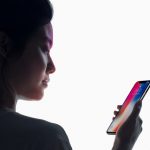
Apple has launched a revamped privacy page proclaiming that its products are "designed to protect your privacy." Describing privacy as "a fundamental human right," the page explains the privacy functions of apps, Siri, Apple Pay and Touch ID.
The company describes not only how it protects personal data with encryption, but also how it responds to government and legal requests for data. Apple has additionally published a paper which goes into some detail about how the Face ID feature of the iPhone X works -- and reveals its limitations.
Mark Zuckerberg denies Facebook is anti-Trump

Yesterday, Donald Trump used his favorite medium of Twitter to complain that -- as well as some media outlets -- Facebook was opposed to him. Mark Zuckerberg has now responded, speaking out to deny the claim.
He said: "Trump says Facebook is against him. Liberals say we helped Trump. Both sides are upset about ideas and content they don't like. That's what running a platform for all ideas looks like." The Facebook founder also backtracked on his earlier dismissal of the social network's influence on the election as "crazy."
Microsoft says Surface Pro LTE goes on sale December 1

Speaking at the Ignite 2017 conference, Microsoft said that the LTE version of the Surface Pro will be available to purchase on December 1. This is not the first time we have heard about the cellular-enabled Surface Pro, but now we have a date to look forward to.
While the on-sale date is just over two months away, we may well learn more about the Surface Pro LTE at Future Decoded in London next month. Leaks from an online retailer have revealed what specifications will be available.
Sofia Elizabella's Bio
Sofia Wyciślik-Wilson is a queer, transgender journalist based in Poland. She has been writing about technology for more than two decades, and after years working for magazines, her writing moved online. She is fueled by literature, music, nature, and vegetables. You can find her on Bluesky and Mastodon. If you like what you read, you can Buy her a Coffee!
© 1998-2026 BetaNews, Inc. All Rights Reserved. Privacy Policy - Cookie Policy.