

Trump blocks Chinese purchase of chip-maker Lattice over national security concerns


President Trump has blocked a Chinese investment firm from buying US company Lattice Semiconductor. The acquisition was stopped because of national security concerns.
Following a recommendation by the Committee on Foreign Investment in the United States (CFIUS), the Trump administration said that the potential buyer, Canyon Bridge, "might take action that threatens to impair the national security of the United States."
Privacy: Senator Al Franken has a lot of concerns about Face ID on the Apple iPhone X
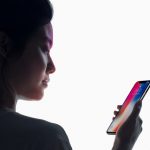
From the moment Apple started to talk about Face ID, there were concerns voiced about privacy and security. It's not just security experts and potential users who have these worries; Senator Al Franken has written to Tim Cook asking for details about the safeguards Apple has put in place to protect users.
On top of this, Franken wants to know more about how Apple trained the Face ID algorithm, and seeks assurances that third parties will not be able to access or be granted access to Face ID data.
Facebook launches Crisis Response, a portal to find out about crises around the world
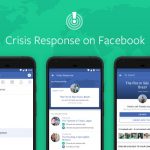
Facebook has today launched Crisis Response, a central hub that provides access to its various crisis response tools such as Safety Check. Over the years, the social network has gradually added more and more tools that serve to help those caught up in a disaster, and those who know them, and the new center pulls all of these into one place.
As well as serving as a central hub, Crisis Response on Facebook is also being bolstered by links to articles and videos posted on the site so users can be kept better informed about a given crisis.
HP blocks third-party ink with printer firmware update... again
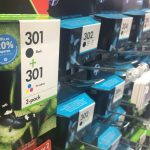
HP is pushing out a firmware update to its range of Officejet printers that blocks the use of the third-party ink cartridges. This is not the first time the company has issued such an update as it tries to force printer owners to buy its own, more expensive cartridges.
A year ago, HP faced strong criticism from the Electronic Frontier Foundation for implementing DRM that forced users to buy official ink. At the time HP saw the error of its ways and backtracked on the third-party ink ban, but now the company is having another crack of the whip. HP's "Dynamic Security Feature" is back to block your cheap ink, but there's a way around it.
Google ad hints at Pixel 2 and Pixel XL 2 event on October 4

Google is expected to take the wraps off the Pixel 2 next month along with -- probably -- the Pixel 2 XL. Last year's Pixel event took place on October 4, and the appearance of a billboard in Boston suggests that the same date will be used this year.
The Google billboard says simply: "Ask more of your phone" and then the date, Oct. 4. The sighting of the billboard comes just as the LG-manufactured Pixel 2 XL passes through FCC.
Google will launch a mobile payment service in India called Tez

A new report suggests that Google is on the verge of launching a mobile payment service in India. Known as Tez (meaning "fast" in Hindi), the service could launch as early as Monday, according to Indian news site The Ken.
Google Tez is said to offer more payment options than Android Pay, including support for the government-backed Unified Payments Interface (UPI).
Kaspersky software banned from US government systems over concerns about Russia

The Department of Homeland Security has told US government agencies to remove Kaspersky software from their systems. The directive was issued because of concerns about influence exerted over the company by the Russian government.
Government agencies have been given three months to identify and start to remove Kaspersky's security products. Kaspersky has constantly denied connections to the Russian government, but the US is simply not willing to take the risk.
Bashware: Microsoft refutes claims that Linux makes Windows 10 insecure

A recent report from Check Point Research suggested that the presence of Windows Subsystem for Linux (WSL) in Windows 10 poses a security risk to Microsoft's operating system. Researchers from Check Point highlighted the issue of Bashware attacks which use WSL to bypass security products.
Microsoft, predictably enough, disagrees with the findings -- and so do other researchers. The Windows-maker says it views the risk of Bashware as "low". But is the company being too dismissive?
Facebook introduces monetization limitations and new advertiser controls

Today Facebook introduces new limitations on what sort of content can be monetized on its network. It's a move that is designed to keep the social network relatively family friendly, and Facebook also wants to address advertiser concerns about the type of content their ads appear next to.
The company is not only clamping down on what can be monetized, it is also doing more to keep advertisers happy, including using third-party verification to measure ad performance. On top of this, Facebook is seeking accreditation from the Media Rating Council for Instagram, Facebook and Audience Network.
Apple quietly raises iPad Pro prices after iPhone X launch
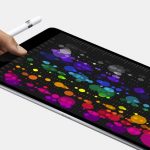
The iPhone X surprised some people with its starting price of (just) under a grand -- many were expecting Apple to break the $1,000 barrier even with the base model. It wasn't all good news on the price front, though. As well as hiking the cost of AppleCare+ for some devices, Apple also raised the price of some iPad Pro models.
With no announcement, the price of the 256GB and 512GB 10.5 and 12.9-inch iPad Pro models have jumped by $50. Apple has not given a reason, but the increased price of memory has been suggested as a possibility.
BlueBorne Bluetooth vulnerability 'exposes almost every connected device'

Armis Lab, the Internet of Things security firm, has revealed details of BlueBorne, a Bluetooth vulnerability that affects millions of iOS and Android smartphones, IoT devices, and Windows and Linux systems. In all, 5.3 billion devices are believed to be at risk.
The BlueBorne attack makes it possible for an attacker to spread malware or take control of nearby devices. What's particularly concerning is that for an attack to be successful, there is no need for device pairing, or even for a target device to be in discoverable mode. There's also no need for any sort of interaction by the victim -- everything can happen completely silently in the background.
JPMorgan chief dismisses Bitcoin as 'a fraud' currency, ideal for drug dealers and murderers

Speaking at a banking conference in New York, Jamie Dimon -- chief executive of JPMorgan -- has dismissed the cryptocurrency Bitcoin as a fraud that will blow up. He said that if he found employees at his investment bank using the digital currency, he "would fire them in a second."
Dimon likened Bitcoin to tulip bulbs and said: "The currency isn't going to work. You can't have a business where people can invent a currency out of thin air and think that people who are buying it are really smart."
Apple strips the App Store from iTunes 12.7

The focus of Apple's event yesterday was certainly the new iPhones, but this was far from being all that came out of Cupertino. Apple also released iTunes 12.7 and there's a glaring change -- the App Store is gone.
iTunes has long been derided for being bloated, and this latest change seems to be Apple's attempt to get things back under control. Ditching the App Store means that apps can only be downloaded using an iOS device, but as significant as this is, it is not the only notable change in the software.
Apple jacks up the price of AppleCare+

If you were enticed by yesterday's iPhone 8, iPhone 8 Plus and iPhone X announcements, you may be preparing to delve into your pocket to hand over some cash for one of Apple's latest handsets. If you're thinking of taking out AppleCare+ insurance to protect your new device, you're going to have to dig a little deeper.
Apple is increasing the price of AppleCare+ for its Plus model -- including the previous generation iPhone 6s Plus and iPhone 7 Plus -- and is introducing a new, even higher price point for iPhone X insurance.
Apple launches iPhone 8 and iPhone 8 Plus with A11 Bionic chip
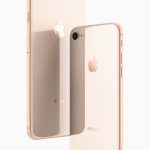
Today Apple took the wraps off the eagerly-awaited iPhone 8 and iPhone 8 Plus -- which Apple says improves on everything about the iPhone. Available in silver, space gray, and gold, the phones have glass on the front and back and are sealed for water and dust resistance.
The body is built from a custom aluminum alloy and the glass has a seven-layer color process. Looks are important, but what's going on inside also matters. Apple claims that this is the first smartphone designed for AR, helped along by new gyroscopes and accelerometer as well as the new A11 Bionic chip -- the "most powerful chip ever in a smartphone".
Sofia Elizabella's Bio
Sofia Wyciślik-Wilson is a queer, transgender journalist based in Poland. She has been writing about technology for more than two decades, and after years working for magazines, her writing moved online. She is fueled by literature, music, nature, and vegetables. You can find her on Bluesky and Mastodon. If you like what you read, you can Buy her a Coffee!
© 1998-2026 BetaNews, Inc. All Rights Reserved. Privacy Policy - Cookie Policy.