

US companies start to pull ads from Google and YouTube over extremist content controversy

Last week saw the start of a backlash against Google after advertisers voiced concern that their ads were appearing next to extremist content. The Guardian, the BBC and the British government were among the first to start to pull their ads from the network, and the trend has spread to the US.
AT&T and Verizon are among American companies that have now announced that they are boycotting YouTube by pulling their ads. After concerns about being associated with terrorist and other extremist content, an increasing number of big names are calling on Google to make guarantees about ad placement.
Facebook Messenger borrows from Slack with Reactions and mentions
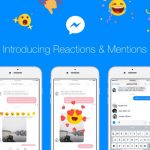
Facebook is not shy about stealing features from other messaging tools, and it's usually Snapchat that is used as inspiration. With the latest update to Facebook Messenger, it's Slack that is being borrowed from.
Today Facebook Messenger gets two new features: Reactions and mentions. These work in very much the way you would expect, and Reactions make a successful transition from the Facebook newsfeed to Messenger after having made a brief appearance to a testing group recently.
Apple buys automation tool Workflow, tweaks some features, and offers it to iOS users for free
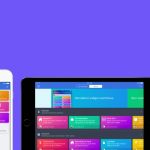
Automation tools like IFTTT continue to be popular, and as if to prove this, Apple has just bought the iOS app Workflow. Working in a similar way to Automator for macOS, Workflow brings task-oriented automation to iPhone and iPad users.
There's good news to top off the acquisition revelation. Apple is not only keeping Workflow up and running rather than shutting it down, it's also hanging onto the original team of developers behind the app. Even better, Apple is making Workflow available free of charge, dropping the previous $2.99 price tag.
DoubleAgent exploit uses Windows' Microsoft Application Verifier to hijack antivirus software

Security researchers at Cybellum have revealed details of a zero-day exploit that makes it possible for an attacker to take full control of antivirus software. The technique can be used to take control of just about any application, but by focusing on antivirus tools, the illusion of safety offered to victims means they are likely to be completely unaware of what is happening.
The attack works by exploiting the Microsoft Application Verifier that's built into Windows. It is possible to replace the tool with a custom verifier which can then be used to inject malicious code into any chosen application. A number of well-known antivirus tools -- including Avast, BitDefender, ESET, Kaspersky, and F-Secure -- are vulnerable, while patches have been released for others.
Now you can broadcast live to Facebook from your desktop or your favorite games

Facebook Live has been with us for a little while now, but it has been limited by the fact that it has only been possible to broadcast from mobile devices. Today this changes as Facebook opens up broadcasting to desktop and laptop users too.
On top of this, Facebook is adding the ability to stream from other software or external hardware. This has many uses, but the social network suggests that gamers might like to use it to broadcast their gaming sessions live online.
New Google report shows Android security is improving

Today Google published its third annual Android Security Year in Review, the day after the launch of the developer preview of Android O. Looking back at 2016, the report details the steps the company has taken to keep Android users and their data safe. Google cites a crackdown on Potentially Harmful Apps as a particular success, and points to the fact that security updates have been issued to 735 million devices.
But it’s not all good news. Many of the security improvements are to be found in Android 7 Nougat which is only available on a limited number of devices. Additionally, a large number of handsets are not eligible for the monthly security updates the company pushes out.
What's new in Android O?

We might not know exactly what Android O is going to be called, or exactly when it will be released, but the arrival of the developer preview means that we now have a hint of what to expect from the next version of Google's mobile operating system.
For now, Android O can only be installed on Nexus and Pixel devices, but further down the line this will change. So what is there to look forward to? Quite a lot as it turns out: battery and data saving, improved notifications, new lockscreen shortcuts, customizable navigation bar, and more!
Microsoft completes modified version of Windows 10 for Chinese government
Microsoft could be on the verge of making greater headway in China after completing a modified version of Windows 10 for the Chinese government. The operating system has been banned for governmental use for some time despite the fact it is already available to consumers in the country.
A joint venture with state-owned China Electronics Technology Group, Microsoft's modifications are now awaiting government approval. While details of the included changes are not being released, China's concerns about other nations implementing surveillance through the software will almost certainly have been a key factor.
US bans laptops and tablets on flights from eight countries in Africa and the Middle East

Not content with its second crack of the whip with a travel ban, the Trump administration has now issued a ban on larger electronic devices being taken on flights from certain countries. Devices larger than a cell phone will not be permitted in cabin baggage but must instead be checked in.
The ban is set to run indefinitely, and means that laptops, tablets, portable DVD players, ebook readers, portable games consoles and other larger electronic devices will be banished to the holds of aircraft. While the ban focuses on individual airports rather than countries, it has been noted that they are located in Muslim-majority parts of the world
Microsoft teams up with Adobe to create an industry standard for marketing, sales and services data
Adobe and Microsoft are joining forces to create new solutions for marketing, sales and services. Microsoft Dynamics and Adobe Experience Cloud will work with a shared data format to allow the two systems to work side by side together.
Ahead of today's Adobe Summit, the two companies revealed their plans to collaborate on another project: creating a new industry standard data model. By standardizing data structure, it is hoped that data can be gathered and processed from customers more quickly, and in-depth data analysis can be performed more efficiently.
Google says it will 'raise the bar' for ad policies after controversy over extremist content
Google has announced plans to introduce safeguards for advertisers after complaints from many big names that their advertisements were appearing next to extremist content. The Guardian, the BBC, and the UK government are among those to have withdrawn advertising from Google and YouTube, and the company has been battling to get companies back on side.
Google's Chief Business Officer, Philipp Schindler, has admitted that while there are policies in place controlling the ad network, "at times we don’t get it right." He says he understands that advertisers don't want their ads to appear next to content that is not in keeping with their values, and more will be done to ensure this doesn't happen.
Ahead of the Galaxy S8 launch, Samsung officially announces its virtual assistant, Bixby
There have been so many leaks about Samsung's upcoming Galaxy S8 that, come launch day, there will be nothing new to learn. One of the features that slipped out a little earlier than planned was news of Samsung's own virtual assistant called Bixby. Now Samsung has officially unveiled its take on Siri and Cortana.
Drawing on artificial intelligence and deep learning, Samsung describes Bixby as "a new intelligent interface." But what makes Bixby any better, or different, than any other virtual assistant on the market? Samsung says that "completeness", "context awareness" and "cognitive tolerance" are the keys to its success.
Microsoft's Mac to Surface Assistant makes it easier to switch to a Surface
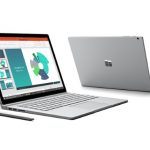
Moving from one operating system to another -- be it Windows to Linux, Mac to Windows or whatever -- can be fraught with tension. Microsoft wants to make life easier for anyone who has decided to ditch their Mac, by releasing the Mac to Surface Assistant to help migrate data to a new Surface Pro, Surface Book or Surface Studio.
For some time, Microsoft has featured detailed instructions on the Surface support pages that explain how to backup and transfer different types of data from one computer to another. With the Mac to Surface Assistant, however, all of this is taken care of by a wizard-led interface.
WikiLeaks holds tech companies' feet to the fire before helping with zero days revealed in CIA leaks

The CIA's hacking tools leaked in the WikiLeaks Vault 7 disclosure revealed vulnerabilities in a range of popular software titles. Julian Assange has said that his organization will share details of the zero days revealed in the documents with the respective technology companies, but it now transpires that there are certain conditions to meet first. It’s a situation that has more than a slight air of "ransom" to it.
Microsoft has initially complained that after the initial leak there had been no contact from either WikiLeaks or the CIA, but it seems that contact has now been made with the Windows-maker and other companies. Mozilla is among those to have been contacted and to have responded, and sources suggest that Assange has attached conditions to disclosing details of vulnerabilities.
Google attracts criticism for hiding LGBTQ videos in YouTube's Restricted Mode
LGBTQ+ videos are effectively being censored by Google, say a number of high-profile YouTubers. The accusations surround YouTube's Restricted Mode and the belief that this is hiding videos with LGBTQ+ content from view, leading some to suggest that active censorship is taking place.
Google says that this limited mode exists to give people the option to avoid "videos that discuss more sensitive issues." The blocking is supposed to be triggered by "community flagging, age restrictions, and other signals," but YouTubers complain that even "innocent" videos that reference same-sex relationships, "queer perspectives" and other LGBTQ+ topics have been restricted.
Sofia Elizabella's Bio
Sofia Wyciślik-Wilson is a queer, transgender journalist based in Poland. She has been writing about technology for more than two decades, and after years working for magazines, her writing moved online. She is fueled by literature, music, nature, and vegetables. You can find her on Bluesky and Mastodon. If you like what you read, you can Buy her a Coffee!
© 1998-2026 BetaNews, Inc. All Rights Reserved. Privacy Policy - Cookie Policy.