

Congressional Encryption Working Group says encryption backdoors are near unworkable


The Congressional Encryption Working Group (EWG) was set up in the wake of the Apple vs FBI case in which the FBI wanted to gain access to the encrypted contents of a shooter's iPhone. The group has just published its end-of-year report summarizing months of meetings, analysis and debate.
The report makes four key observations, starting off with: "Any measure that weakens encryption works against the national interest". This is certainly not a new argument against encryption backdoors for the likes of the FBI, but it is an important one. EWG goes on to urge congress not to do anything to weaken encryption.
Major battery life concerns mean Consumer Reports does not recommend the new MacBook Pro

Consumer Reports -- well-respected for its appraisals of products and services -- has decided not to give the new MacBook Pro its coveted 'recommended' status. This is the first time Apple's laptop has failed to gain the accolade.
While tests showed that the laptop's performance was good, it was the MacBook Pro's battery that let it down. Consumer Reports warns that battery life "varied dramatically from one trial to another". The report will make for difficult reading for Apple.
US government starts asking foreign visitors for their Facebook, Twitter and other social media info

In a move that has drawn criticisms from privacy groups, the US government this week started to ask some foreign travelers arriving in the country to hand over their social media account details.
Since Tuesday, visitors to the US arriving under the visa waiver program have been asked if they will provide "information associated with your online presence". Travellers are prompted to provide their usernames for the likes of Facebook, Google+, Instagram, LinkedIn and YouTube, and while the handing over of information is currently marked as "optional", it's not clear what the consequences of failing to provide it may be, or if there are plans to make it mandatory.
Stop lurking on Facebook (maybe ditch it altogether!) and you'll have a happier Christmas

For all of the talk of it being a social network, Facebook can be a lonely and depressing place. Despite this, many people use the site as somewhere to 'lurk', something which research shows can be psychologically harmful.
A study by the University of Copenhagen found that emotions become more positive and life-satisfaction increased in a group of people who took a break from the site. The effects were more pronounced in heavy users of Facebook, in those who suffered from envy, and those who failed to interact with other users. The advice for some people is that they might want to "consider quitting Facebook for good".
"Does Alaska have polar bears?" and other popular Google search queries in 2016

Google search's autocomplete function is an interesting feature; as well as helping to save time, it can also be very revealing of the zeitgeist. The feature has been in the headlines recently for reasons that probably didn’t make Google particularly happy, but autocomplete can also be the source of some amusement.
Marketing company WebpageFX has come up with an entertaining lookback at the most popular searches in the US, broken down by state. This fairly simple piece of research shows that people are asking questions such as "does Idaho exist?", "does Florida have zika?", and "does Arizona have pee in it?" (yep... we're lost too...*). Some searches are serious, some silly, some weird. Here's how they break down.
Facebook received 27 percent more government requests for information in 2016

Facebook has released its Global Government Requests Report for H1 2016, and it shows that there has been a significant increase in the number of government requests for account data.
Compared to the first half of 2015, Facebook received 27 percent more requests globally. Most of these 59,229 requests came from the US government, and more than half of them (56 percent) included a gagging order preventing Facebook from notifying the affected users.
Twitter search gets an overhaul to place more emphasis on relevance
Twitter has given its search results a tweak just in time for the New Year. The change sees a move away from displaying tweets in reverse chronological order to showing them in order of relevance instead.
The company recognizes that the site is "live and real-time, so naturally Twitter search must surface recent, yet still relevant, results", so time of posting is still factored in to determine the display order -- it is just no longer the only factor used. With a dash of machine learning thrown in, Twitter thinks it has things sorted.
Super Mario Run is bad news for everyone -- especially Android users

When Apple announced that Mario was making his way to iOS, there was much rejoicing. But the excitement soon gave way to disappointment for several reasons. Firstly there was the price, with many feeling $9.99 was just too much to ask for what is, ultimately, a very basic, one button platformer.
Next there's the complaint that Super Mario run requires constant access to the internet -- many users have also grumbled that the game has eaten through large chunks of their monthly data allowance. Nintendo may have made a pretty penny from sales of the title in the first few days, but the company's share price has tumbled. On top of this, just as it happened with Pokémon Go, the initial success of the game is being used to push malware at users.
'General and indiscriminate retention' of data ruled illegal, threatening Snooper's Charter

The UK government's Investigatory Powers Act 2016 (also known as the Snooper's Charter) has been dealt a blow after the European Court of Justice ruled that the "general and indiscriminate retention" of internet data and communication is illegal.
This is a serious setback for Theresa May's government which introduced legislations that not only requires ISPs to store customers' browsing history for a year, but also make this data available to a large number of agencies. The European court made the ruling following a legal challenge made by MPs David Davis and Tom Watson which gained the support of privacy groups.
Facebook introduces Live Audio in conjunction with the BBC
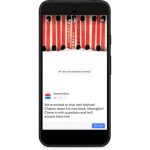
It's not all that long since Facebook started to allow users to broadcast live video to their friends and followers -- now the social network is doing the same with audio. Things are looking good for mobile users, particularly those with Android devices.
Starting off with partners such as the BBC World Service, LBC and Harper Collins, Live Audio is something of a blend of podcasts and radio. To start off -- just as happened with live video -- audio broadcasting will only be available to a select group of companies, but there are plans to open it up to everyone.
Electronic Frontier Foundation reveals its privacy and security wishlist for 2017

With the end of the year approaching, many people are looking back over 2016 and picking out the highlights. Others, however, are looking back to see what can be learned for 2017; this is exactly what digital rights group Electronic Frontier Foundation is doing.
EFF has drawn up a wishlist for 2017, outlining some of the things it hopes technology companies like Google, Twitter, Apple and Facebook will take action on. There are lots of familiar names on the list, and while some of the requests might seem a little hopeful, there is certainly scope for some of the changes to be implemented.
EU accuses Facebook of providing misleading information about WhatsApp acquisition
The European Commission could hit Facebook with a colossal fine for providing misleading information during its $19bn takeover of WhatsApp.
The social networking giant could be hit with a fine equivalent to 1 percent of annual sales (around $125m) for failing to correctly communicate planned changes to privacy policies. The data sharing between WhatsApp and Facebook is already the subject of investigations, but this latest accusation comes as a fresh blow.
Facebook brings colored backgrounds to statuses
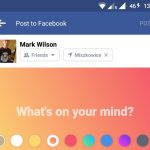
After "the most requested Messenger feature ever" yesterday -- Group Video Chat -- Facebook now has another update.
This time around the social network is allowing users to change the background color of status updates. Before you get too excited, however, there are limitations aplenty to bear in mind.
Apple loses wireless patent violation and employee rest break lawsuits

A jury in the United States District Court for the Northern District of California has ruled against Apple in a lawsuit about wireless patent infringement. Core Wireless was awarded $7.3 million in damages after Apple was found to have violated two patents owned by the company.
Apple was found to have infringed upon Core Wireless' patents in iPhones and iPads, taking advantage of technology that "provide innovations that improve battery life and signal quality in mobile phones". The company is expected to appeal against the ruling, but this is not the only case it has lost.
App update prevents users going viral on Instagram by pretending to be in Singapore
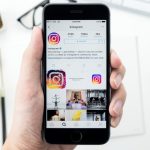
Instagrammers around the world recently discovered a quick and easy way to gain greater attention and increase the likelihood of going viral -- tagging their images as if they were in Singapore.
A flaw in Instagram's algorithms meant that images geotagged on the Malaysian island were more likely to be picked to be featured on the Explore page. Greater publicity equals greater views equals viral status equals win. Or at least it did.
Sofia Elizabella's Bio
Sofia Wyciślik-Wilson is a queer, transgender journalist based in Poland. She has been writing about technology for more than two decades, and after years working for magazines, her writing moved online. She is fueled by literature, music, nature, and vegetables. You can find her on Bluesky and Mastodon. If you like what you read, you can Buy her a Coffee!
© 1998-2026 BetaNews, Inc. All Rights Reserved. Privacy Policy - Cookie Policy.