

TeslaCrypt ransomware shuts up shop and releases free decryption key for everyone


Ransomware is not exactly a new problem, but it's one that seems to be getting increasingly serious. Every week there's a new high profile attack out there including the likes of CryptXXX and PETYA. One of the biggest names, TeslaCrypt, has suddenly thrown in the towel and offered up a free decryption key for its victims.
The surprise move comes just a couple of months after version 4 of TeslaCrypt gained what was described as "unbreakable encryption". The closure is somewhat bittersweet. The shutdown comes as attackers switch to using CryptXXX instead, but perhaps the most surprising aspect is the fact that the site formerly used to accept Bitcoin ransom payments is now where you'll find the decryption key needed to gain access to your files.
Google Home is a voice-activated Echo rival

Today at Google I/O, the search giant unveiled its Amazon Echo-baiting Home. Google Home is ostensibly a cylindrical speaker with an angled top featuring Google's iconic four colors. Far-field voice recognition allows you to issue commands to the device to control everything from music playback to look up something online.
Google's latest foray into the Internet of Things is much more than just a Wi-Fi speaker -- although it will function perfectly well in the role. Just like the voice-activated options in Android, Home can be used to set alarms and reminders, and can even be connected to other smart devices such as Nest thermostats.
Microsoft rolls out new-look Store to Windows 10 Redstone Build 14342

Microsoft continues to try to stir up interest in Store in Windows 10. Insiders who have installed Windows 10 Build 14342 are now being treated to an updated version of the Window Store app complete with a batch of new features.
This update is about not only changing the overall Store experience, but also pushing apps more than ever. The new look mimics that of the updates Store in Windows 10 Mobile and it goes some way to improving usability and ironing out irritations.
Google launches Android Pay in the UK

After a successful launch in the US, Google has now debuted its contactless payment service Android Pay in the UK. If you're packing an NFC-enabled smartphone running Android 4.4 or higher, you can now make payments in a number of stores -- as well as Transport for London -- with just a tap.
For payments under £30, there's no need to unlock your phone, and Google says that the number of supported banks and retailers will expand over the coming months. At the moment, support is limited to Mastercard and Visa credit and debit cards from Bank of Scotland, First Direct, Halifax, HSBC, Lloyds Bank, M&S Bank, MBNA and Nationwide Building Society, and if you're able to take advantage of the service from launch, there are also special offers to look forward to.
Microsoft just tried to use Windows 10 to trick me into using Skype with a random account

So there I was, typing away after using a couple of coffees to make myself feel vaguely human. Up popped a notification from Skype. This was odd. I don’t use Skype because I absolutely loathe it. The app isn’t even running. Nonetheless, there it is: a notification telling me that I have been signed into my account.
While I don’t use Skype, I do have a Skype username from back in days gone by -- but this wasn't the account Windows 10 told me I had been signed into. Rather it appeared that Microsoft had created a secondary Skype account for me (gee, thanks...) based on my name and decided to randomly sign me in to foist the terrible messaging app on me. What gives?
Microsoft expands Windows Defender Advanced Threat Protection Preview to more enterprise users

Security is one of the features of Windows 10 that Microsoft has been particularly eager to highlight. It's something that's important to everyone, but especially enterprise customers. Earlier in the year the company launched a preview of Windows Defender Advanced Threat Protection, and now this is being made available to a wider audience.
The program is still in the testing phase at the moment, but Microsoft is looking for feedback from IT professionals and enterprise customers. Although this is described as a public preview, would-be participants are required to register their interest and their applications are subject to approval.
The Intercept cracks open the Snowden archive including internal NSA newsletters

There can be few people who have had such an impact on people's perception of the government as Edward Snowden. Having exposed the convert spying activities of the NSA, he opened up a worldwide debate about privacy and surveillance that is still going on today. His revelations have shaped public opinion and changed the course of history.
Just as the likes of the Guardian have already helped to educate the world about what the NSA has been doing, so The Intercept is releasing a huge cache of internal NSA documents that give an intriguing insight into the agency's operations. The documents shed light on the NSA's work relating to terrorism, Iraq, and general surveillance.
Google launches Spaces for sharing links, YouTube videos, images and more with small groups [UPDATE: It's live!]

Google is introducing a new way to share content with a group. Spaces is a collaborative tool that Google wants people to use to share everything from articles and images to YouTube videos and messages.
So keen is Google for a huge take up of Spaces, that the service is launching in mobile and desktop web versions, as well as iOS and Android apps. It's billed as an alternative to group conversations, and Google wants to help streamline sharing by eliminating app switching -- this is achieved by integrating Google Search, YouTube, and Chrome into a single tool.
GCHQ arrives on Twitter to give a more public face to the spy agency

The UK's GCHQ -- like its US counterpart the NSA -- is an agency traditionally shrouded in secrecy. Tasked with the job of spying on all and sundry in the name of intelligence gathering, the agency has just joined Twitter, greeting other users with an unoriginal "Hello, world".
With the concerns about privacy and security that blew up in the wake of Edward Snowden's NSA surveillance revelation, spy agencies around the world have been on a mission to boost their public image. GCHQ -- complete with the blue tick reserved for verified accounts -- will use Twitter to "provide news, updates, and opinions".
Microsoft is working on a tool to simplify clean installations of Windows 10

While Microsoft has gone to great lengths to make it as easy as possible to upgrade from Windows 7 and Windows 8.1 to Windows 10, purists will always prefer to opt for a clean installation. For seasoned Windows users, performing a clean install of Windows 10 is easy enough, but that's not true for everyone.
Acknowledging the fact that clean installations are not a piece of cake for all, Microsoft is beavering away on a new tool to simplify the process. Windows Insiders will be able to try it out before anyone else, and give feedback to help shape the final product.
Google to block Flash in Chrome and default to HTML5 except for these ten white-listed sites

By the end of 2016, Google aims to switch Chrome users away from Flash in favor of HTML5. The writing has been on the wall for Flash for some time now, with a seemingly endless torrent of security issues pushing increasing numbers of people toward HTML5.
Google says that by Q4 2016, it wants to make HTML5 the primary user experience. Flash support will still be built into the browser, but it will be disabled by default. Ten sites, however, will be given a year's reprieve.
You'll still be able to hack Linksys WRT routers with open source firmware despite new FCC rules

In a little over two weeks, new rules will come into play that pose something of a threat to people who like to install open source firmware on their routers. The Federal Communications Commission is implementing guidelines designed to prevent users from modifying their routers in such a way that would make them operate outside of their licensed frequency range and interfere with other devices.
Many router manufacturers have opted for the easy way out, and decided to simply completely block (or continue to block) the installation of third party, open source firmware. Not so with Linksys. The company has been working with Marvell and the makers of OpenWrt to ensure that the Dynamic Frequency Selection (DFS) setting cannot be disabled so that users can still install and use open source firmware.
Torrent site The Pirate Bay loses thepiratebay.se and piratebay.se domain names

The Pirate Bay is no stranger to court cases, and the site has just lost another one in Sweden. A Swedish court has ruled that the torrent site's thepiratebay.se and piratebay.se domain names must be handed over to the state.
The two domains have been confiscated after a judge at the Court of Appeal decided that they were being used to (gasp!) commit crimes under the Copyright Act.
Windows 10 Anniversary Update will bring even more deceptive app ads to the Start menu
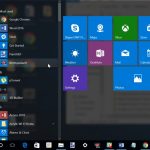
When Microsoft first introduced the idea of 'promoted apps' to the Windows 10 Start menu, it was decried by many as little more than pushing ads at users. If you found yourself among those upset by the appearance of links to apps you may have a vague interest in, things could be about to get a whole lot worse.
Later this summer Microsoft is releasing a major update to Windows 10 in the form of the Windows 10 Anniversary Update. In July the update will be released to the masses -- although Insiders have the chance to try it out in the meantime -- and Microsoft has plans for more ads; the number of spaces for 'promoted apps' in the Start menu is set to double from five to ten.
Microsoft pulls the plug on Project Spark

Out of the blue, Microsoft has announced that Project Spark is closing down. The Xbox One experiment which made it possible for just about anyone to create and publish games is to be killed off "after much consideration".
The service will be completely offline by 12 August meaning that after this date it will no longer be possible to upload or download content. Microsoft stopped development of Project Spark last year, but users had hoped that it would just be left to its own devices; this sunset announcement means that this is no longer the case.
Sofia Elizabella's Bio
Sofia Wyciślik-Wilson is a queer, transgender journalist based in Poland. She has been writing about technology for more than two decades, and after years working for magazines, her writing moved online. She is fueled by literature, music, nature, and vegetables. You can find her on Bluesky and Mastodon. If you like what you read, you can Buy her a Coffee!
© 1998-2026 BetaNews, Inc. All Rights Reserved. Privacy Policy - Cookie Policy.