

Delete the Scan With Windows Defender content menu entry from Windows 10 (Threshold 2)

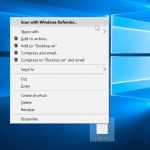
If you've installed the November Update for Windows 10 (or Threshold 2 if you prefer) there are a number of changes for the better to enjoy. But there are some changes that you might not be happy with, and the arrival of a new Scan With Windows Defender entry in context menu is something that is likely to grate with many people.
It might be that you have no intention of using Windows Defender, or your context menu may have become unwieldy and need a little trimming. Either way, a quick registry hack is all that's needed to banish the unwanted option. Here's what to do.
Google extends Chrome's Safe Browsing protection to fight social engineering
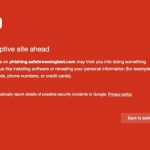
Online attacks take a number of forms, and phishing is one of the more recent problems. Chrome has long featured Safe Browsing to notify people when they visit potentially dangerous websites, and today Google announces that the feature is growing to include social engineering.
Google describes social engineering as being a much broader category than traditional phishing. Typical examples include sites that trick visitors into imparting passwords or credit card details, and those which purport to be an official website when they are in fact malicious. The Safe Browsing expansion offers protection against a range of social engineering attacks that Google provides examples of.
Microsoft launches Office Insider giving access to preview builds of Office 2016

With Windows 10, Microsoft's Windows Insider program proved immensely popular. The chance to try out new features ahead of an official launch gave millions of people an insight into the development process and provided an opportunity to give feedback and influence the future of the operating system.
Today Microsoft is giving Office the same treatment. With the launch of the Office Insider program, Office 365 subscribers are being given the chance to try out upcoming releases of Office 2016.
It is your duty to use an ad blocker, says Edward Snowden

Ad blocking tools are rarely out of the news these days. In times of heightened awareness about online privacy, more and more people are turning to things like Adblock Plus to banish ads and clean up their web browsing experience. For many people an ad blocker is seen as essential.
Edward Snowden goes further. The former NSA contractor says that it is a web user's duty to protect their computer by blocking potential attack vectors such as Flash and JavaScript-riddled advertisements.
How to avoid online surveillance -- the essential guide

It would appear that mass surveillance of the Internet is here to stay. We can rage against the machine, but ultimately we're powerless to stop the likes of the NSA and GCHQ prying into whatever they want to pry into. More and more people are turning to the dark web to help cover their tracks, but even the supposedly anonymous haven of Tor can be cracked for a price.
Last week in the UK, the draft Investigatory Powers Bill was published outlining proposals for ISPs to retain user's browsing histories for a full year. Governments want to weaken encryption. The FCC ruled that Do Not Track requests are essentially meaningless. The NSA finds and takes advantage of vulnerabilities. It's little wonder that privacy groups are up in arms -- the erosion of online rights continues with terrifying speed. But all is not lost. There are still things you can do to help maintain your privacy. If you're concerned, here's what you can do.
Gmail to issue warnings about emails sent without encryption

Google, like many other companies, is pushing people towards using secure internet connections. HTTPS is becoming the norm, but not everyone has caught on. To keep the security-conscious informed, Gmail is set to issue warnings about emails that are received through unsecure connections that do not use encryption.
A joint study involving Google, University of Michigan and the University of Illinois found that email is "more secure today than it was two years ago", with an increase in the number of encrypted emails sent. That said, there are still plenty of people who are not using secure connections and Google is keen to keep its users informed when they receive communication through unencrypted channels.
The price of de-anonymization -- FBI paid $1m to Carnegie Mellon to crack Tor

Tor has long been thought of as offering a level of privacy, security and anonymity that enables people to do whatever they want online; it also facilitates access to the so-called Dark Web. Despite this, law enforcement agencies were able to crack Tor and identify a Silk Road 2.0 user. Now it seems that the FBI was helped out by researchers at Carnegie Mellon University.
It was previously known that the FBI tracked down Brian Richard Farrrell using information from a "university-based research institute". The Tor Project itself believes that the FBI paid researchers at the university at least $1 million to attack the network and gather data from Tor relays that could be analyzed and used to identify users' IP addresses.
Time to ditch your phone -- Android Wear now has cellular support

Not long ago LG announced the LG Watch Urbane 2nd Edition -- the first Android Wear smartwatch that offers LTE/3G connectivity. Now Google has officially announced Android Wear's cellular support.
Breaking down one of the barriers to wearable adoption -- the previous reliance on smartphones for a lot of functionality -- the arrival of cellular support means your smartwatch can be used to make and receive calls even when you don’t have your phone with you.
Facebook is receiving more government data requests than ever before
The time has rolled around once again for Facebook to release its twice-yearly report about government data requests. It will perhaps come as little surprise that in the current atmosphere of surveillance and privacy concerns that in the first half of 2015 Facebook received more government data requests than ever before.
The latest figures show that the number of data requests has jumped by 18 percent to 41,214. There was also a massive increase in the number of pieces of content that were taken down or 'restricted' for violating local laws -- a rise of 112 percent. Facebook reiterated previous assertions that it does not provide backdoor access to governments, and reveals that the US is by far the leading requester of data.
Microsoft to hide European data from the NSA with new German datacenters

The arms of the NSA may be long, but there are some parts of the world in which it holds no sway. Conscious of European concerns about US government web surveillance, Microsoft today announces German datacenter options for Azure, Office 365 and Dynamics CRM Online.
Starting in the second half of 2016, customers in Europe will be able to opt to have their data stored in Germany. The datacenters will be controlled by German data trustee, Deutsche Telekom who will oversee all access to customer data. With Microsoft’s "mobile first, cloud-first" philosophy, this is a move to try to rebuild trust in cloud services which the company clearly feels has been lost.
Adblockalypse: nearly one fifth of web users employ ad blockers

Online ads are a major bugbear for web users, hence the existence of ad blocking software. Tools such as AdBlock Plus have long been popular, but despite efforts by publishers to discourage their use, more and more people rely on ad blockers to improve their online experience.
The Internet Advertising Bureau reports that ad blocking is on the rise. In the UK, 18 percent of people use software to prevent the appearance of ads -- up from 15 percent just five months ago. Not everyone, however, is looking to block every single ad they might encounter.
InstaAgent app steals usernames and passwords from Instagram users

An app that enables iPhone users to keep an eye on who has been looking at their Instagram account has been pulled from the App Store after it was found to be stealing usernames and passwords.
Apple took the decision to kill "Who Viewed Your Profile -- InstaAgent" when the app was found scraping login details and sending them back to the developer's server. This in itself is worrying for users, but it gets worse: the usernames and passwords were sent in unencrypted format.
Apple's Tim Cook on weakening encryption: 'Any backdoor is a backdoor for everyone'

Tim Cook is concerned about privacy. The Apple CEO has spoken out against requests from governments for backdoors into encrypted products. Following the UK government's decision not to ban strong encryption but to force companies to provide authorities with access to encrypted data upon production of a warrant.
This is effectively a backdoor into products and Tim Cook gives a stark warning: "Any backdoor is a backdoor for everyone". He also suggests that security is something that needs to be tackled on a global scale rather than by individual countries.
No more Chrome updates for Windows XP from April 2016

Anyone still desperately clinging to Windows XP only has another six months of updates for Chrome. Google has decided that the time has finally come to sever ties with the ancient operating system, and the same applies to Vista and OS X 10.6, 10.7, and 10.8.
Just as Microsoft has stopped issuing updates for Windows XP, so too has Google set a cut-off point of April 2016 for Chrome support on older OSes. These versions of Windows and OS X have been dropped by Microsoft and Apple, so it makes sense that other companies will move on as well. But as well as not getting new versions of Chrome, there will also be no more security updates.
Apple Music arrives on Android as a beta

In a few short months, Apple Music has picked up millions of followers, and it has managed to do this whilst remaining exclusive to iOS. Now that changes. Today Apple's music app makes the jump to Android.
Currently in beta, Apple Music for Android is a free download, and includes a three-month free trial of the service. After this, should you want to continue using it, you'll have to cough up $9.99 per month. For the most part, this is a direct port of the iOS version of the app, but as it is in beta there are some notable differences.
Sofia Elizabella's Bio
Sofia Wyciślik-Wilson is a queer, transgender journalist based in Poland. She has been writing about technology for more than two decades, and after years working for magazines, her writing moved online. She is fueled by literature, music, nature, and vegetables. You can find her on Bluesky and Mastodon. If you like what you read, you can Buy her a Coffee!
© 1998-2026 BetaNews, Inc. All Rights Reserved. Privacy Policy - Cookie Policy.