

The BBC Store opens its doors for digital boxset downloads


Today the BBC launched a new online store where its back catalog of programming can be found. Featuring classics such as Doctor Who, Sherlock, and Orphan Black, the BBC Store provides a way to buy digital copies of your favorite shows... if you're in the UK, at least.
At the moment the store includes around 7,000 hours of viewing, but more of the BBC archive will be added over time -- and there are more than four million items for the corporation to add. Although the store is run by the license fee-funded BBC, content is not free of charge. Box sets start at around £8, while one-offs can be bought for much less.
Shuanet, ShiftyBug and Shedun malware could auto-root your Android

Rooting a phone is something that many people decide to do to allow them to do things and use apps that would not otherwise be possible. If you make the choice, you are in control. But security researchers at Lookout have discovered a new form of malware disguised as apps from the likes of Facebook and Twitter.
While some of the apps are partially functional, the malware has a nasty payload: it could be quietly rooting your phone in the background. Lookout has identified three families of malware -- Shuanet, ShiftyBug, and Shedun -- that can be found in more than 20,000 apps in Google Play. Once installed, the malware is almost impossible to remove.
Dropbox launches Dropbox Enterprise and new cloud security features

Today at the Dropbox Open event, the cloud storage company launched Dropbox Enterprise. Building on the idea of Dropbox Business, Dropbox Enterprise is aimed at larger organizations and includes a new set of security and admin tools.
At the same time, the company also launched Dropbox Platform 2.0, and updated version of Dropbox's API that makes it easier for developers to build apps. Also announced was the new Dropbox Partner Network, creating a way for partners to collaborate to create new products and communicate with customers.
Twitter launches new Public Policy and Transparency page

It has been all change at Twitter recently. After increasing the number of accounts users are able to follow, and switching the Favorite star for a Like heart, Twitter today takes the wraps off a new Public Policy and Transparency page.
This is a central hub for information about Twitter's policies relating to freedom of speech, privacy, security, and corporate responsibility, as well as being a home for transparency-related information. It's also the place to go to find out how Twitter is handling government surveillance and online legal issues.
ISPs to be forced to store users' browsing history for a year

The UK government today published a draft version of the Investigatory Powers Bill setting out a framework for new surveillance powers. Among the proposed measures is a requirement for ISPs to keep a record of every website their customers visit for 12 months.
Fears that encryption would be banned were not realized, but privacy campaigners will be disappointed that internet connection records will be accessible by police and security services without the need for a warrant. The NSA-style data collection is indiscriminate. Data will be stored about everyone's internet usage, not just those suspected of crime, terrorism and the like.
Google says Samsung Galaxy S6 Edge reduces Android security

Samsung's Galaxy S6 Edge is blighted by 11 security problems according to the Project Zero team at Google. The team carried out research to determine how easy it would be for an attacker to exploit an Android phone produced by an OEM.
Over the course of just a week of investigations, Google discovered "a substantial number of high-severity issues". While Samsung has now fixed some of the problems, at least three are still to be addressed.
Facebook uses AI to recognize objects in photos

Artificial intelligence researchers at Facebook are set to unveil a new system that can identify objects in photographs. While this is not an entirely new idea, Facebook's AI Research (FAIR) team says that it has reached a new milestone, meaning that recognition is now much faster and requires less training.
Any AI-driven recognition system is built on sample data which can be used as a reference point. FAIR's new system needs just a tenth of the amount of training data than other systems, and operates 30 percent faster. But the team's progress doesn’t end there -- great strides have also been made in natural language understanding and predictive learning.
Hearts vs Stars: Twitter embraces Likes as Facebook leaves them behind

The idea of 'liking' something is synonymous with Facebook. Or at least it was. Now Twitter is trying to get in on the action, renaming Favorites to Likes. As well as a name change, there's also a new icon. Gone is the Favorite Star, replaced with the Like heart.
The move comes just as Facebook is talking about introducing reaction emoji, with a view to giving users of the social network new ways to express how they feel about the content they see. Twitter, however, is moving in the other direction. While 'favoriting' a tweet was fairly non-partisan, 'liking' is an action that is loaded with meaning.
Smart Reply for Google Inbox suggests replies to emails

Gmail might be Google's most well-known email service, but more recently the company has introduced Inbox. Now Inbox gains a new feature -- Smart Reply. The email tool is known for its automation features and Smart Reply aims to cut down the amount of time you have to spend replying to messages in Android and iOS.
Although not entirely automated. Smart Reply analyzes the content of the emails you receive and suggests a number of stock replies that you might like to send. While it is certainly not going to eliminate the need to type out emails entirely, the ability to respond to common types of email with a couple of clicks will prove a real time-saver.
Hate Windows 10? You still have a year to buy a Windows 7 PC

The adoption of Windows 10 is slowing, and that trend is set to continue -- largely thanks to Microsoft. In an unusual move, the company has extended the availability of Windows 7 so it will be possible to buy computers with the operating system pre-installed until the end of October next year.
What's particularly interesting about this is that it means that Windows 7 will be available to buy for longer than Windows 8. Many would take this as an admission of the widespread dislike for Windows 8, but it also offers a lifeline to anyone who wants a new computer without Windows 10.
Microsoft shows what gamers can expect from the New Xbox One Experience

The New Xbox One Experience is just around the corner. We already know that the rollout starts on 12 November, and that means that there are just ten days until Windows 10 comes to Xbox One gamers. Today Microsoft shows off what there is to look forward to in a couple of new videos.
This is not a small update by any stretch of the imagination -- it sees the arrival of the New Xbox One Experience. Not everyone has been keeping up to date with the snippets of news that have crept out over recent months, nor have they all been taking part in the preview program. But whether you've kept abreast of what's to come or you haven’t got a clue what to expect, the videos serve as an excellent introduction.
Google says Chrome OS is going nowhere

Google has scotched rumors that Chrome OS could be ditched. There had already been some doubts about the truth behind suggestions that Android and Chrome OS could be on the verge of merging. Google has already gone to some lengths to stress how committed it is to Chrome OS, and today goes a step further in stating in very plain language:
"Chrome OS is here to stay".
Windows 10 fans will lose their (User)Voice in a fortnight
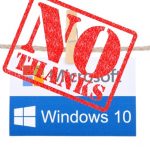
As Microsoft has released numerous preview builds of Windows 10, testers have been able to provide feedback and make suggestions via the UserVoice website. In two weeks, this feedback system dies completely.
The killing of UserVoice actually took place on 30 October, but the site remains accessible until 16 November -- almost coinciding with the expected release of Threshold 2. Before you start to panic that Microsoft is killing the feedback that has been provided, there is a contingency plan.
Snapchat denies it stores users' messages and pictures

As often happens, the internet went nuts over the weekend. The cause? A change to Snapchat's privacy policy. Rumors spread like a disease that the blink-and-you'll-miss-it messaging service was not only storing users' posts, but also taking ownership of them.
Snapchat has responded to the public outcry, explaining that this is simply not the case. But having spread around the world via mainstream media, the rumor may be hard to quash -- perhaps the app's Ghostface Chillah mascot spooked people over Halloween.
Huge Windows 10 Fall Update (Threshold 2) due 10 November

Windows 10 has been with us for a few months now, and the time has come for its first big update. Known variously as Threshold 2, the November Update, and the Fall Update now has a release date -- 10 November.
In just over a week's time -- according to a Microsoft Support Engineer writing on Microsoft Answers -- the November update is due to launch bringing, amongst other things, Cortana support to India. Windows Insiders on the Fast Ring who have tried Windows 10 Build 10576 already have an idea of what to expect.
Sofia Elizabella's Bio
Sofia Wyciślik-Wilson is a queer, transgender journalist based in Poland. She has been writing about technology for more than two decades, and after years working for magazines, her writing moved online. She is fueled by literature, music, nature, and vegetables. You can find her on Bluesky and Mastodon. If you like what you read, you can Buy her a Coffee!
© 1998-2026 BetaNews, Inc. All Rights Reserved. Privacy Policy - Cookie Policy.