

Facebook apes TimeHop with On This Day


History. It's so much more reliable than the future. You know where you stand with things that have happened. This is possibly why they are often looked back upon (is that not the only way to view such things?) with such fondness. Unless they were bad things, of course.
Latching on to the general liking for getting moist-eyed and nostalgic, Facebook is rolling out a new On This Day. It's something that borrows heavily from services like TimeHop, and gives users of the social network a new way to check back on the content they've posted. It's something Facebook has experimented with already with its Year In Review, but this is a more wide-reaching feature.
Windows 10: Smooth user experience it ain't
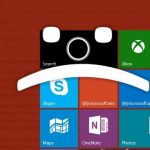
Despite months of work, Windows 10 still falls a long way short of what it should be by now. Based on the last time I wrote about Windows 10 in a less than positive way, I'm not expecting great feedback on what I'm about to write. Of course, there is the caveat that we're all using a pre-release version of the operating system and problems are to be expected, but that’s not really the point.
The point is that Microsoft has been working on Windows 10 for quite some time now. Public builds have been a little slow to creep out -- despite promises that things would speed up -- but I'm concerned about how little time there is until the planned release. While there's a lot that right with Windows 10, there's an awful lot that's still very, very wrong.
Microsoft decides sub-10.1 inch devices just aren't professional

You've probably heard that size matters, and Microsoft agrees. If you're carrying about a mobile device that measures 10.1 inches or less, the chances are you're not using a "professional" device -- at least this is what Microsoft believes.
10.1 inches, 256.54 millimetres, 25.654 centimetres; this is the new dividing line between what is classed as a personal device, and which is professional. This is interesting to know, but what does it actually mean? For starters, if you fall into the "personal" category, you're entitled to a free copy of Office.
Project Spartan and IE will no longer share rendering engines in Windows 10

It is now a couple of months since Microsoft started talking about Project Spartan, the Internet Explorer successor that's set to become Windows 10's default web browser. Some have suggested that this will lead to the death of Internet Explorer, but today Microsoft confirmed that the two browsers will live on side by side in Windows 10.
At the Project Spartan Developer Workshop, Microsoft went into more detail about the future of the two web browsers. In particular, there is the revelation that previous plans to use a new rendering engine in both Internet Explorer 11 and Project Spartan have been ditched. Internet Explorer will live on in Windows 10, providing legacy support for those who need it, and it will be virtually identical to the version found in Windows 8.1.
Amazon patches huge XSS vulnerability that left user data exposed for two days

A serious XSS vulnerability left Amazon customers in "real danger" of having their accounts compromised. The man who made the discovery is Brute Logic, the current top security researcher at XSSposed.org and "light-gray computer hacker". We spoke to him about the security issue as well as talking about the responsibilities involved in exposing vulnerabilities.
The cross-site scripting vulnerability was discovered on March 21 and was left unpatched for two days. In this time, Brute Logic says there was a real risk that people "could have their Amazon account compromised or had their computer invaded by means of a browser exploit". He says it is the responsibility of sites to fix problems when they are highlighted by the hacking community.
Microsoft releases Windows 10 SDK tools for developers

It has been a long time coming, but Microsoft has finally released the SDK for Windows 10 -- just ahead of next month's Build. Users have been playing around with various builds of Windows 10 Technical Preview, but this is the first chance developers have had to get hands on with the tools they'll need to create apps for the latest version of Microsoft's operating system.
The Windows 10 Technical Preview tools and Visual Studio 2015 CTP6 can be downloaded by Windows Insiders, and it gives developers the chance to try out the tools and provide feedback with the first technical preview. Templates are provided to make it easy to get started with the development of universal apps, and Microsoft is keen for developers to get to work.
Twitter teams up with Foursquare for location-based tweets

Foursquare (remember that app?) is joining forces with Twitter to make tweets more relevant to specific locations. At the moment it is possible to tag your location in a tweet, but you're limited to mentioning the town or city you find yourself in.
With the new partnership, you'll be able to tag individual locations such as the Starbucks you're sitting in with your iPhone or Android handset. It's a feature that takes advantage of the huge cache of data Foursquare has built up over the years and something that provides yet another way for users to search for data and, importantly, for Twitter to monetize data.
LightEater malware attack places millions of unpatched BIOSes at risk

Two minutes is all it takes to completely destroy a computer. In a presentation entitled "How many million BIOSes would you like to infect?" at security conference CanSecWest, security researchers Corey Kallenberg and Xeno Kovah revealed that even an unskilled person could use an implant called LightEater to infect a vulnerable system in mere moments.
The attack could be used to render a computer unusable, but it could also be used to steal passwords and intercept encrypted data. The problem affects motherboards from companies including Gigabyte, Acer, MSI, HP and Asus. It is exacerbated by manufactures reusing codes across multiple UEFI BIOSes and places home users, businesses and governments at risk.
Anti-censorship site Greatfire.org suffers massive DDoS attack

GreatFire.org, the website with the aim of delivering uncensored news to China, has been hit by a massive DDoS attack. The attack started on March 17 but the anti-censorship site has only just gone public about it and made a call for help.
The organization believes that the attack -- which it calls "censorship by brute force" -- could be a response to an article in the Wall Street Journal. With a peak of 2.6 billion page requests per hour, servers were simply unable to cope with the traffic, knocking GreatFire.org's mirror sites offline.
Where did you lose your smartphone? Android Wear can now tell you

Android Device Manger is Google's approach to helping people track down lost smartphones and tablets. Now the feature is rolling out to Android Wear so if you should lose your phone, you can find it with your watch.
At the moment the Android Wear version of the feature is pretty basic; you can use your watch to call your phone. This is great if you have mislaid it nearby, dropped it down the back of the sofa or buried it under some books, but not so helpful if you've left it on the train -- don’t expect to be able to home in on your phone using GPS at this stage.
Opera acquires VPN firm SurfEasy to boost browsing security

Opera Software, the company behind the web browser of much the same name, has acquired SurfEasy, a provider of VPN security. SurfEasy's software bolsters the security of internet users by adding a layer of encryption that helps to protect privacy.
More than this, the software also makes it possible to bypass some online restrictions and to access sites that are region locked. Few details have been revealed yet, but it's possible we could see VPN features integrated into future versions of the desktop and mobile Opera browser.
Despite what you may have heard, Internet Explorer is not dead

You shouldn't believe everything you read online -- no, really, you shouldn't. Just the other day we heard from John Gruber who made the baseless suggestion that Apple invented USB-C (hint: it didn't). Now it's the turn of Tom Warren from the Verge. Yesterday he wrote an article with the headline "Microsoft is killing off the Internet Explorer brand". Gosh!
He goes on to talk about Project Spartan (the new default web browser in Windows 10 that we learned about weeks ago) but also immediately contradicts himself in a sub-heading: "IE will live on...". Hang on... I thought it was being killed off? There then followed confusion, back-pedalling, and playing with semantics from Warren that did nothing to clarify the matter and served to rile many on Twitter.
Electronic payments coming to Facebook Messenger

Facebook is introducing support for sending and receiving money through Messenger. Starting in the US in the next few months, users of the social network will be able to make electronic payments free of charge. While this is not a service that will rival the likes of Apple Pay or PayPal, it provides a way to quickly send money to a friend.
This is not a payment system that has been completely built from the ground up. It's based on the same backbone that's used to process payments for gamers and advertisers. Security is understandably of paramount importance, and Facebook stresses that as well as encryption and PIN protection for all, iOS users will also be able to take advantage of Touch ID.
Google starts vetting Android apps and implements age rating system

For a long time now Google Play has been home to just about any sort of app imaginable. Apps covering every subject under the sun are available, with quality ranging from atrocious to incredible. To help sort the wheat from the chaff, Google has announced two important changes to the way apps appear in the store.
Apps that are submitted to Goole Play are now subject to a review process, and an age rating system is being introduced to help indicate the target audience for apps. Google says this will help to weed out "violations of our developer policies earlier in the app lifecycle".
What do you want in a mobile operating system?

I'm not going to open the 'which mobile operating system is best' can of worms -- let's get that clear from the offset. This is not me trying to push my preferred operating system on you, or trying to convince you that you're wrong about the OS you've opted for. This time it's over to you. What you do want?
Do you want things handed to you on a plate, or would you prefer to be granted more control over the operating system on your phone and tablet? Is there mobile platform that meets your needs at the moment, or would you like to combine elements from Android, iOS, Windows Phone and even BlackBerry OS? Just what is it that makes the perfect operating system for your phone or tablet?
Sofia Elizabella's Bio
Sofia Wyciślik-Wilson is a queer, transgender journalist based in Poland. She has been writing about technology for more than two decades, and after years working for magazines, her writing moved online. She is fueled by literature, music, nature, and vegetables. You can find her on Bluesky and Mastodon. If you like what you read, you can Buy her a Coffee!
© 1998-2026 BetaNews, Inc. All Rights Reserved. Privacy Policy - Cookie Policy.