

Reports that uTorrent silently installs Bitcoin crapware are... crap


Sometimes it's easy to be swayed by what's being written online. At the moment there are lots of stories creeping out about the iPad Pro and Apple Watch, none of which are founded in any fact whatsoever. Still, making stuff up, popping it in quotes and attributing it to an anonymous source is great fun, right?
It may be fun, but it's not really fair on the reader. Another story which popped up on my radar today was about uTorrent -- the popular BitTorrent client that's loved and hated in equal measure. Stories on Trusted Reviews, Engadget and the Verge suggest a Bitcoin mining tool called Epic Scale is installed without permission, and is a tricky blighter to remove. There's an easy way to find out; let's just install it.
Facebook's inactive account cull means fewer likes for pages

Like just about any online service, Facebook has a huge number of dead and dormant accounts. It could be that the owner has died, they might have lost interest, or they may be spam accounts that are no longer used. Facebook is now having a spring clean, sweeping aside inactive accounts, and this could have an interesting side effect for page owners.
Accounts that have been purposely deactivated, or memorialized after a death, are currently still factored into the 'like' count for pages. This is set to change, so many page owners should brace themselves for a sudden drop in likes over the coming weeks.
Microsoft and Google working together on Angular 2 JavaScript framework

There are unlikely partnerships, and there are unlikely partnerships -- Google and Microsoft certainly make for strange bedfellows. At developer conference ng-conf in Salt Lake City, Google's Angular team revealed that it has been working with the TypeScript Team from Microsoft to produce Angular 2.
The worlds of TypeScript and AtScript have converged, resulting in the collaborative effort that is Angular 2. The new version of the JavaScript framework will be written in TypeScript and will be used to develop the next generation of web sites and web apps.
Windows 10 Build 10031 leak shows smaller Start button plus transparency
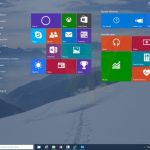
Wzor has come up with the goods again. While many have been disappointed by the lack of new Windows 10 builds in February, appetites have been whetted by a steady stream of unofficial screenshot leaks and even complete builds. Now the Russian leaker has published screenshots from build 10031.
What's new? Microsoft appears to have listened to calls for the introduction of transparency, as the Start menu is now semi-transparent. This is not the only change to the Start menu -- the Start button is also smaller than in previous builds. Could this be the build which is made publicly available in coming days? It's entirely possible.
Google Compare tracks down cheap car insurance for US drivers

Referred to variously as Google Compare for U.S. car insurance, Google Compare for car insurance, and Google Compare for Auto Insurance, Google has just added a new string to its bow. The newly launched service lets drivers hunt down the best car insurance deal -- something which UK Googlers have been able to take advantage of for a little while already.
After handing over a few details like address, vehicle stats and the level of coverage required, Google will compare all of the available policies so you can pick the one that suits you the best. Don’t like a quote? Just increase the deductible and a new deal will be calculated for you.
Microsoft launches Office 2016 Mac Preview
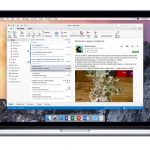
Microsoft is all about software previews these days. We've seen various preview builds of Windows 10 and Windows 10 for Phones, and now it's time for the next version of Office for Mac. Today Microsoft released Office 2016 Mac Preview, giving Mac users a chance to try out the next version of the office suite ahead of its full launch.
As with the Windows version of Office, and in keeping with the new focus of Microsoft, there's a strong emphasis on the cloud. OneDrive, OneDrive for Business and SharePoint can be used to sync documents between devices, and Microsoft is keen to point out that this is more than just a straight port of PC Office -- the suite has been Mac-ified.
Hosted web apps could solve Microsoft's Windows Phone problems
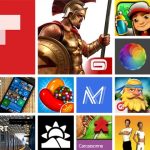
Despite my colleague Wayne Williams' eloquent suggestion that the naming conventions used for Lumia devices is part of the reason for the low uptake of Windows Phone, the platform still has a serious problem when it comes to apps. Whether there is a real problem or not, the perception is that Windows Phone -- or Windows 10 for Phones -- is rather lacking in the app department. Fear not... Microsoft has a solution.
Rather than pumping out a glut of new apps of its own, or encouraging developers to produce third-party apps, Microsoft is adopting a slightly different tactic. At MWC 2015 this week the Lumia 640 and Lumia 640 XL were revealed, but Microsoft also announced that web apps will be permitted in the Windows store. Could this be what app-hungry consumers have been waiting for?
Samsung Galaxy S6 and Galaxy S6 Edge unboxing and hands-on videos
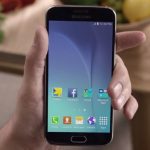
Fresh from the unveilings at MWC 2015, Samsung has released official unboxing videos for its two latest Android devices -- the Galaxy S6 and Galaxy S6 Edge. Published on YouTube, the video clocks in at under three and a half minutes -- no epic-length unboxings here! -- and gives us a close-up look at the flagship handsets.
Both devices appear in fairly unassuming, plain white boxes, unadorned with imagery or other distractions, but it's the contents that everyone is interested in. It's the Galaxy S6 Edge that is unwrapped first, and fans of the Galaxy series are sure to be impressed by what they see.
Apple, Microsoft and Google need just one mobile improvement -- battery life
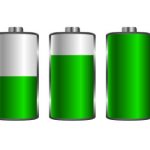
Let’s face it, you’ve picked the mobile operating system you like. Whether you’ve opted for an iPhone, a Lumia handset or a device running Android, the chances are you’re not going to switch allegiances no matter what others may do or say to try to convince you otherwise. At the same time, few people would argue that their handset of choice is perfect.
You’ve picked your side when it comes to OS, but what about the handset itself? Apple, Samsung, HTC et al keep releasing slightly tweaked versions of last year’s handset, perhaps adding a faster processor, a larger screen and more memory. One thing is constantly overlooked, however -- battery life. And it’s time for things to change.
What the FREAK? Huge SSL security flaw stems from US government backdoor

Seven hours is all it takes to crack the encryption that is in place on some supposedly secure websites. Security experts blame the US government's ban on the use of strong encryption back in the 1990s for a vulnerability that has just come to light. Named FREAK (Factoring attack on RSA-EXPORT Keys), the flaw exists on high-profile websites including, ironically, NSA.gov.
Restrictions that limited security to just 512-bit encryptions were lifted in the late 90s, but not before it was baked into software that is still in use today. The ban on the shipping of software with stronger encryption apparently backfired as it found its way back into the States. Security experts say the problem is serious, and the vulnerability is relatively easy to exploit.
iPhone 6 and Surface Pro 3 win at MWC 2015 Global Mobile Awards

MWC 2015 has seen all manner of exciting smartphones, tablets, wearables and other goodies, but the event is not solely about brand new products. It's also a chance to look back on the past year and reflect on the highlights. Today Microsoft and Apple were among the companies picking up gongs for their products.
Both were to be found in the prestigious Best Mobile Handsets and Devices section. Apple's iPhone 6 shared the best smartphone award with the LG G3, and Microsoft Surface Pro 3 picked up the prize for best mobile tablet. Plenty of other awards were handed out in recognition of innovative technology products.
Google reneges on its promise of encryption by default for Lollipop devices

Not wanting to be outdone by Apple, when it was announced that iOS 8 would encrypt data by default, Google felt compelled to follow suit. Back in September Google said that in Lollipop "encryption will be enabled by default out of the box, so you won't even have to think about turning it on". But six months is a long time, and it now seems that Google has had a change of heart.
Well, as noted by Ars Technica, many of the Lollipop handsets appearing at MWC 2015 -- including the Samsung Galaxy S6 -- do not have encryption enabled. Of course there is nothing to stop users from manually enabling it, but that's not really the point; the idea was that you "won't even have to think about turning it on". So what gives?
Embed Twitter-hosted videos on your own site with new widget

It just became a whole lot easier to embed Twitter-hosted videos on websites. A newly launched widget makes it possible to add the video from a tweet to a website without the need to embed the entire tweet. It's a neat-looking solution that makes it simple to embed videos without unnecessary, distracting page furniture.
It works in just the same way as embedding an entire tweet, and it provides a way for Twitter to drive traffic back to its own site rather than other video services, whilst simultaneously making life easier for embedders and helping to pull in followers from other sites.
Android apps crash more than iOS apps
With MWC 2015 underway in Barcelona, the tech world is laser focused on mobile devices at the moment. Whether your mobile device preference is an iPhone, an Android handset or a Windows Phone device, your decision will have been swayed by a number of things -- price, brand reputation, knowledge of the ecosystem, and range of apps. Android may be the most popular choice at the moment, but this appears to be in spite of problems the platform suffers form.
A new report from Crittercism suggests that Android apps crash more frequently than their iOS counterparts. But this is not the only bad news for Google's mobile operating system; the report also finds that the fragmentation of Android persists.
Apple Pay security scam nets fraudsters millions of dollars
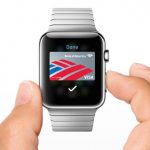
The big names in tech are falling over themselves to get new payment systems out of the door at the moment. At MWC, Sundar Pichai confirmed Android Pay is on its way, and we've also learned about Samsung Pay from the Barcelona event. The convenience of paying with a smartphone is undeniable, but there are unavoidable security concerns.
Having been adopted by millions of Americans -- and with plans to expand into Europe and beyond -- Apple Pay is serving to highlight important security problems. Lax verification systems used by banks coupled with criminals exploiting stolen credit cards and IDs mean Apple Pay is used to make millions of dollars worth of fraudulent purchases. So how does it work?
Sofia Elizabella's Bio
Sofia Wyciślik-Wilson is a queer, transgender journalist based in Poland. She has been writing about technology for more than two decades, and after years working for magazines, her writing moved online. She is fueled by literature, music, nature, and vegetables. You can find her on Bluesky and Mastodon. If you like what you read, you can Buy her a Coffee!
© 1998-2026 BetaNews, Inc. All Rights Reserved. Privacy Policy - Cookie Policy.