

Samsung's 128-gigabyte UFS 2.0 memory promises faster smartphones


Samsung has announced that it has started mass-production of 128 GB ultra-fast embedded memory. Described as an industry first, the memory is based on the Universal Flash Storage (UFS) 2.0 standard and is 2.7 times faster than the commonly used eMMC 5.0.
With performance of 19,000 IOPS (input/output operations per second), the memory offers sequential read and write speeds comparable to SSDs. Despite this, the memory draws half the level of power of existing mobile memory.
Google aims to secure enterprise BYOD with Android for Work

Android has successfully secured its place as the most used mobile operating system. With this in mind it should come as little surprise that more and more people are bringing Android devices into the workplace -- and for IT departments this can be something of a security nightmare. Today Google announces Android for Work with the aim of grabbing the BYOD (Bring Your Own Device) market and making Android more secure and manageable in the workplace.
What does this mean? Work profiles are being introduced to keep business apps and data separate from each other, so employees can use a single device to manage their personal work life. For both employer and employee this brings a number of advantages.
Microsoft Malware Protection Center helps take down Ramnit botnet

Ramnit, a botnet that infected millions of computers around the world, has been tamed, thanks in part to Microsoft Malware Protection Center. The takedown operation was a collaboration between Microsoft, Europol, Symantec and others, and it successfully stopped the malware which worked by disabling virus protection before stealing banking details and personal information from infected machines.
With an estimated 3.2 million computers infected globally, Ramnit has been used by cybercriminals the world over, but the majority of infections were found in Britain. The botnet was brought under control by shutting down several servers used by the group responsible for Ramnit.
Mobile transfer speeds hit 1Tbps over 5G

If you curse the speed of your mobile data connection, prepare to shake with fury, turn green with envy, and yearn for a time machine. Forget 3G, forget 4G; at the University of Surrey in the UK, researchers have harnessed the power of 5G to establish a data transfer rate of one terabit per second.
At this speed it would be possible to download a Blu-ray quality video in under a second, but it's likely to be some time before we have the chance to experience these sorts of speeds via our handsets.
Exciting new experimental apps emerge from Microsoft Garage

Microsoft Garage is home to all manner of innovative projects from Microsoft employees, and today a new batch of projects has been unveiled. As Garage is a cross-platform venture, there are apps for Windows Phone, Android and desktop Windows, and the myriad tools cover everything from app development to the weather.
On the productivity front, Mouse Without Borders is a name that might seem familiar. Strictly speaking, this is a re-release rather than a new release, and the utility makes it possible to control up to four computers with a single keyboard and mouse by acting like a virtual KVM switch. If this isn’t your sort of thing, there are plenty more tools to explore.
Reddit imposes ban on non-consensual sexual content

If you want to post naked pictures or videos of people on Reddit without their consent, you only have a couple of weeks to do so. As of March, the site is imposing a ban on content of an explicit nature that the subject has not given permission to be posted.
The cleanup of the site comes hot on the heels of news from Google that explicit content will be banned from Blogger. It also comes in the wake of last year’s Fappening which saw a glut of naked celebrity photos leaked online.
Google unveils a redesign after 1,000 Chrome Experiments

Chrome Experiments is now entering its sixth year and is home to hundreds of coding experiments that help to make the Internet a more fun and enjoyable place. Ten hundred in fact. To celebrate reaching the milestone of 1,000 experiments, Google is not only launching a new experiment that shows off all of the rest, but also rolling out a redesign.
The redesign is about more than just a new look, it's also about emphasizing the fact that Google wants to be part of every platform available. It's a Polymer-based redesign that works equally well on large-screen-desktops and small-displayed mobiles and is Google's new way to showcase the best in HTML5 and JavaScript.
Microsoft releases OneDrive API for cross-platform cloud storage development

Today Microsoft launches a new OneDrive API, opening up its cloud storage service to a wider range of developers. The API can be used to integrate OneDrive into apps running on Android, Windows, iOS and the web, and there is a focus on efficiency with minimal calls needed to keep files in sync.
The API has already started to roll out to a number of Microsoft apps, and the company is keen to ensure that all developers have access to the same set of tools. There are a number of new features to be found in the API which can be easily added to existing apps and services.
No sex on Blogger please, we're Google

Blogger users risk having their blogs removed from public listings if they feature graphic nudity or explicit content. Starting on March 23, any Blogger blog found to contain offending pictures or videos will be converted into a private blog that can only be seen by the owner and those, erm, explicitly invited to see it.
Google emphasizes that no content will be deleted from blogs created before March 23, 2015, but is encouraging blog owners to take action. It's a different story for any blog set up after this date.
Twitter lends its support to Net Neutrality campaign

Many prominent groups and figures have given their backing to the fight for net neutrality. Today Twitter reveals why it supports the proposals put forward by the FCC chairman Tom Wheeler, just a few days ahead of a vote that will decide whether they will be adopted by the FCC. The aim is to "protect the open Internet as a place for innovation and free expression".
Twitter's public policy manager, Will Carty, says that protecting the open architecture of the internet is essential for the US to remain competitive and to allow freedom of speech. He says that providing a voice to those who would not otherwise have a platform is at the heart of Twitter, and this is just one of the reasons for supporting the net neutrality proposals.
Facebook's privacy policy breaks the law in Europe

There are many things that Facebook finds itself accused of on a regular basis. Unfairness to different groups, censorship of content, insensitivity, and endless problems surrounding its attitude to privacy and handling of user data. It seems that concerns about privacy were well-founded as a new report finds that the social network violated European law. Analysis carried out by the Belgian Privacy Commission and ICRI/CIR says that Facebook breaks the law in Europe in a number of ways. As well as placing too many expectations on users to be able to change settings for themselves.
Facebook is also accused of failing to give people the ability opt out of certain privacy-invading features. Back in January, Facebook made some changes to its privacy policies and also introduced simplified documentation. The report found that rather than cleaning up its act, Facebook merely highlighted some of its old, existing practices. The social network is criticized for its "complex web of settings", for failing to explain what is meant when users are told that their data will be used "for advertising purposes", and for not allowing people to opt out of Sponsored Stories and location sharing.
The next Linux kernel is Linux v4.0, codename 'Hurr durr I'ma sheep'

In the spirit of democracy, Linus Torvalds recently started a poll on Google+ to decide on the version number of the next Linux kernel. Should it be Linux v3.20 or Linux v.4.0? Well, the people have spoken, and Torvalds has listened -- albeit somewhat reluctantly.
With 56 percent of the vote, v4.0 came out on top, so that's what the next version will be called. Torvalds made the revelation at the same time as announcing the availability of Linux 4.0-RC1. Oh... and it's codenamed "Hurr durr I'ma sheep".
LG launches mid-range Magna, Spirit, Leon and Joy Android phones

Mobile World Congress (MWC) kicks off next week, but ahead of the big event LG announces a quartet of mid-range Android handsets. Each of the four phones runs Android 5.0 Lollipop and each is available in LTE and 3G variants -- the former has a metal rear cover, and the latter's is plastic.
The Magna, Spirit, Leon and Joy all share something of a similar look and LG describes the range as combining the "perfect balance of style and usability". At the top of the current batch is the LG Magna, which boasts a 5-inch screen, 1.2GHz or 1.3GHz quad core CPU (exact specs are region-dependent), 1GB RAM and 8GB of storage.
Windows 10 build 10022 screenshots leak along with 10014 release notes
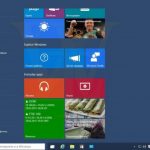
It has been a few weeks since Microsoft released the Windows 10 Technical Preview Build 9926, and Windows Insiders are now champing at the bit for the next version. Mobile users have been kept happy with the release of Windows 10 Technical Preview for Phones, but desktop and laptop users now have some more snippets to whet their appetites.
Over the weekend, screenshots from a couple of new builds were leaked online by the renowned Wzor. First of all we were treated to a glimpse of build 10014, and shortly afterwards images of Windows 10 Professional Technical Preview Build 10022 appeared. Another revelation is a set of release note relating to build 10014. So what do we have to look forward to?
OS X, iOS and Linux have more vulnerabilities than Windows

It might come as something of a surprise, but Windows is more secure than not only Apple's iOS and OS X, but also Linux. I'll just let that sink in for a moment...
Windows, the operating system ridiculed for its vulnerabilities and susceptibility to viruses is actually more secure than the supposedly Fort Knox-like Linux and OS X. This startling fact comes from the National Vulnerability Database (described as the "US government repository of standards based vulnerability management data") which details security issues detected in different operating systems and software titles.
Sofia Elizabella's Bio
Sofia Wyciślik-Wilson is a queer, transgender journalist based in Poland. She has been writing about technology for more than two decades, and after years working for magazines, her writing moved online. She is fueled by literature, music, nature, and vegetables. You can find her on Bluesky and Mastodon. If you like what you read, you can Buy her a Coffee!
© 1998-2026 BetaNews, Inc. All Rights Reserved. Privacy Policy - Cookie Policy.