

Twitter tests 'Buy' button to allow purchasing via tweets


It has been the subject of speculation for some time now, but today Twitter finally announces that the rumored "Buy" button will soon be making an appearance in timelines. The feature has been made public through a blog post that explains that the button will initially be pushed to "a small percentage of US users", but reassuring everyone else that coverage "will grow over time".
What does this mean? Well, that you will be able to buy things via tweets, essentially.
Calling all RSS fans! Inoreader now supports Microsoft OneNote

They said RSS was dead, but when Google decided to close the door on Google Reader, there was a vocal clamoring of disapproval. A flood of tools popped up to filled the vacuum left behind by the absence of Google's service and one that quickly grew in popularity is Inoreader -- thanks, at least in part, to the fact that it can be customized to look and work in much the same way as Google Reader.
No RSS reader worth its salt would be complete without offering integration with a number of other online services of course, and now InoReader benefits from OneNote support.
Facebook celebrates 1 billion daily video views with new view count feature

As demonstrated by the infuriatingly popular #ALS Ice Bucket Challenge phenomenon, video on Facebook is more popular than ever. If you were in any doubt about just how popular these magic moving pictures really are, the social network announces that it is racking up an incredible 1 billion video views every day.
But have you ever wondered how many other people have wasted their time watching yet another video of crazy Russian drivers, drunken debauchery, or amusing animal antics? Wonder no more! Starting this week, Facebook is rolling out a new feature that shows how many views a particular video clip has received.
Microsoft takes down Bing Image Widget after Getty legal action

Following a lawsuit from Getty Images Inc, Microsoft has taken the beta version of its Bing Image Widget offline. The stock image firm had complained that Microsoft's widget infringed on copyright by enabling people to embed protected images in websites without attribution or authorization.
In opting to willingly pull the widget, Microsoft may have managed to sidestep at least some of the brunt of the legal action taken against the company. Getty had called for the immediate blocking of the tool and filed a lawsuit at US District Court for the Southern District of New York.
Watch out! More iPhones stolen than any other smartphone

New figures released by the Home Office and published by the BBC show that if you own an iPhone 5, 5C, 5S and 4S in England or Wales, you are most at risk of having your smartphone stolen. If the trend continues, it is likely that the upcoming iPhone 6 will also prove similarly attractive to thieves. Figures show that there were a total of 742,000 phone thefts between 2012 and 2013, and that the largest numbers of theft involved Apple's handsets. Interestingly, despite massively dwindling sales, the next most popular phone to be pocketed by thieves was the Blackberry 9790.
While the iPhone is the most appealing to the light-fingered, the figures show that Apple's claim to be "leading the industry in protecting" seems to be true. New security features introduced in iOS 7 led to a noticeable drop in iPhone thefts, but it still remains the most commonly stolen handset. Apple told the BBC:
Facebook rolls out Privacy Checkup feature to users around the world
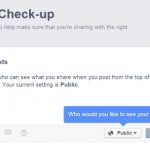
We now live in an age where privacy is a key concern. Facebook has long been criticized for its somewhat lackadaisical attitude to the privacy of user data, and over the years various steps have been taken to afford Facebookers greater control over who is able to see their status updates and other data. First announced back in May, the social network is now rolling out its Privacy Checkup feature around the world, giving users the chance to check exactly who they are sharing information with.
The new tool does not really introduce any new features, but it does bring existing security controls to the fore. Privacy Checkup should make itself known over the next few days by popping up when you use Facebook, but it can be accessed whenever you want by clicking the privacy lock icon to the upper right of the page. For some reason, the face of Privacy Checkup is a friendly blue dinosaur, sort of like a prehistoric version of Clippy.
Apple's September 9 event to stream live -- but only to Apple devices

It was all but expected, but Apple has confirmed that Tuesday's "special event" will be streamed live online. This in itself is nothing particularly surprising, but the small print at the bottom of the launch announcement page will upset many people -- if you're not already packing an Apple device, you're not invited. "Live streaming video requires Safari 5.1.10 or later on OS X v10.6.8 or later; Safari on iOS 6.0 or later. Streaming via Apple TV requires second- or third-generation Apple TV with software 6.2 or later". Android, Windows, and Linux users are excluded.
At the event, which kicks off at 10am PT on Tuesday at the Flint Center for the Performing Arts in Cupertino, it is expected that Apple will talk about the iPhone 6 -- possibly two sizes -- as well as a wearable device -- which in all likelihood will be the iWatch. Anyone who is not attending the event will have to either fire up a Mac, iPad, iPhone or Apple TV, or wait for news of the announcements to be written up and posted online.
Facebook to target emerging markets with ads tailored to connection speeds

Equality for all is a utopian ideal, but Facebook has plans to treat its users differently depending on where in the world they are. Specifically, the social network plans to change the way adverts are delivered to people based upon the speed of their internet connection. In a blog post drearily entitled "In High-Growth Countries, Reaching People Based on How they Connect", product marketing manager Brendan Sullivan reveals details of the plans which will make better use of available bandwidth.
Facebook has analyzed internet usage in developing, growing nations, and determined that the majority of people in these areas get online via mobile networks. The speed of connections can vary greatly from place to place leading to a huge variation in experiences. Mark Zuckerberg is already involved in projects designed to help get more people online, but the company is also concerned about keeping advertisers happy. "High-growth countries" offer great potential for income streams, and companies need to be sure that their ads are being seen by the people they target.
Twitpic is closing. You have three weeks to grab your photos and videos

Image and video sharing service Twitpic is closing its doors. Threatened with loss of access to the Twitter API if the company refused to abandon a trademark application, Twitpic has decided it does not have enough clout to take on the microblogging giant. Twitpic founder Noah Everett used a blog post to break the news and give a little background to help explain the move. He stressed that the closure was a difficult decision and thanked users for their support.
The problem seems to stem from Twitpic's name. Everett explains that the company was contacted by Twitter a few weeks ago and asked to give up on the trademark application. The timing is a little strange because, as Everett points out, Twitpic's name has been in use since 2008, and the trademark application was filed the following year. The company managed to fight opposition from some parties, but it seems as though Twitter dealt the killer blow.
Getty Images fires lawsuit at Microsoft for "massive" copyright infringement

Getty Images Inc is suing Microsoft for "massive infringement" of copyright. Microsoft's recently released Bing Image Widget enables people to display images on a website based on search terms. The automatically generated code creates image slideshows and galleries that pull in images from Bing -- Getty's complaint centers around the fact that the widget displays unlicensed images from its catalog that are subject to copyright. The Seattle-based stock image company says that Microsoft has turned the images that can be found online into "a vast, unlicensed clip art collection".
The lawsuit, filed at the US District Court for the Southern District of New York, says that the injury caused to Getty is "incalculable" and calls for the widget to be blocked immediately. The level of damages sought is not specified, but Getty's lawsuit suggests that the company has more than 80 million unique images in its library. Getty has its own image embedding tool, and John Lapham, general counsel for the company, explained to Reuters that it is "only available for non-commercial websites and includes photographer attribution".
Google to cough up $19 million in kids' in-app purchases case

Google is to pay out at least $19 million to Android users whose children were tricked into making expensive in-app purchases on smartphones and tablets. The Federal Trade Commission has been investigating mobile purchases for the last three years, and Apple agreed at the beginning of the year to a settlement. Amazon was also investigated and plans to appeal against the charges. In agreeing to repay the money, Google has effectively admitted that apps available in Google Play may be deceptive.
The brunt of the FTC case centers around the idea that it was not made clear to parents that their children would be able to make purchases within apps without authorization. Many of these in-app purchases are to be found in games where players are encouraged into parting with money in return for extra lives, game power-ups, or to unlock new levels. The FTC complained that since 2011 Google had indulged in unfair practices that left parents with bills of hundreds of dollars.
91 percent of Americans concerned about online privacy -- 7 percent would change their name as protection

There are lots of reasons to be concerned about privacy online -- not least the spying carried out by the NSA and other governmental agencies. While some companies are trying to stick up for the rights of their customer, many web users have now taken to censoring themselves. New research by WP Engine shows that the level of paranoia is higher than many people may have thought -- a staggering 91 percent of Americans are concerned about their online privacy. This is interesting in itself, but the steps that web users are willing to take if they feel their privacy is threatened makes for particularly interesting reading.
Of course there are some people who would take things to the extreme, going as far as changing their name in a bid to protect their privacy, but others would take slightly less drastic action. In fact only five percent of those surveyed say they would take no action to protect their privacy. The most common reaction to feeling threatened is to change passwords (79 percent of people), but some would go further, admitting they would consider changing their email address (48 percent) or change their credit cards (48 percent). Well over a third of those surveyed (42 percent) said they would be willing to delete all of their social media accounts. Three percent of people indicated that they would even move house as a result of having their privacy threatened online.
Stop! Don't buy that Xbox One just yet! Free game ahoy!

If you were planning on picking a new Xbox One console tomorrow, hold off on that purchase. Wait for a few more days and you can pick up a game worth up to $60 free of charge. This is the latest attempt by Microsoft to boost the popularity of its console and nose it ahead of Sony's PS4. It's likely that this offer will go down well with customers as, apart from the $60 upper price limit, every disc-based game is eligible.
The offer runs from Sunday 7 until Saturday 13 September and it applies to standalone consoles as well as bundles. You could pick up a bundle that already includes a game and still bag yourself another one free of charge. Here's the small print in full, although it's a pretty straightforward offer:
Box integrates with Office 365 thanks to new beta tool

Office 365 users are encouraged into storing their files in one of two locations -- locally or on OneDrive. Microsoft's own cloud storage service is neatly integrated into its office suite, just as it is into Windows 8.1. There are ways to integrate other services such as Google Drive, but today Box launched a beta version of Box for Office 365 in a bid to bring the cloud service to Office. The new beta was announced at Box's BoxWorks event. There are also plans to add Box integration to Office for iPad, although no timescale has been suggested for this.
The idea behind integrating Box into Office 365 is simple, but the beta page explains: "With our new Box for Office desktop app integrations, you can easily open, edit, share and save any file from Box seamlessly within Word, PowerPoint and Excel".
Isis Wallet to become Softcard to avoid ISIS extremism association

When you see the letters ISIS, what is it that you first think of? Is it the Egyptian goddess of health, marriage and love? The Institute for the Scientific Investigation of Sexuality? Or is it the Islamic State of Iraq and Syria, the jihadist group that has been in the news for some time now? It's quite common for there to be unfortunate sharings of names and acronyms, and it's something that Isis Wallet, the NFC payment service, has fallen foul of. To avoid being associated with the Middle East group, the service is being renamed to Softcard.
The rebranding has not come completely out of the blue. Back in July, company CEO Michael Abbott explained: "Recently, we have observed with growing concern a militant group whose name, when translated into English, is Islamic State of Iraq and Syria -- often referenced by the acronym ISIS. We have no interest in sharing a name with a group whose name has become synonymous with violence and our hearts go out to those who are suffering".
Sofia Elizabella's Bio
Sofia Wyciślik-Wilson is a queer, transgender journalist based in Poland. She has been writing about technology for more than two decades, and after years working for magazines, her writing moved online. She is fueled by literature, music, nature, and vegetables. You can find her on Bluesky and Mastodon. If you like what you read, you can Buy her a Coffee!
© 1998-2026 BetaNews, Inc. All Rights Reserved. Privacy Policy - Cookie Policy.