

Post Heartbleed, Tor could significantly reduce capacity -- but is it enough?


It seems that there have been few big names left unaffected by the Heartbleed bug in OpenSSL. Google may have rushed to patch the flaw, but the number of websites and services that fell foul of the discovery is staggering. It seems that even stalwarts of security are finding themselves in troubled waters, and this includes anonymizing service Tor.
Put very simply (very, very simply!), Tor works by not only encrypting data that is transferred online, but also bouncing it around a number of servers, making it all but impossible to trace to a particular user or computer. It transpires that some of the Tor nodes that are used in the process are running versions of OpenSSL that are vulnerable to Heartbleed, and this has led to calls for the affected nodes to be closed down. Writing to the Tor mailing list, developer Roger Dingledine suggests that up to 12 percent of the network's capacity may be lost if all of the vulnerable nodes are taken offline.
Nokia issues warning for potentially shocking Lumia 2520 charger
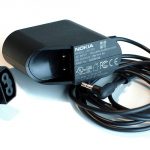
Nokia is warning owners of the Lumia 2520 tablet that they should stop using the European and UK versions of the AC-300 charger. The warning affects customers in Austria, Denmark, Finland, Germany, Russia, Switzerland and UK, with tablets owners being warned to "suspend use of the charger until further notice". At the moment there is no word on whether or not a full recall will be made, but the problem also affects the Lumia 2520 travel charger that was available in those countries and the US.
Unlike other charger problems that have emerged in recent times, Nokia's warning does not relate to an overheating issue, but the risk of electric shock. This time it has been determined that in "certain conditions" -- which Nokia does not specify -- the charger's plastic cover could work loose and come off, exposing internal components that "pose a hazard of an electric shock if touched while the plug remains in a live socket".
New CEO ahoy! Mozilla grows a Beard… will balls follow?

Emerging from what it describes as an "unexpected leadership transition", Mozilla announces its new CEO, albeit an interim replacement. The vacancy opened up a couple of weeks ago after the departure of Bendan Eich following outrage from developers that someone opposed to gay marriage should be placed at the head of a company. The pitchfork wielding and flaming torch brandishing mob, got their way as Eich "stepped down".
It's not really clear whether he jumped or whether he was pushed -- what is publicly announced is not necessarily representative of what has taken place behind boardroom doors -- but there's now a new man at the top. Announced with the Mozilla Blog, Chris Beard's appointment is apparently something that had been under consideration for some time: "we began exploring the idea of Chris joining the Board of Directors some months ago." Executive Chairwoman Mitchell Baker described Beard as someone who has "been actively involved with Mozilla since before we shipped Firefox 1.0, he’s guided and directed many of our innovative projects, and his vision and sense of Mozilla is equal to anyone’s".
Google is a bully, but that's not necessarily a bad thing

Google has a lot of mud thrown at it, and while a lot of it slides off, there is a good proportion that sticks. There are a variety of accusations levelled at the search giant -- evil, self-serving, monopolistic, nosey, invasive, overbearing, corporate, et cetera, et cetera -- but could it be that the power the company wields is actually a good thing? Could Google use the sway it holds over website owners to make the web a better place? But before we start praising Google, there's no harm in sticking the boot in first, eh?
For many people, Google is a bully. In the constant search for page views, ranking in Google matters -- it matters a lot. My colleague Joe Wilcox argues that writers should write for themselves and their readers rather than Google -- something I would strongly advocate -- but until this notion gathers momentum, there are still countless bloggers panicking themselves silly about what impact the latest search algorithm changes will have on their position in search results. It can be a constant game of catch-up, requiring endless changes to optimize content for maximum visibility -- all too often at the expense of readability and reader experience.
The most popular stories on BetaNews this past week: April 6 -- April 12

Microsoft was in the headlines this week not for launching new products but for, finally, bringing an end to support for Windows XP. Yes, the now ancient and decrepit -- although still much loved and used -- operating system is no more. It will be interesting to see how long it manages to survive now it has been officially dropped -- some are suggesting that a move to Linux might be in order, or even a switch to Chromebook. But, of course, it hasn’t all been about XP. After the announcements at Build, Joe Belfiore revealed on Twitter that developers will be able to get their hands on Windows Phone 8.1 in the "first part of April".
There is also renewed interest in Windows 8.1 following the release of Update, and Microsoft published a guide to making the most of the new features and options. Will the operating system be viewed as fondly as XP in years to come? Only time will tell. Working in conjunction with Google, Microsoft also gave a new and improved YouTube experience to Xbox One owners.
will.i.am has a self-designed smart watch ready to launch soon

Rapper, producer, Black Eye Pea and all round tech-loving futurist tech-head will.i.am has designed his own smart watch which will be ready for launch in the coming months. The music titan has, apparently, self-designed and self-funded a project which should lead to a release in July. Very little is known about the device at the moment, but it has made a few appearances on TV screens that give an intriguing glimpse of what's to come. Unlike other wearables, this one looks like it will not require tethering to a smartphone -- it will stand on its own two feet.
It's worth pointing out for non-UK residents that product placement (endorsements, 'support from', 'promotional consideration' or however you want to view it) does not really exist in the UK in the same way as in the US and some other countries. But that said, will.i.am has been spotted on more than one occasion, "subtly" interacting with a device strapped to his wrist. Viewers of The Voice in the UK (yeah, sorry, I've been known to dip into it from time to time) will probably have noticed him fiddling with his wrist, and reference has been made to his actions on a couple of occasions.
The most popular stories on BetaNews this past week: March 30 -- April 5

It's difficult to deny Microsoft at least some of the limelight this week as the Build developer conference generated some interesting news. Bringing Windows version numbers in line with each other, Windows Phone 8.1 was finally revealed, complete with a notification center and Siri-like Cortana. The highly anticipated Windows 8.1 Update (which you may have heard something about) was official unveiled and given a launch date of April 8. Wayne, for one, liked what he saw.
Microsoft came over all open source, making the Roslyn compiler as well as WinJS freely available. Brian was pleased with the tech giant's latest moves, proclaiming Microsoft is now back. Build also gave us a sneaky glimpse of an upcoming, but as yet unnamed, version of Windows that features the return of the Start menu -- all of this chopping and changing is getting confusing. Maybe next on the list of things to do with Windows will be getting rid of those apps and features that should have been killed some time ago.
Nest halts sales of smoke and carbon monoxide alarm amid safety concerns

When people invest in a smoke alarm, it is done with the intention of making the home safer. Should a fire start during the night, for instance, it's good to know that there's something there to alert you. While most smoke alarms are fairly basic affairs, there are some more advanced models available, including from Nest Labs -- the company behind intelligent thermostat controls and the Nest Protect smoke alarm. But there are safety concerns about the device which could mean that the sounding of an alarm is delayed, leaving owners to burn to a crisp in their beds. Perhaps.
In a message on the Nest website, the company's CEO Tony Fadell explains that a feature of the smoke alarm is being disabled and the sale of units is to be stopped. Nest Protect -- which has the tagline "Cares for your family as much as you do" -- includes a feature called Nest Wave. The idea is that should you accidentally set off the alarm by burning the toast, you can shut it up by waving your hand in front of the device. The problem is that the feature can be, to use Fadell's words, "unintentionally activated".
Microsoft changes its mind yet a-bloody-gain, shows off resurrected mini Start menu

Build 2014 has seen lots of revelations already -- a free version of Windows is on the cards, universal apps for different devices will make the lives of developers rather easier, and a raft of new Windows Phones are just around the corner -- but there is one that is particularly intriguing.
During the keynote speech today Microsoft also revealed something else. That it is changing its bloody mind yet again. The Start menu is going to make a return. Yep. The Start menu that was shunned is coming back.
Stop Google+ broadcasting the number of profile views you've received

It has often been said that making use of any social network is an exercise in vanity or narcissism. The likes of Facebook, Twitter, Google+ and other similar tools give anyone a platform to voice their views, concerns, complaints and anything else they feel inclined to get off their chest. But what matters about each of these social networks -- for the vane narcissist, at least -- is the number of people who are actually reading the words that are published. Unburdening online can be a wonderfully cathartic experience, but all the better if it is read by tens of thousands of people rather than just hundreds.
Each network gives you its own way to keep track of your potential audience. On Facebook, it's easy to keep track of the number of friends you have, while on Twitter it's the number of followers that's important -- as well, of course, as the coveted blue verified badge. Similarly on LinkedIn, it is easy to see how many people you’re connected to, and in the case of Google+ you can check how many people have circled you. But then there is the matter of how these figures translate into actual views.
LinkedIn 'hacking' tool Sell Hack no longer exposes user email addresses

One of the great things about social networks is that it is possible to connect with people without the need to share email addresses. This means that you can remain "friends" with someone on Facebook, but not get to the point where you're handing out your email address and worrying about checking your inbox. The same is true of LinkedIn, but the difference with this "professional network" is that you're probably connecting with a larger number of people you would rather didn’t have your personal contact details. This comforting level of security was wiped out by Sell Hack.
This free browser extension -- available for Firefox, Chrome and Safari -- could be used to expose the email address associated with any LinkedIn account, regardless of whether you are connected to the person you are, essentially, spying on. Perhaps understandably, this caused a degree of upset and resulted in LinkedIn sending a cease and desist notice to the extension's developers. Sell Hack adds a "Hack In" button to social network pages which, when clicked, reveals the email address used by the account owner to create their page.
Switching to Garamond could slash US government printing costs by almost a quarter

A Pittsburgh teenager has worked out that the US government could slash millions from its costs by making a simple change to IT policy. Suvir Mirchandani's suggestion is laughably simple, but it is one that should hold water -- although I'll admit to not fully following through with the math to determine the precise levels of savings that could be achieved. Suvir proposes that a move away from the most commonly used fonts, such as Times New Roman, in favour of a lighter typeface such as Garamond could reduce the US government's printing costs by a colossal 24 percent.
There can be few printer owners who have not cursed the price of ink -- it is one of the costs of ownership that can creep up on the unsuspecting printer user. You might think that the paperless office was, if not here, well on its way to arriving. It's something that has been talked about for years now, and there has been a general move toward eliminating some paper versions of documents in favour of electronic copies. But there are still an unbelievable number of printed documents out there.
5 features of Windows that need defenestrating -- including IE

Defenestrating? Pretentious? Moi?! How could you?!
Don't get me wrong, I love Windows. A fanboy I am not -- I'll quite happily pick holes in Microsoft's operating system -- but for the most part I do love it. While I have a great deal of time for Windows, it doesn’t mean there isn't room for improvement. By this I don’t mean that Microsoft needs to bring back the Start menu or start copying features from OS X or Linux, rather that it's time to have spring cleaning. In just over a week, Windows XP will be consigned to the OS graveyard, but what about Windows 8.1? The latest version of Windows doesn't need to be killed, but there are lots of features that need to be put out of their misery.
The most popular stories on BetaNews this past week March 23 -- 29

Microsoft has flirted with Apple's iPad on a couple of occasions this week. Early on in the week there was the case of a 12-year-old girl who wanted nothing more than an iPad Mini. Microsoft stepped in and managed to convince her that the Surface 2 was the way ahead. Way to spin! But this was not the big Microsoft-iPad news. In a move that many saw as almost sacrilegious -- but one that was welcomed by just about the same number -- Microsoft Office, finally, made its way onto iPad. This wasn't the only release from Microsoft this week -- the source code for early versions of MS-DOS and Word for Windows was made publicly available. Having faced criticism for the way it approached a recent investigation, Microsoft pledged that it would no longer read customer emails during the course of an investigation without getting law enforcement involved.
Windows XP may be in its death throes, but this isn't going to stop people from using it. To help keep these hardy fellows safe, Malwarebytes announced that it would keep its users protected for life. It's not just XP that Microsoft is lowering into the grave, Office 2003 also finds itself six feet under. As the door on XP closes, another one opens -- or closes, depending on how you look at it. The purchase of Nokia's Devices and Services division is due to close in April after initially facing some delays.
The cheap, cheerful and lovable Microsoft Wireless 1850 mouse [Review]
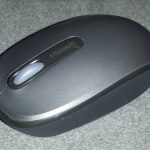
What can you get for $15 these days? Not a lot, really. A few Starbucks, perhaps, a burrito and a couple of slices? Or you can get yourself a cheaper, almost throwaway, replacement mouse to chuck in your laptop bag. This is the bill that the Microsoft Wireless 1850 fits. The mouse was announced just recently, and we've got our hands on one to put through its paces. To cut to the chase, this is a perfectly acceptable mouse, but it ain't going to blow your mind.
This is a mouse designed with the pocket in mind in more ways than one. Yes, it's super low-cost, but it's also super lightweight; and I mean that both in terms of mass and features. Oh, at this point it's worth highlighting something I touched upon the other day when talking about the price of digital downloads. While in the US this mouse costs $14.95, over here in the UK it has a £16.99 price tag. Sure, US buyers have to factor in taxes, but $14.95 should translate into about £9, so the trip across the ocean from One Microsoft Way has resulted in the price almost doubling!
Sofia Elizabella's Bio
Sofia Wyciślik-Wilson is a queer, transgender journalist based in Poland. She has been writing about technology for more than two decades, and after years working for magazines, her writing moved online. She is fueled by literature, music, nature, and vegetables. You can find her on Bluesky and Mastodon. If you like what you read, you can Buy her a Coffee!
© 1998-2026 BetaNews, Inc. All Rights Reserved. Privacy Policy - Cookie Policy.