

The spying game: Obama announces watered-down NSA surveillance reforms -- but will we see any difference?


Unless you have been living under a rock for many months, you couldn't help but be aware of the activities of the NSA. They certainly knew what you were up to, even when you were hiding under that rock. Campaigners have been calling for reform ever since Edward Snowden blew the lid off previously secret surveillance of telephone calls and web activity of millions of users in America and around the world. In an address at the Justice Department, President Obama gave details of some reforms to surveillance, but at the same time remained defensive of the National Security Agency.
Referring to surveillance (or spying, if you will) carried out in the 1960s, Obama said: "In the long twilight struggle against communism, we had been reminded that the very liberties that we sought to preserve could not be sacrificed at the altar of national security". The speech continued, making the obligatory nods to terrorism, "weapons of mass destruction" and September 11th; all very emotive stuff. This heartstring tugging was cited as the reason the intelligence community in general -- including the NSA -- needed to up its game. They "suddenly needed to do far more than the traditional mission of monitoring hostile powers and gathering information for policymakers."
The most popular stories on BetaNews this past week - January 12 -- 18

Now that CES 2014 is completely out of the way (although there was still time for me to pick my favorite tech from the show), it's back to business as usual. For many a company, business as usual means security issues, and Microsoft suffered at the hands of The Syrian Electronic Army. Again. The earlier security issues at Target were found to be far worse than first thought, affecting an estimated 100 million customers, and a potential security flaw was identified in Starbucks' mobile apps. For the antivirus side of protection, Kaspersky's Internet Security was named product of the year by AV-Comparatives.
Hoping against hope that new tech isn’t embraced for the sake of embracing new tech, I pondered the need for curved screens. In the mobile world, KitKat started to roll out to the Samsung Galaxy Note 3 and also announced the company somewhat deceptively named Galaxy Tab3 Lite, which is in fact no lighter than the non Lite version, other than in terms of hardware specs.
Facebook copies Twitter and introduces trending topics
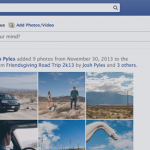
It's starting to feel as though the myriad of social networks that exist are homogenizing. As one site introduces a feature, it is not long before the rest follow suit. Now it is Facebook's turn. Occasional leader, but often a follower, Facebook now boasts a trending topics feature. Simply known as Trending, the new feature borrows the idea used by Twitter and countless news websites to provide a constantly updating list of topics that people around the world are talking about.
In fact, Trending acts as a sort of blend between Twitter's Trends feature coupled with content suggestions. This is not a straight list of the subjects that are proving most popular around the world, but, theoretically, the list should be personalized with content that you have an interest in. That’s the theory at least.
Samsung adds the bigger, heavier Galaxy Tab3 Lite to its 7-inch tablet line-up
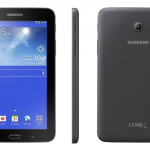
There's no shortage of choice when it comes to 7-inch tablets, and Samsung is extending the selection even further with the release of the Galaxy Tab3 Lite. As you've probably discerned from the not-particularly-enigmatic name, this is a device closely based on the original Galaxy Tab3, albeit in a thinner lighter design. Or so you might think. Despite the name, the Tab3 Lite is not smaller in terms of dimensions or mass. In fact it is both larger and heavier than its predecessor. Here, 'Lite' refers to trimming back on the hardware spec.
Looked at in terms of size, it looks as though the Tab3 Lite has gained a little over the holiday period. The Lite model is more than 3mm wider, over 5mm taller and 10g heavier. The new device is 2mm thinner than the Tab3, but it is the other specs that make for interesting reading. A 2 Megapixel rear camera replaces the 3 Megapixel unit, while on the front you'll find that the camera has disappeared entirely.
Google helps you stay legal, makes it easier to track down images you can use for free

There is a common misconception that anything that is made available online is fair game for use by other people. Found an image you like on a website? Why not just grab a copy and use it on your own? In some cases this is not a problem and the owner of the image will not mind others re-using imagery in whatever way they want, but this is certainly not always the case.
Google Image Search has long made it possible to filter results by the type of license they have, but now things have just got a whole lot easier.
Tumblr takes a leaf out of Twitter's book, introduces @ mentions

Today Tumblr introduces a new feature that makes it easier to interact with other users of the blogging/photo-sharing/Twitter-on-steroids/sort-of-social-network service. It's something that has been done in plenty of other places, most notably Twitter and, more recently, Facebook, but Tumblr now includes the option to @mention other users. This is not a feature that is going to cause outbreaks of mass hysteria around the globe, but it is certainly useful, and brings the service in line with many of its competitors.
The idea is very simple. When writing a new post, type an @ symbol and as you continue to type, a list of suggested users will be displayed ready to select from. Any user who is mentioned in a post will receive a notification that someone is writing about them, and this opens up a new realm of interactivity for Tumblr.
Twitter gets an online interface revamp for 2014
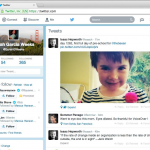
It was announced very casually with very little fanfare. Twitter is getting a new look. It is in the process of rolling out around the world and when the revamped interface hits your account you'll find that the new look closely mimics that found in the iOS and Android apps. The redesign follows a recent update to the mobile apps, and while there are not many dramatic changes, the standardized look helps to create a more uniform experience moving between devices.
The tweet composition section is now found to the left hand side of the screen -- gone is the pop-up box in favour of an inline option. The two-column design has a very neat look to it, and does an excellent job of keeping related data together. The left hand column houses the profile box and composition field, and beneath this you'll find suggestions for who to follow, as well as a list of trending topics.
Why I hope curved screens don't become the norm

One of the most memorable presentations given at CES this year saw Samsung showing off its latest curved screen TV. Sadly for the tech giant it was Michael Bay's on-stage brain fart that most people took away from the talk (if I can just leave you with the delightful image of taking away someone's fart with you...), but Samsung would much rather we concentrated on the display technology it was showcasing. It excited a great many people, and for some it is seen as the way ahead and something we could see a lot more off. I sincerely hope we don't, particularly on the desktop.
Why? There are lots of reasons that I am opposed to the idea of curved screens, particularly when used for TVs and monitors -- smartphones are slightly different, but I'm not too keen on that either. Curved screens are not really a brand spanking new technology; there have been curved cinema screens for a number of years now, and I can see the benefit of the curve in this setting. Used in a theater the curve eliminates the problem of trying to find a seat right in the center because it matters far less where you are in relation to the screen. Everyone gets an equally good view of the action. It is a democratizing technology. So why am I down on it?
My favorite product from CES 2014 [Mark]
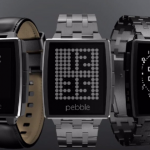
There has been a lot of talk about 2014 being the year of wearable tech. I'm yet to try out Google glass, but I can see its appeal -- providing the price drops a little! -- yet what interests me are smart versions of existing things we already wear. (I will grant you that Glass kind of falls into this category, but not everyone wears glasses) There have been quite a lot of smart watches over the last year, but they have a tendency to be rather ugly, bulky, or require an additional, specific device in order to function correctly. Yes, Galaxy Gear, I'm pointing at you.
But things are starting to evolve quite nicely. The new Pebble Steel is a spectacular smart watch that overcomes the looks issue that has blighted other models. The three models -- black leather, stainless steel and black matte -- all look great, and don’t stand out for the wrong reasons. This is a smart watch that looks like a watch rather than a smart watch, and this is where wearable technology stands or falls. An incredible piece of technology should be capable of just blending in and getting on with its job rather than jumping up, grabbing your eyeballs and demanding LOOK AT ME!
The most popular stories on BetaNews this past week: January 4 -- 11

This was a week dominated by CES, and there were a huge number of announcements about upcoming hardware. Lenovo took the wraps off the (slightly) heavyweight ThinkPad Tablet 8, but any excess weight was countered by the ultra-light ThinkPad X1 Carbon ultrabook. HP's range of business desktops even included one device running Android, while Nvidia's new Tegra K1 promises much for the mobile market.
Competitor Qualcomm revealed two processors designed for entertainment while Pure's Connect platform opens up the possibility of using any streaming music service with its wireless speakers. Smart TVs are set to benefit from the addition of Roku software, but it seems that the technology du jour is 4K, with a new 4K laptop from Toshiba joining the streams of 4K TVs and monitors.
How to disable Gmail's new email via Google+ option

Google recently made an interesting change to Gmail, making it possible for users to send messages to anyone in their Google+ circles. If the prospect of receiving emails from people you don’t know concerns you -- they don’t even need to know your email address -- you might like the idea of locking down your account. Thankfully, Google has made it quite simple to put restrictions in place. So if you'd like to avoid a possible influx of unsolicited emails, here's how to go about it.
Before we get started, it's worth pointing out that you may not see these settings in Gmail yet. This means that the feature has not been enabled for your account yet -- which means you don’t need to worry about receiving messages in this way anyway!
Watching pirated porn streams is not illegal says German government

Dealing with copyrighted material online has long been something of a legal minefield. Whatever your moral position on enjoying copyrighted movies, music, and other content without paying for it, there is usually little argument about whether or not it is actually illegal.
While downloading copyrighted movies from FTP servers, via BitTorrent, or using other means is widely regarded as breaking the law, things are not seen in quite such black and white terms when it comes to streaming content.
Gmail lets you email Google+ users without exchanging email addresses

Assuming you're a Gmail user you'll be aware that there's rarely a need to type out an email address in full. Once a contact is in your address book, you can start typing a name into the To field and suggestions will pop up as you type. But what about those people whose email address you don’t actually have? You may have connected with someone on Google+ but start to type out an email and you suddenly realize you don’t have an address to send to. D'oh! However a new feature that's rolling out could see this frustration becoming a thing of the past.
What’s the solution? Google is keen on integrating Google+ with as many products and services as possible, and now this is spreading to Gmail. You've probably got a large number of contacts on Google+ (well… maybe you have some... Google+ isn't that unpopular!), but it doesn’t necessarily mean that you have their email address. Over the next few days, when you start to type the name of a recipient in the To field, Google+ contacts will be displayed as suggestions in addition to entries from your address book.
Stop with all the transforming, just decide what kind of device you want to be!

It seems that these days it is not enough for a laptop to just be a laptop, or a tablet to be a tablet. I'm not talking about the strange new breed of devices that are capable of running Windows and Android, or the rumors that handsets running Windows Phone and Android might see the light of day (haha! Can you imagine?). I'm talking about the devices that seem to be trying to become best friends with Michael Bay, transforming between multiple modes.
It's not really a new concept. We've already looked at Lenovo's Yoga 11S which can be bent into four different positions. The same company also has the Flex range which has fewer Transformer-like capabilities, but is still more than just your average laptop. At CES 2014 Toshiba decided to up the ante, taking the wraps off a 5-in-1 device.
Nokia taunts Samsung after Michael Bay fluffs his lines
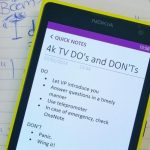
Michael Bay -- yes, he of Transformers fame -- managed to get Samsung some attention with his performance at CES 2014... but not necessarily the sort of attention the company was hoping for. The idea behind the director's appearance was that he would showcase Samsung's latest range of curved-screen TVs. As a director, Bay probably has an eye for such details. He would seem to be well-positioned to extol the virtues of the new ultra-high definition. But it seems that speech making is not a forte of his. A mini-meltdown saw him fleeing the stage after an apparent auto-cue problem.
After attempting to "wing it", Bay fluttered off stage muttering "I'm sorry". He appeared incredibly uncomfortable from the moment he started speaking, but it wasn’t long before he said that the text was "all off". The situation was handled slightly more professionally by the Samsung representative who tried to cajole Bay into explaining how the curved screen would enhance the viewing experience -- but to no avail.
Sofia Elizabella's Bio
Sofia Wyciślik-Wilson is a queer, transgender journalist based in Poland. She has been writing about technology for more than two decades, and after years working for magazines, her writing moved online. She is fueled by literature, music, nature, and vegetables. You can find her on Bluesky and Mastodon. If you like what you read, you can Buy her a Coffee!
© 1998-2026 BetaNews, Inc. All Rights Reserved. Privacy Policy - Cookie Policy.