

Google buys webcam gesture app Flutter


Flutter, the app that lets you control music and movie playback using gestures picked up by a webcam, is to continue life as a Google product. The innovative app is the latest acquisition by the search giant, and comes just three years after the company was founded in San Francisco, California. Flutter is extremely upbeat about the purchase, seemingly keen to reap the benefits of the Google marketing machine.
Flutter CEO Navneet Dalal announces the acquisition on the Flutter website:
Retrotastic! Microsoft uses 18-year-old game Hover to show off Internet Explorer 11

If you can cast your mind back far enough to the dim and distant days when Windows 95 was taking the world by storm, you may well remember Hover. Taking more than a little inspiration from Doom, this fun driving/maze game was buried on the installation CD of Windows 95. It was responsible for the loss of many hours that could have been spent doing something far more worthwhile -- but probably less entertaining -- and it's back! Hover is back!
The game has been revived to show off the capabilities of Internet Explorer 11, and you can try your hand at it -- for the first time or to relive your youth -- by heading over to Hover.ie. But more than this, the game feature touchscreen control so it's also a great way for Microsoft to highlight the causal gaming capabilities of the recently announced Surface 2.
How to secure your Yahoo account with second sign-in and App Passwords

Two factor authentication is all the rage. Google has done it, as has Facebook and LinkedIn. Yahoo is getting in on the action with a couple of security features -- second sign-in verification and App Password.
Second sign-in verification works much as you would expect any similar service to work. Whenever a login is attempted from an unrecognized device, you'll be prompted to enter a code that will be sent to your mobile.
Just how much trust can you put in benchmarks? Is Samsung tricking us?

Benchmarks are important. The quoted figures for any piece of hardware are all well and good, but potential buyers need to know how a hard drive, processors, computer, tablet or smartphone really performs. After all, two processors with a clock speed of 3GHz do not necessarily perform equally well, and it is only through testing that it is possible to determine which one comes out on top. Few people have the means to go out and compare two similar pieces of hardware, so this is where benchmarks prove useful.
People use smartphones and tablets for different things. One person might be happy being able to take notes and make phone calls, while someone else might be looking for a 60fps hi-def gaming experience. Here benchmarks matter. It is important to be able to accurately compare devices using reliable figures. If you want to know how quickly phone A shifts pixels around the screen compared to phone B, it is important that the tests are performed in the same way, and are carried out fairly.
Samsung Galaxy Note 3 and Gear ad shows off devices' potential
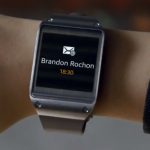
We are now just days away from the launch of the Samsung Galaxy Note 3 and Galaxy Gear. If you're yet to be caught up in the hype and excitement, Samsung's first commercial for the two devices could help to whip you into a frenzy. There's a slight cinematic quality to the ad which is… well… take a look for yourself. "Different" is perhaps the word.
The advertisement finds us following an artist as she uses the two devices to help her prepare for a dance performance in the evening. We see the star of the ad flick through My Magazine whilst getting ready to leave the house before showing off the Air Command and Action Memo feature when making a note of an interesting event advertised on a poster in town.
Facebook adds posts, status updates and more to Graph Search

Facebook's Graph Search is being updated to include more information from the social network. The personalized search engine previously allowed for searching of people, photos, places and interests when it was launched back at the beginning of the year. Now posts from you and your friends as well as status updates can be included in searches allowing you to get even more specific about what you're looking for.
Also included in the update is the ability to search for status updates, photo captions, check-ins and comments. There are various ways in which searches can be used to hone in on the content you're looking for, and natural language searching is the order of the day. Want to see the posts your online contacts have made about Microsoft's latest operating system? Just search for "posts about Windows 8.1 by my friends". Results can be limited by date as well, so you could search for "posts about Nexus 7 from the last month".
Facebook makes statuses editable… but is this open to abuse?

It's extremely irritating. You change your Facebook status and immediately notice that you've made a stupid spelling mistake. This could come as a result of a slip of the finger, or your phone's autocorrect might be to blame. You could, of course, simply delete the status update and recreate it without errors. But what about if you've already managed to amass dozens of comments that you don’t want to lose?
Now there's no need to fret because Facebook has made it possible to make edits to statuses. At least this is the case if you're using the Android app or the website -- iOS app users will have to wait a little longer for an update. This is great news! No more stupid typos! No more statuses that sound like they were written by someone with their eyes closed after an evening of heavy drinking! Or is it such great news?
New Windows 8.1 ad shows off return of the Start button

We asked and Microsoft delivered. The removal of the Start button from Windows 8 was seen by many as a huge mistake on Microsoft's part. We've known for some time that this familiar component of the operating system is to make a comeback, and now Microsoft is showing it off in a new commercial. The latest ads also highlight the ease of switching between desktop and Modern UI modes and the unified experience Microsoft is looking to create across devices.
More than the absence of the Start button perhaps, being thrown in to Modern UI (or Metro as it was at the time) was something that put a lot of people off Windows 8. In the "Windows 8.1 Everywhere" ad, Microsoft tries to get across the idea of choice. Now rather than being a portal to your apps, the Start button is described as the means by which users switch between modes.
Facebook isn't getting rid of ads, but will make them more relevant to you

Facebook wants to show you more relevant ads. Advertisements are the price we pay for free online content and services, and there are no signs of it vanishing any time soon. Even though this is something internet users have accepted for some time, there are often complaints about the unsuitability of ads. Far fewer people have a problem with seeing adverts for products and services they might genuinely be interested in than those that have no relevance to their lives.
In a blog post Engineering Manager for News Feed Ads, Hong Ge explains that Facebook would like to ensure that the ads that make it into your timeline are more relevant. If you're anything like me, you've probably built up something of a mental filter for "pointless" ads, and maybe even those that might be of interest, but Facebook is keen that you see more ads and that you respond to them positively.
Microsoft reveals 37,000 data requests from law enforcement agencies

Just about every company with an online presence is getting into the sharing game. It's something we’ve already seen from other companies. Facebook has already shared information about the data requests it has received from governments, and LinkedIn, Microsoft and Google all want to be able to tell us more. Now Microsoft is sharing what it can about the requests for information it has received from law enforcement agencies around the world.
The company's second Law Enforcement Requests Report covers the first six months of 2013 and reveals the requests received for data about users of all of Microsoft's online services. There is no particularly detailed breakdown of the figures, but they do include requests made for information about Skype. Despite collating figures for all Microsoft services, it looks as though the number of requests is in line with the figures from last year. In the first six months of 2013, Microsoft received a total of 37,196 requests relating to 66,539 accounts. This compares to 75,378 requests impacting 137,424 accounts throughout the whole of 2012.
The most popular stories on BetaNews this past week -- September 22-28

Microsoft held an event in NYC to launch the Surface 2 and Brian was live-blogging. The full video of the launch is available to view online as are advertisements that show off the tablets' versatility. Microsoft is pinning a lot on the updated product after the first generation suffered from poor sales. There were no great new features, but there is a redesigned kickstand, a healthy speed boost, new dock and updated covers -- Brian was particularly impressed by the Blades.
Anyone buying a Surface 2 or Surface Pro 2 earns themselves a SkyDrive upgrade. Purchase a new device and your online storage gets upgraded to 200GB, but the same amount of space is available for $100 per year. Moving away from Surface-related news, Microsoft turned its guns on Google Docs, highlighting user complaints to demonstrate the superiority of Office 365.
Microsoft to allow apps to be installed on up to 81 devices
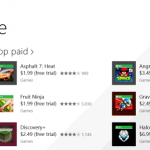
Microsoft announces that it is dramatically increasing the number of devices users are able to install apps on. At the moment there is a limit of five devices, enabling customers to install the apps they have bought on multiple devices with the same user account. While you might think that five devices is enough for most people, some developers and customers wanted more. Microsoft listened and has increased the app roaming limit. Massively.
Five devices just not enough? How does 81 sound? Yep… 81 devices. Microsoft says it is responding to the demands made of it -- "since we launched Windows 8, we heard growing feedback from many developers and from our most enthusiastic customers that the limit of 5 was not enough for their needs. Developers asked for more flexibility in implementing their business models, and customers wanted to run those apps on the variety of tablets, laptops and desktops they owned".
Microsoft highlights Reading List ahead of Windows 8.1 launch
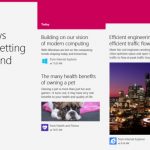
There are only three weeks to go until the release of Windows 8.1 and Microsoft is laying the groundwork by highlighting some of the new features and apps that are to be found in the update. The latest app to be picked out is Reading List -- Microsoft's answer to the list of Pocket and ReadItLater. The app has been designed to make it easier to save online articles to read at a later time without the need to bookmark it.
Reading List differs from RSS readers such as Feedly in that articles are stored on an individual basis. And while it is well suited to "bookmarking" articles you find on websites that you would like to return to, it can also be used to bookmark content from other apps. Just like other "read it later" tools, the real advantage comes from the fact that content is synchronized between devices.
BlackBerry reports almost $1 billion loss in Q2 fiscal results

As expected, BlackBerry is reporting a quarterly loss of nearly $1 billion as the struggling firm releases its fiscal results for the second quarter. The company managed to ship 3.7 million handsets, giving a revenue of $1.6 billion. This is a drop of 49 percent from the first quarter ($3.1 billion) and 45 percent down on the same period last year ($2.9 billion). Overall, there are operating losses amounting to $965 million.
A large proportion of the units shipped were BlackBerry 10 handsets sent out to wholesalers and mobile firms, and profits from these will not be counted until sold to customers. In Q2, 5.9 million smartphones were placed in customers' hands, and this includes handset shipments from previous quarters. The poor results had been widely predicted, and BlackBerry cancelled its scheduled conference call.
Office of Fair Trading says games should not encourage in-app purchases by children

The Office of Fair Trading (OFT) is calling on the games industry to avoid pressuring children into making in-app purchases in games and potentially running up large bills. Back in April, an investigation began into the ways in which children are pressured into making in-app purchases. 38 web and app-based games thought to appeal to children were looked at, and the results of the investigation are available in the Children's Online Games report.
The OFT aimed to determine whether the way in-app purchases were presented could be considered "misleading, aggressive or otherwise unfair". As a result of the investigation, the OFT has drawn up a set of eight proposed principles that apps and games should follow. The principles include clearly and prominently informing app users about the potential for costs to be incurred through the app. It is suggested that users should be able to fully understand the current and future costs associated with any app they download.
Sofia Elizabella's Bio
Sofia Wyciślik-Wilson is a queer, transgender journalist based in Poland. She has been writing about technology for more than two decades, and after years working for magazines, her writing moved online. She is fueled by literature, music, nature, and vegetables. You can find her on Bluesky and Mastodon. If you like what you read, you can Buy her a Coffee!
© 1998-2026 BetaNews, Inc. All Rights Reserved. Privacy Policy - Cookie Policy.