

The most popular stories on BetaNews this past week -- September 8-14


Big news came from Apple and Microsoft this week. Microsoft seemingly had a change of heart; having previously said that Windows 8.1 RTM would not be made available before its official launch date, the company announced that it would be released to people with TechNet and MSDN subscriptions.
The same group of people also gained access to the pre-release version of Skype. Microsoft was clearly in a very giving mood this week as the company also announced that it was giving free copies of Office 365 to non-profit organizations.
Facebook to increase your mobile data usage with automatic video playback

A new feature is rolling to Facebook mobile, a feature that has been designed to provide "an easier way to watch video". "How could a video possibly be made easier to watch?", you may well ask. "All it takes is a quick tap to start playback!" The new feature will play videos as soon as you see them in your news feed -- no need for a tap.
Videos start playing silently and if you're not interested in watching you can just keep scrolling by. But if a video does take your fancy, how do you think you view it with sound and in full screen mode? That's right… you tap on it. Just like you do at the moment. The feature is not yet available to everyone, but if you don’t see it in your account on your mobile handset, you can check out a video of what it looks like in action.
Twitter explains why you and your friends may see different site features

When you use Facebook and Twitter, everyone's looking at the same website and has access to the same set of tools, right? Wrong. In the case of Twitter, users who have verified accounts have access to different tools and options and the same is true for different levels of users on other sites and social networks. But it seems that even two average Twitter users could find that they have a different experience from each other on the site.
In a blog post entitled "Experiments @ Twitter", Twitter's Vice President of Engineering, Alex Roetter, says that experimenting with new features and options may mean that two people see different versions of Twitter. Roetter explains "it’s rare for a day to go by when we’re not releasing at least one experiment", referring to both the website and mobile clients.
Facebook closes Social Fixer's page -- owner warns other businesses

Social Fixer is a browser extension available for Chrome, Firefox and others. It exists to make Facebook a more pleasurable experience, by ironing out annoyances and adding extra features. In theory this means Facebook users are happier and therefore use the site more -- everyone's a winner. The tool is free and over the course of four years its developer, Matt Kruse, built up a following of hundreds of thousands of users. Now Facebook has wiped that out.
The Social Fixer tool still exists and still offers the same options as it did before, but it no longer has a Facebook presence. Back on 2 September the Social Fixer Facebook Page (which is still inaccessible) was "unpublished" by Facebook. The reason specified was that the page had been flagged up for spam -- this is something Matt vehemently denies ever engaging in.
AT&T causes offense with 9/11 Twin Towers ad for BlackBerry Z10
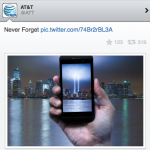
AT&T finds itself on the receiving end of an internet backlash after tweeting an advertisement for the BlackBerry Z10 that used 9/11 imagery. On the anniversary of the tragedy that saw the Twin Towers fall, the US phone giant posted the ad on Twitter -- the tweet has since been removed -- which featured the Tribute in Light memorial under the heading Never Forget. A similar post was also made on Facebook -- this has too been removed.
The ill-advised marketing move has backfired however. The company's Twitter feed is now filled with vitriolic responses from those sickened by the imagery. Search Twitter for AT&T and there are tweets from thousands of users who can only be described as being seriously pissed and deeply offended. On the BetaNews team, New Yorker Brian said that it was horrible and that he hated it.
Google loses appeal in Street View Wi-Fi collection case -- right or wrong?

Google faces claims for damages from people who had personal data collected from their wireless networks as the company gathered information for its Street View service. Google had previously claimed that emails, usernames and passwords had been collected unintentionally, but the appeal ruling means that the company is not exempt from liability under the federal Wiretap Act.
Back in 2010, Google admitted that data such as network SSIDs and MAC addresses were collected along with photos. In this blog post the company denied that it pulled "payload data" (essentially the data that is being sent over the networks) but it was later revealed that "Google did indeed collect (and store) this information from unencrypted Wi-Fi networks". A full report is available to read online. Google was required to delete this data, and indeed did so.
Google files amended transparency petition in push to publish FISA order details

Google's unofficial motto has long been 'do no evil' and the company is keen to be seen to stick to it. Jumping into bed with Nestle may have raised a few eyebrows and rattled a few cages, but in a blog post, Richard Salgado, Director of Law Enforcement & Information Security, and Pablo Chavez, Director of Public Policy and Government Affairs show the search giant is eager to stay on the right side of customers.
Google has filed petition in the US Foreign Intelligence Surveillance Court asking that they be allowed to publish details of FISA orders. The petition is very similar to others that we have seen in recent months in the wake of the NSA surveillance revelations, and is really just a follow-up to the We Need To Know letter from back in July in which a number of leading companies wrote to, amongst others, President Obama to "urge greater transparency around national security-related requests".
Apple reveals iPhone 5S -- the rumors were true

There were so many leaks prior to today's announcements at Cupertino that we pretty much already knew what to expect. Apple has taken the wrapper off the latest version of the iPhone and the company has stuck to its recent release schedule of following up a major iPhone with an S edition -- the iPhone 5S. Visually, things are very much the same as before, but in addition to black and white models, there's also the light gold colored model -- colors we now know should be referred to as space gray, silver and gold.
The promise to "brighten everyone's day" seems to have meant not only an addition to the color options for the iPhone 5C and 5S, but also new features. While the 5C retains the same processor as in the 5, the 5S boasts a new A7 processor which is the world's only 64-bit chip in a smartphone. iOS 7 has been re-engineered as a 64-bit operating system, but the chip is capable of running 32-bit and 64-bit apps. Apple claims the processor is double the speed of the iPhone 5 according to the graph they showed. And the processor now supports OpenGL|ES 3.0, the same as Nexus 7.
9 reasons why Windows Phone 8 leaves me cold

Just like Brian (despite his niggles), Android is my mobile operating system of choice. I was once a diehard iOS user -- my old iPhone 3GS is still one of my favorite phones of all time -- but I've also been known to experiment with other mobile platforms.
Back in the days before smartphones, I had handsets from Nokia, Sony, Samsung, LG and numerous others that have been lost in the mists of time. My first smartphone was a rebranded HTC handset going under the guise of an Orange SPV M3100. It ran Windows Mobile, had a slideout keyboard and was amazing.
F*@K me! Nominet may block 'offensive' words in domain names

You know how the internet is meant to be one of the few remaining forums in which you’re free to speak your mind? That could be set to change in a slightly concerning way. You might think that if you have your own website you're free to say pretty much whatever you want (legality providing), but the UK's domain name registry, Nominet is looking into the possibility of blocking offensive words from domain names.
Perhaps the first question to ask here, is "who decides what is offensive?", and Nominet is not only reviewing its domain registration policy but also asking for input from the public. In its review document, Nominet explains that until now it has "intentionally taken a non-restrictive approach to the words and phrases that may be used in a domain name". The organization goes on to say that it has not "made any value judgement as to the use to which domains are put, or whether they might be offensive or in poor taste" but cites the Republic of Ireland and China as examples of countries in which some restrictions are in place.
Now your public Facebook posts could appear on the news!

Facebook is making it easier for news outlets such as BskyB, CNN and NBC to integrate conversations from the social network into their broadcasts. Using the Public Feed API, broadcasters are now able to display a real-time feed of posts that contain a specific word. Considering that, according to Facebook's own figures, last week's kick-off of the new NFL season resulted in over 20 million likes, comments and shares, that's a lot of data to be dealing with.
There is also the new Keyword Insights API which can be used to determine how many posts mentioned a particular term in a specified timeframe. But the API goes further than this, also making it possible to filter results -- allegedly anonymously -- based on gender, age and location. At the moment both of these APIs are only being made available to a limited number of partners, but the list is certain to grow over time.
The most popular stories on BetaNews this past week

Looking at the biggest stories on BetaNews from September, 1 - 7, 2013. This was a week packed with news from IFA in Berlin -- lots of big announcements to whet our appetites for the coming months. LG's G Pad was revealed as a potential competitor to the Nexus 7 and iPad mini, while Acer was found to be proudly showing off its new R7 notebook complete with innovative Ezel hinge that allows for a range of working positions.
IFA was also where Samsung unveiled the Galaxy Note 3 as well as the Galaxy Gear smartwatch which will allow us all to live out our Star Trek dreams. It wasn't long before Note 3 pre-orders were being taken. If you've noticed that phones are getting bigger and bigger, the same is certainly true of tablets -- the Panasonic Toughpad 4K is a staggering 20 inches from corner to corner.
Taste the future -- try out a cloud-based quantum computer

A taste of the future of computing is available from the Physics department of the University of Bristol. The limits of traditional computers are being reached and new technology is needed if things are going to develop at any sort of reasonable pace in the coming years. Quantum computing could just be the way ahead, and the UK university has produced Qcloud, an online quantum computer that you can play with for free.
Mere binary is too limiting, but a quantum computer is not restricted to working with 1s and 0s. Rather than the two states associated with a regular bit, a quantum bit (or qubit -- not to be confused with the Brighton Rock character, Cubitt) is capable of being in multiple states simultaneously. Forget "on" and "off", each qubit can be used to hold multiple pieces of data at the same time.
Judge bars Apple from price-fixing deals with ebook publisher

Apple says it will appeal against a court ruling that bans the company from entering into deals with publishers that could allow ebook prices to be fixed or inflated. The case was raised by the Department of Justice and judge Denise Cote's decision is very much in line with what they were seeking. The Cupertino, Calif.-based company is banned from entering into agreements with five named publishers in ways that might restrict ebook prices.
Having been found to have conspired with publishers to prevent retailers (rather than publishers or Apple) from setting ebook prices, Apple fell foul of antitrust legislation. The company is required to wipe out a controversial 'most favoured nation' clause in its contracts that effectively ensure that Apple's ebook prices would always match the lowest price available online. Restrictions are in place for different lengths of time for various publishers, ranging from two years in the case of Hachette, to four years for Macmillan.
Google celebrates Chrome's 5th birthday with Apps for the desktop
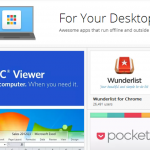
Five years. That's how long it is since Chrome was unleashed on an unsuspecting world. Five years and we've already made it to version 29! There will undoubtedly be a few glasses charged in celebration, but Google is also taking this special date as an opportunity to reveal a "new breed of Chrome Apps". Head to the Chrome Web Store and you'll find a new section: For Your Desktop.
Working online with web apps has become increasingly common, but traditional desktop apps are still more popular. Now Google is looking to blur the boundaries between the two, making web apps much more like desktop software. The key thing to note here is that the apps that are found in this section do not -- after the initial download process of course - require an internet connection: they can be used in offline mode.
Sofia Elizabella's Bio
Sofia Wyciślik-Wilson is a queer, transgender journalist based in Poland. She has been writing about technology for more than two decades, and after years working for magazines, her writing moved online. She is fueled by literature, music, nature, and vegetables. You can find her on Bluesky and Mastodon. If you like what you read, you can Buy her a Coffee!
© 1998-2026 BetaNews, Inc. All Rights Reserved. Privacy Policy - Cookie Policy.