

Nexus 7 comes to Europe and Asia -- O2 reveals details of 4G model

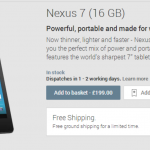
Some weeks after the US release of the Nexus 7, Google’s 7 inch tablet has found its way to eager customers in other countries. In Europe, the UK, France, Spain and Germany get a little bit of Nexus love, while in Asia it is Japanese tech-heads who can now get their hands on the 7-incher everyone is talking about. As has become the norm with many gadgets, prices are comparatively higher than in the US.
There are 16GB and 32GB Wi-Fi versions available and UK customers can expect to pay £199 and £239 respectively. In France, Germany and Spain, prices are pegged at €229 and €269, while Japanese Nexus fans can expect to be parted from ¥27,800 and ¥33,800 apiece.
Tech festival -- a long weekend in the mud shows battery life needs to improve

For me, virtually any trip out of the house means loading up on various pieces of tech. I, obviously, cannot leave the house without my phone -- my trusty HTC Sensation has been with me for two years -- but there are usually other things to consider as well. While my phone is great for picking up my emails on the move and staying in touch with people via IM, Facebook etc, it’s far from ideal for doing any work.
Depending on where I’m going, and how strong I’m feeling, there are various other pieces of kit I can take with me to make things easier. My Sony Tablet S is easier to type on than my phone, thanks mainly to its larger screen, but it’s not something I like to use for extended periods of time. I could take my laptop with me, or the MacBook Pro, which are great to work on, but rather weighty to hump from place to place.
Facebook reveals details of government data requests from around the world

We’ve known for a while that governments around the world have been gathering data about Internet users, monitoring online communication via instant messaging, email and much more. Numerous websites and social networks have received requests from government bodies for information relating to their customers and users. Now, Facebook reveals for the first time just who has been asking for data.
The Global Government Request Report covers the first six months of 2013, and is introduced with the words "Transparency and trust are core values at Facebook". Although the report is not especially detailed -- it is likely that it was not legally possible to be -- it does show which countries have asked for data, the number of requests each country made, the number of user accounts inquired about, and (perhaps most interestingly) the percentage of requests that Facebook was legally obliged to comply with.
Facebook to pay out $20m to users in 'Sponsored Stories' case

A US judge rules that Facebook must pay out $20m as the Fraley vs Facebook class action draws to a close. The lawsuit was taken out by users of the social network whose pictures were used without consent in "Sponsored Stories" advertisements. While up to 150 million Facebook members were affected, only approximately 614,000 who filed a claim will receive any money.
It’s hardly a massive windfall. The $20m is to be divided not only between the successful claimants, but also used to pay for lawyers and administrative costs. Users will be paid $15 each -- not even enough to buy half of a share in Facebook.
China suffers from 'largest ever' DDoS attack on .cn domains

In an announcement on the China Internet Network Information Center (CNNIC) website, China reveals that .cn domains became the target of a massive DDoS attack. The attack lasted for several hours, starting off around 2am Bejing time on Sunday, intensifying at 4am before control was slowly regained at around 10am.
The attack resulted in many sites with a .cn domain going offline, but at the moment it is not clear who may be responsible. CNNIC said little apart from confirming the fact that the attacks had taken place and condemning them. The organization also apologized to users who had been affected by inaccessible or slow websites, but offered no analysis or speculation about what had happened.
More than two thirds of US adults have home broadband -- three percent still on dial-up

Mark Zuckerberg may be keen on making the internet accessible to everyone in the world but it appears even in the US there is still a little way to go. A report by Pew Research reveals that while 70 percent of US residents over the age of 18 have a high-speed broadband connection at home, access is not as prevalent as the Facebook founder would doubtless like.
The research center’s Internet & American Life Project has monitored broadband usage since 2000 when dial-up connections accounted for 34 percent of access and just three percent of adults used a broadband connection. Increased availability of Internet access means that 73 percent of US adults now have some form of connection at home, compared to just 37 percent 13 years ago.
The most popular stories on BetaNews this past week

Looking at the the biggest stories on BetaNews from August, 18 - 24, 2013. Perhaps the biggest news from the last seven days -- at least in part because it came as such a surprise to most people -- was the announcement that Steve Ballmer intends to resign from Microsoft within the year. The CEO is planning to step down as soon as a suitable replacement is found, but there has been speculation that Ballmer may have been pushed rather than opting to jump.
Getting my hands on a Surface Pro for the first time gave me an opportunity to try out Windows 8 as a touchscreen operating system. Despite loving the Surface in general, I pondered whether the use of the same version of Windows 8 as on desktop machine may have been what's stopping Microsoft’s convertible devices from becoming more popular. At the same time, Brian fell in love with the Lenovo Yoga, citing Windows 8 as one of the computer’s strengths.
Tumblr ‘hack’ leads to a spate of undeletable posts

Tumblr is downplaying a suspected hack attack that left users facing the appearance of a series of undeletable posts in their blogs. Reports of problems spread through Tumblr itself as well as Twitter. The problem is not just that posts are undeletable, but also that they were not created by the blog owners.
While some of the content is fairly tame, some users have complained about the appearance of pornographic posts. Researchers at ThreatTrack Security Labs are advising users to change their account passwords, as bloggers are left facing not only undeletable posts, but many also finding themselves unable to access their dashboards.
Microsoft targets parents of back to schoolers with new Office 365 ads

Microsoft is on something of a roll with advertisements at the moment. After taking a swipe at iPads and Google, the latest round of ads, this time for Office 365, takes a slightly different approach -- tugging on the heartstrings of parents about to wave offspring off to university.
The two advertisements examine father-son and mother-daughter relationships and push the collaborative and cloud-working features to be found in Office 365.
Mark Zuckerberg launches Internet.org to help bring web access to the whole world

The Internet is thought of as being a global infrastructure that breaks down barriers, blurs physical boundaries and renders distance meaningless. But for two thirds of the world, Internet access is just not available, and this is something that Facebook founder Mark Zuckerberg wants to change.
Working in conjunction with Ericsson, MediaTek, Nokia, Opera, Qualcomm and Samsung, Internet.org is an initiative that aims to help bring web access to the five billion people who are not yet connected.
Sony announces PS4 release date

At a press conference at Gamescon, Sony revealed the information that hundreds of thousands of gamers have been waiting to hear -- the official launch date of the PlayStation 4.
And there’s not all that long to wait. In just over three months, on November 15 to be precise, the eagerly anticipated console will be made available in the US and Canada.
ID@Xbox gives indie developers the chance to sell games directly on Xbox One

Becoming a developer for platforms such as iOS and Android is relatively simple, but the same has not always been true for anyone looking to break into the world of serious gaming. Microsoft is keen to help out, and the new Independent Developers @ Xbox (ID@Xbox) program aims to make it possible for small-scale devs to work in the same arena as the big players.
At Gamescon, Microsoft today unveils details of the program and Director of ID@Xbox, Chris Charla, is keen to welcome the next generation of developers who will usher in a new breed of games. The scheme will enable developers to publish their own games on Xbox One and gain access to the same development kits and resources that are already available to leaders in the market.
Surface Pro -- is Windows 8 the biggest failing of this expensive tablet?
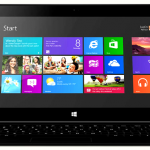
Almost every time I have written about Microsoft in the past, I have been accused of being on the company's payroll when I write something positive, or being a hater out to bash the firm when I write something negative. Fair warning to anyone inclined to make such accusations (and a slight spoiler); this is one article in which I am going to sit firmly on the fence.
Let’s get one thing out of the way to start with. I quite like Windows 8. It’s not perfect and I have my complaints, but it is my primary operating system on three computers, and has been for some time. Until now, my only experience of Windows 8 has been on a traditional desktop and a laptop -- this means I have only interacted with the OS using a combination of a keyboard, mouse and trackpad.
Latest Microsoft ad targets students while dissing iPads

In a recent ad Microsoft levelled its guns at Google, but this time around it is Apple who finds itself in the crosshairs. The thinly veiled attack pits the Lenovo Yoga against Apple’s iPad in a bid to win favour in time for the ‘back to school season’.
The advertisement is set in a lecture hall and finds the lecturer’s audience divided into three distinct camps -- old-school pen and paper fans, iPad users, and a solitary student with a convertible Windows device. As the cue comes to start taking notes, the Windows user casually stops playing the word game she was engrossed in, flips the Yoga into ‘notebook’ mode and starts typing.
Microsoft's QR code competitor Tag to shut up shop -- hands in two years' notice

You may well not have heard of it -- and even if you have, it's even less likely that you've used it -- but Microsoft's Tag service is to close two years from now. In a statement on the Tag website Microsoft says that it is issuing a two year termination notice in accordance with its Terms of Use and that the service can be used as normal for the next 24 months.
For anyone to whom Microsoft Tag is an unfamiliar name, and this is likely to be a large group, this is -- or perhaps was -- Microsoft's alternative to the QR code. Scan a tag from a magazine or advertisement and you can access content such as websites, videos and more.
Sofia Elizabella's Bio
Sofia Wyciślik-Wilson is a queer, transgender journalist based in Poland. She has been writing about technology for more than two decades, and after years working for magazines, her writing moved online. She is fueled by literature, music, nature, and vegetables. You can find her on Bluesky and Mastodon. If you like what you read, you can Buy her a Coffee!
© 1998-2026 BetaNews, Inc. All Rights Reserved. Privacy Policy - Cookie Policy.