


What's in a name? Artificial Intelligence or Data Science?

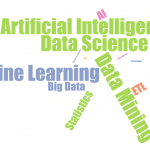
If you are like me, there is a good chance that you are confused as well about the most recent terminology to use in the field of data science … pardon, artificial intelligence … no, I mean data science. No, I mean artificial intelligence. Please, somebody tell me what I should call it and what the difference is!
Isn’t artificial intelligence just a new cool name to label the old traditional data science? Don't both concepts cover the same algorithms? And isn’t it all machine learning anyway? This is what I used to think until I took a pause to write this post. During this breather, I went back in time and tried to remember all the names that used to be used to label this field of what essentially is data analytics. Let’s see …
Trust, transparency, and the rise of explainable AI

Most organizations are currently in the process of investigating, planning, or deploying artificial intelligence (AI) implementations, but there’s a problem: businesses -- or even AI designers -- don’t understand how or why the AI arrived at a specific decision. This is a big hurdle for businesses who want to begin relying on AI-based dynamic systems for their decision making. In fact, a recent PwC survey found that 37 percent of executives said ensuring AI systems were trustworthy was their top priority, and 61 percent would like to create transparent, explainable, and provable AI models.
The need for transparent, explainable AI goes beyond individual business preferences. Interpretability, fairness, and transparency of data-driven decision support systems based on AI and machine learning are serious regulatory mandates in banking, insurance, healthcare, and other industries. In addition, regulations like GDPR’s right to explanation clause or the upcoming California Consumer Privacy Act will compel businesses to know what their AI algorithms are thinking. The solutions to these issues of trust and explainability typically have been to stick with simpler models, improving transparency at the expense of accuracy. From my perspective, understanding how to create trust -- more so than creating transparency -- in AI is going to be crucial to success.
Bill Belichick installed an Event-Driven Architecture, so should you

Widely regarded as the greatest football coach of all time (much to the chagrin of NFL fans outside of New England), Bill Belichick has now 'enjoyed' six Super Bowls as coach of the Pats (plus two more as Defensive Coordinator for the Giants) and led the Pats to three-fourths of AFC Championship games (including a record-setting 8 consecutive trips).
But what’s really made Belichick great is his belief that you shouldn’t just "run what we run," but that you should game-plan specifically for each opponent. This means the strategies and actions they employ are based on what they expect each specific opponent to do. And if things aren’t working as planned, they switch it up and adapt (Belichick is the master of in-game adjustments). Here’s a few examples:
Unpacking the influence of the IoT in travel

You cannot miss the signs of technological advancement in travel today. From mobile ticketing to biometric scanning at amusement parks, today’s business trips and family vacations look vastly different than in years past. Innovation has come just in time for the crowds -- Expedia Group reported a 40 percent increase in the number of people traveling for business and leisure since 2016, and this number is on track to grow in the coming years.
Behind the scenes, one of the quiet workhorses of hospitality innovation has been the Internet of Things (IoT). Broad and flexible IoT coverage has already enabled major changes in the traveler experience and the hospitality industry, through innovations such as luggage tracking to parking and trash management. Largely in part to communication networks that enable the travel industry to implement a variety of innovative solutions, cheaply.
4 reasons private equity firms should be concerned about digital transformation

Every business by now is familiar with the term 'digital transformation', and for good reason. When done right, digital transformation has the potential to revolutionize the customer experience; drive data-based insights; encourage collaboration across departments; increase agility and innovation; update skillsets and knowledge; consolidate processes and operations; and create incredible returns on investment.
So why aren’t more people concerned about it?
The elements of cybersecurity hygiene and secure networks - Part 3

While it’s essential that employees consistently avoid taking risks that could lead to a data breach, even top-performing employees don’t necessarily have top-notch cybersecurity knowledge. Thus, organizations are in charge of bridging the cybersecurity skill gap to keep employees from damaging the company’s network by accidentally uploading of a malicious program or sharing confidential documents with the wrong people.
Though it’s easy for IT and leadership teams to put systems in place that defend their network from external threats, well-intentioned internal users can be a hackers easy way in. The only way for organizations to counter this is with education and training.
Ten top tips to keep your information secure on Data Privacy Day

One of the biggest threats as you browse the internet isn’t hackers trying to get into your computer (a common misconception) or the potential of accidentally installing malicious software. Your security suite should take care of both these issues.
No, the single biggest issue is your personal data and the information you leave all over the internet when you share your content, chat with other people and the login information we use to access our online data. What can we do to safeguard our personal data and keep it away from people seeking to exploit us? Here are our top tips.
Millennials and their motors: 5 predictions for 2019 and beyond

Nothing in life is certain except death, taxes, and an article appearing daily in the news either slating or praising millennials. Millennials, or Generation Y, are the group of people who were born between 1981 and 1996. Opinions of millennials range from those claiming that they are everything wrong with our changing society, others that they are saving it. Millennials are arguably the most influential generation of consumers today, making smart, considered decisions all the time.
One such decision is their method of transport. Reports suggest that millennials are buying fewer cars than older generations, with 43 percent of them saying that having a car was a hassle. Cars used to be the ultimate status symbol, so why are so many millennials avoiding them? Is it sustainable living? The rise of Uber and Lyft? Are they holding on for connected cars? Or do they simply just not want to drive?
LiFiMAX is a new kind of high-speed internet... that runs on light

During this year’s recent CES conference in Las Vegas, attendees got a preview of the evolution of high-speed internet. It's called LiFiMAX and offers an internet connection based on invisible light.
It gives a 100Mbps downlink data rate and 40Mpbs uplink rate, making it ideal for use in a professional setting.
What does IT performance really mean?

IT is moving into the future, growing beyond its traditional role to become a center of innovation -- so then why are conversations about IT performance stuck in the past?
Too often, the discussion starts with the hard numbers of quantitative performance, what I call "speeds and feeds": details like what kind of processor, memory size, disk I/O or throughput. The problem is that using these metrics to evaluate the performance of your IT -- whether solutions, service providers or the organization itself -- comes hopelessly short of determining the value that IT is bringing to its new task of leading digital transformation.
In defense of private companies: Creating a cyber risk-aware culture

Each year, the amount of investment organizations -- big and small -- are making to protect their most valuable assets with technological and physical safeguards continues to grow by staggering amounts. Yet, with just one click or touch, an unsuspecting employee can expose a company to cyber spying, ransomware or outright theft.
Private companies are aware of various risks posed to their businesses both from external threat actors (e.g., business/political rivals, organized cyber criminals) and from their own personnel (e.g., disgruntled employees). This year, 38 percent of mid-market and private leaders ranked cybersecurity as a top information technology (IT) investment priority according to Deloitte’s annual mid-market technology trends report. What are they investing in? New information security capabilities, monitoring and detection, and employee education initiatives.
Email: Year in review 2018

2018 is has come to a close. Many experts are making predictions for 2019, but I think it’s important to learn from the past. Let’s take a look back at all of the major email industry events of 2018.
There were plenty of changes amongst mailbox providers that kept marketers and deliverability professionals busy. Providers like Gmail and Oath (AOL, Yahoo and Verizon mail) went through significant changes this year, including:
How AI will -- and won't -- dominate customer service in 2019
Is artificial intelligence the future of customer service, or is it the jump-the-shark moment that slows our society’s reliance on technology and automation? It’s fair to say that 2018 didn’t make the answer any more evident. In 2019, most businesses will seek a balance between the added efficiency and responsiveness that AI customer service can provide and the human touch that customers still value.
There are two significant areas where businesses are finding success with AI in customer service: chatbots and data. Expect to see both areas grow in 2019 as companies look for ways to serve their customers more efficiently and intelligently.
Is the QA lab dead?

Quality assurance is changing. Internal teams too often don’t have the resources necessary to get releases to market on time, on budget, and without bugs. And offshoring comes with its own share of issues like irrelevant results and inefficient testing. In its current form -- with traditional lab and outsourced testing -- traditional QA is dying.
There are more than 45,000 unique mobile device profiles on the market today. And that’s just the mobile devices. Forget about desktop computers, connected devices, or any of the other places apps can live and be used on a day-to-day basis. Then add in all the different operating system and browser variations and it becomes clear internal teams need help to test on a massive breadth of devices.
Add an additional layer of website security with the Emsisoft Browser Extension

Although we’d regard ourselves as technically proficient, even we can get caught out online. Over the New Year period we were searching for a product from a reputable brand, seeking the best price available through Google search.
Browsing through the shopping results, we found an official store which sold this brand and was offering a discounted new year sale. Looked legit. But the discount was too high and it was tricky to find any definitive location information. The online store was either selling fake products or simply extracting funds with no intention of shipping. Most people trust sources such as Google Search, but unless individuals report fake or phishing websites, it’s easy to get caught out.
© 1998-2026 BetaNews, Inc. All Rights Reserved. Privacy Policy - Cookie Policy.