


IoT data threats and other issues global companies face as GDPR nears


While the E.U.’s General Data Protection Regulation (GDPR) won’t take full effect until May 25 2018, multi-national companies do need to take thoughtful action now to be certain their E.U.-based operations will be fully compliant when the time comes.
With WannaCry, the world’s largest ransomware attack fresh in their minds, most global businesses are hyper-focused on data security in formulating responses to GDPR. However, many are less well organized in their approach to the data privacy issues related to the new regulation. The lack of a well-formulated approach should give global companies pause though, particularly because the definition of data privacy under GDPR is especially broad, and because harnessing IoT data can be very challenging.
Microsoft buys cybersecurity startup Hexadite

Microsoft is rumored to have acquired Israeli cybersecurity startup Hexadite in a deal worth around $100 million.
The startup was founded in 2014 and its primary focus is identifying cyberattacks through the use of artificial intelligence (AI). By connecting a number of cybersecurity detection systems that are already in place, Hexadite then uses AI to analyze threats automatically as they present themselves.
OpenStack services monitoring: Challenges and solutions

If you have previously worked with cloud platforms, you will be familiar with the distributed and decoupled nature of these systems. A decoupled distributed system relies on microservices to carry out specific tasks, each one exposing its own REST (Representational State Transfer) APIs. These microservices talk to each other through a lightweight messaging layer usually in the form of a message broker such as RabbitMQ or QPID.
This is precisely how OpenStack works. Each major OpenStack component (Keystone, Glance, Cinder, Neutron, Nova, etc.) exposes a REST endpoint and the components and sub-components communicate via a message broker layer, such as RabbitMQ. The benefits of this approach are first that it allows failures to be allocated to specific components, and second that cloud infrastructure operators can scale all services in a horizontal fashion and intelligently distribute the load.
Executives are the most at risk employees when leaving the office

Four in ten organizations in the US and Western Europe believe C-level executives are the most at risk of cyber attacks when working outside the office.
That's according to research by iPass, whose Mobile Security Report 2017 says that coffee shops and cafes are the riskiest venues (42 percent), followed by airports (30 percent), hotels (16 percent) exhibition centers (seven percent) and airplanes (four percent).
Apple Pay now supports purchases over £30 in UK

The latest move from Apple may soon lead to consumers leaving their wallets at home, now that a majority of cash registers in the UK will be able to accept Apple Pay mobile payments over £30.
According to the vice president of Internet Services at Apple Pay, Jennifer Bailey, more than half of the contactless payment terminals in the UK are now able to accept Apple Pay payments of any value. Previously they had been limited to £30, which is the limit for card readers when dealing with contactless card payments.
CISO salaries topping €1 million in Europe

Now might be a good time to consider that job as a chief information security officer you always wanted, because salaries are skyrocketing.
Thanks to an ever-increasing number in breaches, and the damage these breaches are causing, businesses in Europe have begun offering much better salaries to their CISOs.
Businesses worry about long-term data storage

Businesses fear that, with the speed at which technology changes, they won't be able to read their corporate data in the near future. And that seems to be a big issue, as many businesses want to be able to read its archived data for at least 50 years in the past.
This is according to a new report released recently by Crown Records Management.
Many businesses don't know who has access to their critical data

According to a survey conducted by Lepide, a leading security auditing solutions provider, 60 percent of companies are still not able to determine who has access to their critical data. The survey was conducted during a variety of trade shows including Infosec Europe, RSA Singapore, and DataConnectors Pittsburgh, and involved 250 face-face interviews.
A common misconception amongst organizations is that all cyber threats originate from outside their organization, yet according to a report published by mcafee.com, 43 percent of data breaches were the result of malicious or incompetent insiders. This problem is emphasized by the continuous surge in healthcare related breaches. For example, according to a report published by Protenus, of the 31 health data breaches disclosed in January 2016 "59.2 percent of breached patient records were the result of insiders."
Most Internet of Things initiatives fail to gain traction

Despite the rising momentum surrounding the Internet of Things and its practical applications, a new survey from Cisco reveals that 60 percent of IoT initiatives are failing to take off.
While many projects fail to move past this initial stage, only 26 percent of companies have had an IoT initiative which they have labelled a complete success. A third of all completed projects in this space were not considered successful by the companies behind them.
Microsoft working on DNA-based data storage

Quantum computing is not the only large leap in computing the human race is currently working on, there's also the crazy and amazing research in storing data in DNA.
According to media reports, Microsoft is now planning on building, "an operational storage system based on DNA working inside a data center," by the next decade.
Google Cloud IoT Core helps businesses manage data and devices
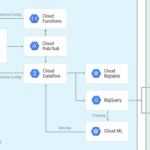
Google has announced the launch of a new service to help businesses handle large volumes of data created by their IoT devices.
IoT Core will look to take on the likes of AWS and Microsoft, although a company's spokesperson says that Google is not playing catch up.
Customers prefer bots over humans for support

People are now more receptive of bots in customer support services, a new report by LivePerson has concluded. Consumers would rather talk to a bot than to a human, and usually rate the interaction with the digital helpers as a great one.
Even though the general opinion of bots was that they were implemented by companies to cut costs, it is now being realized that it was also (or even more) about the speed of service.
What TechOps needs to better support the business

The arrival of the digital age is changing the way organizations work and how they interact with the outside world. Highly competitive and disruption-prone markets demand businesses to think fast and act fast -- and IT capabilities are widely recognized as the key to success. Yet, the role of Enterprise IT is often associated with cost and frustration, rather than that of enabler, or perhaps even driver of innovation. Can this image be repaired?
When people talk about Enterprise IT what they often refer to is the Operations side of the IT world. And, to be even more specific it is the Technical Operations (TechOps, sometimes also referred to as Operations Engineering) part of the team that is under significant pressure to meet the ever-increasing demands of their business while being itself disrupted by the advances of technology. Service Operations, the other part of the corporate IT team -- usually associated with the Service Desk, but at least in theory covering a lot more -- is battling its own maturity challenges in the service economy.
Tech-savvy workers increasingly common in non-IT roles

IT professionals are becoming an increasingly common presence outside of the traditional IT departments, new research has found.
According to CompTIA, it seems executives are calling for specialized skills, faster reflexes and more teamwork in their workers.
More businesses are becoming familiar with GDPR, but fines are still likely

Even though the GDPR is just a year from coming into force, the majority of businesses are still unprepared. This is according to new research from Compuware, which says businesses are risking huge non-compliance fines.
Some businesses, truth be told, have made progress since last year.
© 1998-2026 BetaNews, Inc. All Rights Reserved. Privacy Policy - Cookie Policy.