


Changing business models will create 'ultra freelancers'


With the significant and imminent changes in the way we do business a new type of freelancers will emerge, according to Samsung. Called "ultra-freelancers", this type of workers will "connect deeply within multiple organizations simultaneously, working with multiple corporate data sets but fiercely protective of the privacy of their own data."
These ultra-freelancers will be mostly Millennials, a cohort that is taking full advantage of the new technologies and the open economy.
Tech Deals: Get a new Dell XPS Core i7 desktop for just $600, and enjoy the best savings of the year on XPS laptops
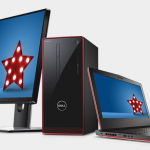
Why pay full price for a new laptop, desktop, or PS4 bundle, when you can get one for a fraction of the cost?
Courtesy of our partners at TechBargains we have yet another selection of fantastic deals, with huge savings to tempt you. Offers include fantastic savings on new Dell laptop and desktop PCs, HDTVs, electronics and components, and much more.
What's next for containers, unikernels, and coding

Everyone talks about containers. It became so huge that we think Docker has existed for a long time. The fact is that it has only started. We can observe that by the amount of changes we are seeing. Docker from two years ago is very different than Docker today. Products in its ecosystem are appearing every day and many are disappearing just as quickly. If there is a space we should turn our attention to, that’s containers.
At the same time, we have already switched our focus to other areas. Containers, by themselves, are the old story. We know what they are, we did our proof of concept (PoC), and we adopted them. The real question is what should we focus on now? What will this year bring?
Security must be a priority in smart offices

Businesses all over the globe are faced with a tough challenge: to make their "smart offices" as secure and safe as possible. This is according to a new report by Samsung, which says that by 2021, there will be 7.3 billion connected IoT devices.
Each device also represents a security challenge, so it will be "critical" to secure each and every one. Samsung says businesses have up to three years to secure themselves, otherwise they’re risking being left behind as the market moves forward.
Europe leads in business collaboration

The way people do business will drastically change in the next three to five years, and Europeans are leading the way. This is according to a new report by Samsung, which investigates key trends impacting the workplace culture.
This new business model we’re all about to embrace Samsung dubs the Open Economy. Basically, it revolves around high levels of collaboration between companies, contractors and partners, while retaining industry-standard security levels. The report calls upon WIPO’s Global Innovation Index, which claims European countries occupy eight out of the top ten slots.
Consolidation in the unified communication industry will continue post Atlassian-Trello deal

Last month, Atlassian announced its $425 million acquisition of task management provider Trello, a move that signals increased consolidation in the unified communications and collaboration industry. As enterprise software providers continue buying asynchronous collaboration tools, we’ll see software giants like Atlassian expanding their portfolios to meet the needs of the evolving workforce.
Consolidation is actually a trend that’s here to stay in the collaboration space. Let's discuss the basics of this acquisition, what it means for the industry, the future of team-based communication and more:
IBM and Visa want your IoT devices to double as point of sale terminals

IBM and Visa want every Internet-connected device you own to be its own point of sale. The two companies announced the industry’s first collaboration to achieve this, through IBM’s Watson for IoT platform and Visa’s token technology.
Visa is currently powering 60 percent of the entire world’s payments and IBM’s Watson really needs no particular introduction.
Fintech players need to build bridges, not walls

At a time where in certain parts of the world there is a desire to build walls, brick by brick, to keep people out, it’s ironic that elsewhere -- not least in the global fintech space -- the mantra is all about sharing, partnering, competitive innovation and freedom of movement within a well-governed environment.
That said, a number of the early digital advisory (or "robo") propositions have -- surprisingly -- been slow to recognize this sentiment, instead aiming to recreate a faster version of the conventional advice (or investment) experience -- "faster horses" syndrome. Hardly the stuff to make the big incumbents shake in their boots or lose any sleep.
IT departments dealing with 'unrealistic expectations' in project assignments

Just half of IT departments managed to complete all of the projects that they were assigned during last year, a new report by MuleSoft claims.
Based on a survey of 951 IT decision makers, MuleSoft’s Connectivity Benchmark Report 2017 says there is a widening IT delivery gap that is to blame for these results.
How enterprises can overcome SaaS' data fragmentation challenge

When the Great Recession hit in 2007, Software-as-a-Service (SaaS) began to catch the attention of enterprise CIOs as a favorable way to reduce the CAPEX necessary to provide their businesses with world-class IT services, and deliver more predictable OPEX. Fiscal reasoning may have been the carrot-on-the-stick, but CIOs were just as smitten by the promise of a simplified IT environment. It took several years for SaaS to firmly establish itself in the enterprise -- gaining a true foothold in 2012 -- and the delivery model is now considered mission critical by most enterprises. The "hands off" environment, rapid deployment potential and lower upfront costs all contributed to SaaS’s disruptive shift.
Notably, however, when SaaS was first being considered as an enterprise option, many cautioned that its use should be rooted in "vanilla" business applications that would not require complicated integration with enterprise data. Remember, SaaS burst onto the scene as a way to provide the SMB market with quick and affordable access to robust, single-purpose capabilities such as CRM or human resource management, but the applications were not particularly good at exchanging data in real-time, across transactional environments. "The convenience of using SaaS applications can mask a significant IT challenge of integration, both with other enterprise applications and with data sources," warned CIO Magazine.
New macOS malware steals passwords and iPhone backups

Cyber security firm Bitdefender says it has recently uncovered a new type of malware which targets macOS users. The company says that the malware, which it has dubbed Xagent, is capable of stealing passwords, taking screenshots and grabbing iPhone backups stored on the machine.
Bitdefender says it still can’t be absolutely certain of who is behind the malware, but all evidence points in the direction of the APT28 cybercrime group. The company says this group uses the same dropper / downloader, as well as the same control center URLs. On top of that, Bitdefender says same artifacts have been hardcoded in the binary files.
How to create a resilient DNS framework

Telephones used to have a dial. Television viewers used to have to get up to change the channel. Internet connections used to run at 56 kbit/s. And, not so long ago, organizations could run their service from a single data center. Their DNS servers were placed inside it with no contingency plan. After all, if the data center went down, the DNS server was useless.
But time and technology march on, and a single data center is now the exception rather than the norm. Enterprises run multiple data centers, sometimes in multiple countries, not to mention cloud regions and highly distributed networks. Consequently, your DNS needs to be just as highly distributed as your content. What good is a disaster recovery site if you have no way to direct your users to it?
Tech Deals: Get a new Dell Inspiron 15 7000 Gaming Laptop for only $900, plus other great bargains

Why pay full price for a new laptop, desktop, or PS4 bundle, when you can get one for a fraction of the cost?
Courtesy of our partners at TechBargains we have yet another selection of fantastic deals, with huge savings to tempt you. Offers include money off new laptop and desktop PCs, HDTVs, electronics and components, and much more.
A closer look at DevOps adoption in the enterprise

The speed of business today affects every part of the organization, and IT is no exception. That’s why traditional methods of developing and deploying software that split up the process into multiple teams and departments are being replaced by newer, more agile techniques such as DevOps. This removes silos to get people, process and tools working together to make the product delivery lifecycle faster and more predictive.
DevOps is fundamentally changing the IT landscape -- and that includes areas such as the database, which has often not been part of the traditional development model. New research that we recently carried out shows exactly how much of an impact it is having. Our global study of 1,000 organizations surveyed database professionals using SQL Server, ranging from C-level executives and IT directors/managers to database developers and administrators (DBAs). Half of them employed 500 people or more. The overall message was clear -- DevOps is becoming mainstream, and more and more people see the database as central to the process.
Most UK businesses will be ready for GDPR

Whoever gets to enforce GDPR on businesses is going to have their hands full starting May next year. According to DMA, 26 percent of marketers believe their businesses are unprepared for the General Data Protection regulation, and just two thirds (68 percent) believe they will be compliant in time for the deadline, which is May 2018.
In the second edition of DMA’s "GDPR and you" series, it says that two thirds of marketers (66 percent) have "good" awareness, up from 53 percent in June last year.
© 1998-2026 BetaNews, Inc. All Rights Reserved. Privacy Policy - Cookie Policy.