


Why Facebook Workplace has no future


On October 10, Facebook debuted its long-incubated and much-anticipated platform for business: Workplace. But within days it was already clear that it wasn't going to live up to the hype. In fact, there's no way it could have.
This is not meant as a snub of Facebook. It makes perfect sense that Mark Zuckerberg would want his platform to become as popular for work as it is for fun. It has even made some initial converts. Hootsuite CEO Ryan Holmes defended Workplace -- which he has implemented at his offices -- in a Fast Company article because it represents "part of a broader wave of the consumerization of IT".
OpenAI and Microsoft team up to create 'cloud brains'

The artificial intelligence (AI) non-profit OpenAI has agreed to partner with Microsoft to develop "cloud brains" to test its experiments.
The organization, which is backed by Elon Musk, has signed an agreement that will allow it to run large-scale experiments using the company's Azure cloud services. OpenAI aims to discover more about deep learning and AI, while Microsoft will use the partnership to create new tools and technologies that use AI.
UK businesses are not keen to embrace AR

Businesses are reluctant to accept augmented reality, a new survey by ISACA has shown. The main reasons for this reserved stance is that they don’t believe the benefits are bigger than the risks of implementing the new technology.
The findings were published in ISACA’s new report, entitled IT Risk/Reward Barometer, which polled 363 UK professionals. Less than a fifth (18 percent) currently believe the benefits of AR are bigger than the risks, and 40 percent say that both organizations and consumers should be "very concerned" about the privacy risks that go with the implementation of augmented reality tech.
What does Pokémon Go reveal about the future of Augmented Reality?

The lifecycles of breakthrough technologies such as augmented reality (AR) are heavily reliant on mainstream take up. Many believed AR would initially be used by architects to visualize buildings and design companies for 3D graphic imagery. Yet its first major adoption saw more than 100 million people take to the streets to hunt Pokémon.
Evolving from a simple, location-based AR game into a cultural phenomenon, Pokémon Go was the most successful app launch of 2016. Approximately one in five 14-24 year olds installed Pokémon Go and it has been credited as the most successful mobile game launch in history. It captured the imagination of a new generation of game players by combining location awareness, exploration and much loved cartoon characters in a global treasure hunt.
Wi-Fi is more important than sex

Which of these would you consider a daily essential: sex, chocolate, alcohol or Wi-Fi? If you depressingly chose the fourth and final answer, then you probably are a mobile professional, according to a new iPass report, the iPass Mobile Professional Report 2016.
The report surveyed 1,700 mobile professionals, and 40 percent of them choose Wi-Fi. Thirty-seven percent choose sex, 14 percent chocolate and nine percent chose alcohol. When asked why they gave such answers, three quarters (75 per cent) say having Wi-Fi improves the quality of their life.
Tech Deals: Get a 55 inch Samsung 4K UltraHD Curved LED Smart HDTV (with a $175 Dell Gift Card) for $699.99
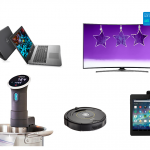
Black Friday and Cyber Monday are almost here, but you don’t have to wait for those big shopping days to pick up a bargain.
Courtesy of our partners at TechBargains, we have a selection of great deals to share with you right now, including a 55 inch Samsung 4K UltraHD Curved LED Smart HDTV (with a $175 Dell Gift Card) for just $699.99, Amazon Fire HD6 6 inch 8GB WiFi Tablet for $49.99, Amazon Echo Bluetooth Speaker with Alexa Voice and Home Automation Control (Refurb w/ 1-year Amazon Warranty) for $119.99, and much more.
What you need to know about fog computing

You could be forgiven for thinking it’s something to do with improving weather forecasts, but in fact fog computing is a type of decentralized infrastructure. In a fog computing -- sometimes referred to as edge computing -- model, computing resources and applications are placed at the most logically efficient point, whether that’s in the data center or in the cloud or somewhere in between.
The idea of this is to boost efficiency, return faster responses and to minimize the amount of data that has to be moved around. It is a key part of implementing the Internet of Things as computing, storage and networking can be placed anywhere along the line between the thing and the cloud. But while the main driver is efficiency, fog computing is sometimes also adopted to meet compliance and security requirements.
CEOs not deemed responsible for cyber-security -- but they should be

Chief executive officers in the UK are still far from being considered responsible for keeping their organizations safe from cyberattacks, according to a new report by NCC Group. The report, which the risk mitigation and cybersecurity company just released, is based on a poll of 200 UK board of directors, where they were questioned on cybersecurity. Just 13 percent say the managing director was responsible for cyber risks in their company.
Also, just nine percent named the financial director. The biggest burden is still on the shoulders of CTOs and CIOs -- 52 percent. "Boards continue to pass the cyber buck by delegating accountability to technical leads likes CIOs and CTOs. Cyber security is the responsibility of the CEO and the main board as it is the most significant issue facing businesses today", comments Rob Cotton, CEO at NCC Group.
Google will offer digital skills training for free in UK

Google has just announced that it will be offering free digital skills training to everyone in the UK with the aim of ensuring that the country's population is able to take advantage of its online tools.
The company's CEO Sundar Pichai offered further details regarding Google's latest program, saying: "No matter where you live, no matter where you're from, no matter what your job is – you deserve access to all the information, education, and opportunity the web has to offer. Our aim is to make sure that every individual and business in the UK has the support they need to make the most of online tools to innovate, compete and have fruitful careers in the digital age".
Test email brings UK's NHS to its knees

The entire email system of the UK NHS (National Health System) crashed on Monday after an IT contractor sent out a "test email" to all of the 1.2 million staff using the system.
News of the crash first appeared after NHS staff began to complain about the test email they had received from an IT contractor in Croydon on Twitter. The email itself was sent to everyone in the organization and that along with the high number of replies sent out caused the entire email system to be overloaded and go offline.
What you need to know about federated identity

As we conduct more and more of our work and personal lives using information technology, we have to sign in to lots of different systems. That can mean many different sets of credentials which can be hard to manage.
Federated identity is a way of streamlining this by linking an electronic identity and attributes across several identity management systems. This is related to single sign-on (SSO), which involves sharing authentication between systems -- such as signing onto other websites using your social network ID -- but federated identity goes much deeper.
Samsung buys Harman for $8bn

In an effort to expand into the auto market, Samsung has announced that it will purchase Harman for $8 billion to gain access to both its automotive and audio offerings.
The American company Harman is best known for its audio equipment, though it also has a large presence in the automotive market. Last year, the company earned over $7 billion, of which its connected car devices and audio systems accounted for 65 percent of the total sales.
What you need to consider before adopting Microsoft Office 365

The cloud-based office productivity software market is expected to reach $17 billion in 2016. That’s more than a 400 percent increase from 2009 when the market was valued at $3.3 billion.
With the success of cloud-based applications and their pay-as-you-go model, it shouldn’t be surprising that the cloud version of one of the most widely used desktop application packages would grow to become a popular choice for businesses. I’m of course referring to Office 365, Microsoft’s leading productivity and work software package delivered via the cloud.
SMBs hold on to their hardware longer than enterprises

Smaller and medium-sized businesses would rather wait a couple years longer before upgrading their systems, compared to large enterprises, a new survey by memory and storage company Crucial shows. Out of 350 IT decision makers in the UK, US, Germany and France, more than half (52 percent) say their company has a hardware refresh cycle of about three to four years.
Large organizations replace systems every two years or so (23 percent) while small organisations wait four years or more (22 percent). The reason behind upgrades is always the same -- their current systems are no longer good enough. Sometimes, businesses would opt to reimage and redeploy problematic storage drives (28 percent), and sometimes, they’d just buy new computers to replace the old and the slow ones (19 percent).
What you need to know about network function virtualization

We’re seeing more and more technology functions being virtualized in order to streamline operations and cut costs. Networking is no exception to this trend, though it has been slower to adopt it than some other areas, there are good reasons for this which we’ll look at later. A shift is beginning to occur though.
Network function virtualization allows network tasks to be performed by software running on commodity hardware, replacing expensive, dedicated hardware appliances. This promises easy scaling of functions and should help in the automation of service delivery.
© 1998-2026 BetaNews, Inc. All Rights Reserved. Privacy Policy - Cookie Policy.