


Something wicked this way comes… the cyber security issues that scare people most


"There is a time to take counsel of your fears," General George S. Patton once famously said. Halloween marks the end of National Cyber Security Awareness Month (NCSAM). Let’s make this the time to take counsel of the cyber security fears that keep us up at night.
We asked more than 250 business professionals from across the country to share their concerns. Their answers seem influenced by recent headlines, the pending election, and the coming shopping season.
Inventor of DNS on the DYN attack: 'DDoS threatens our values and freedoms, as well as our surfing'
Imagine standing in line at a coffee shop, the place is brimming with people all shouting their order at the one overwhelmed barista. You place your order but he can’t hear you. You shout it, you scream it over the din of the thousands of people also ordering their coffee, but the barista just shrugs because he can’t get your order much less process it. No coffee for you. As you leave you realize those thousands of other customers aren’t even customers, they were just noise generated to keep you from getting your coffee.
Welcome to DDoS.
How mobile payment adoption can pick up speed

Despite the fact that consumer awareness of mobile wallets like Apple Pay and Samsung Pay is growing all the time, the use of mobile payment solutions in the United States and Canada has so far been low. In fact, in both markets mobile payments account for only 3 percent of all transactions.
While the two payment landscapes are very different, there are similar reasons why the result has been largely the same. By the same token, there are also common factors that could see mobile payments explode in both markets sooner rather than later.
One in three Salesforce professionals want to find a new job

A third of Salesforce professionals probably won't be working at the same company in a year, according to a new report by Salesforce recruitment organization Mason Frank. The report, which the company released at Dreamforce in San Francisco just recently, says 35 per cent of Salesforce professionals admitted the desire to switch, which is five per cent up compared to last year.
They're mostly interested in bigger pay checks (62 percent), but also say this is the best way for them to get a promotion (60 percent). More than half (55 percent) want a fresh challenge, a third (38 percent) say their current employer lacks leadership and vision, and another third (33 percent) say they aren't pleased with their work environment. Another third (32 percent) are interested in working with Salesforce’s latest software and features.
What you need to know about disaster recovery as a service

Historically, disaster recovery was something that only really concerned big businesses. But as cloud adoption is continuing to grow amongst enterprises and small businesses alike and, as competition in the technology industry becomes ever-more intense, it has never been more important to be able to respond to network outages and unplanned downtime.
This is where disaster recovery as a service (DRaaS) comes in, providing a failsafe in the event of man-made or natural catastrophes through the replication and hosting of physical or virtual servers by a third-party.
What you need to know about OpenStack
Despite being launched more than five years ago and being supported by high-profile businesses of the likes of IBM, Intel, Yahoo, CERN, Disney, and hundreds of others, OpenStack is not particularly well known in business circles. This is largely because OpenStack is a cloud operating system that works behind the scenes delivering the infrastructure that organizations need to work effectively.
Speed and simplicity are its two main attributes, and since launching the OpenStack project has created thousands of jobs and benefitted countless organizations. With cloud computing continuing to grow in popularity all over the world, it’s vitally important that businesses have a strong understanding of what OpenStack can deliver.
Facebook introduces PayPal integration in Messenger app

In an effort to make it easier for users to pay through its messaging service, Facebook has added PayPal as a new payment option in the Messenger app.
The deal between the two companies will allow customers to use PayPal when shopping through Facebook Messenger -- and they will even be able to use the service to pay for items purchased through merchants' chatbots. The online payment service had added that it will also be making it easier for users to link their PayPal account to their Facebook account.
Flash storage adoption is on the rise in UK

A new survey carried out by data management company NetApp reveals the trends in flash storage adoption throughout various industries in the UK.
The legal industry is currently leading the way, with (50 percent) of respondents having already adopted it. This is followed by finance and manufacturing (both at 46 percent), education (42 percent) and IT and telecommunications (40 percent).
Productive and satisfied employees can live inside BYOD containment
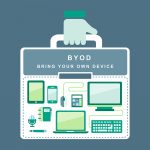
When employees started bringing their devices to work with the rise of the smartphone, companies in all industries feared what that would mean for productivity and security. Nowadays, personal devices in the workplace are a given -- so much so that Bring Your Own Device programs (BYOD) are being implemented across the enterprise at an increasing rate.
Unfortunately, those programs come at a price. Organizations that have attempted implement a BYOD program, however are largely failing as employees don’t want the company to control their entire device.
What you need to know about Internet of things

The Internet of things is predicted to revolutionize the way in which we live our lives, with many industry experts tipping it to have the biggest technological impact since cloud computing.
The reason behind such a bold claim is that IoT devices have the potential to be more pervasive than any other form of technology. By embedding Internet connectivity into everyday objects we can open every facet of our lives to technological innovation. In truth, it is impossible to say with certainty what the future impacts of this will be, and there are just as many Internet of things doomsayers as there are enthusiasts.
Dyn DDoS attack used Chinese firm's unsecured IoT devices

Following the large scale cyberattack that took down a number of high-profile sites last Friday, a Chinese electronics component manufacturer has admitted that its products were used by the attackers behind the disruption.
Hangzhou Xiongmai Technology, which produces DVRs and internet-connect cameras, has come forward to acknowledge that its products were exploited and that the attackers had taken advantage of security vulnerabilities resulting from weak default passwords.
What you need to know about BYOD

With the rise of smartphone technology, BYOD -- or bring your own device -- certainly cannot be ignored by businesses. Whether they endorse the policy of using personal devices for workplace tasks or not, employees will use the best tools, or those they are most familiar with, to complete tasks, which frequently means using their own smartphone.
Of course, this extends far beyond simply taking work calls. Smartphones in the workplace are now being used to access corporate applications and perhaps more importantly, the data that they contain. Disregarding the mobility benefits of BYOD, this raises a number of security risks that businesses must consider.
AT&T wants to buy Time Warner for $85 billion

In one of the biggest media acquisitions of all time, AT&T wants to buy Time Warner, in what is an $85 billion deal. This will enable the carrier to expand beyond being a telecommunications company and allow it to offer the media company's wealth of content to its customers, as it is currently the parent company of CNN, TNT, HBO and Warner Bros.
AT&T will pay $107.50 per share of Time Warner's stock, which is a large premium compared to what the stock was trading for the previous week. Overall, the deal is valued at $109 billion, when the media company's debt is taken into account.
Businesses find IoT devices hard to secure

Internet of things (IoT) is expected to make an enormous impact on pretty much every industry in the upcoming months and years, but it seems as organizations don’t really know how to secure their devices. This is according to a new report by ForeScout Technologies, which surveyed 201 senior IT decision makers in the UK, Germany, Austria and Switzerland.
First, the report says the threat surface is going to increase dramatically. An average business will operate 7,000 IoT devices in the next 18 months, which is "far more" than what the average company is used to securing and defending. Second, almost two thirds (65 percent) have "quite", "little", or "no" confidence in identifying and controlling their IoT devices. And third, the biggest challenge seems to be having IT functions working together.
What you need to know about hybrid cloud

In terms of industry buzz and discussion, it is unlikely you’ll find a technological concept that’s more popular at the moment than cloud computing. Since it burst on to the scene a few years ago, cloud computing has proven its utility within a huge range of business and consumer markets.
With the flexibility, productivity and cost advantages being delivered by the cloud, it can truly claim to have had a profound impact on the way that we live our lives. However, although "cloud computing" is often spoken about in relatively generalized terminology, it is far from a homogeneous resource.
© 1998-2026 BetaNews, Inc. All Rights Reserved. Privacy Policy - Cookie Policy.