


Public cloud services market to reach $208.6 billion in 2016


Both businesses and consumers have embraced the cloud and Gartner projects that the worldwide public cloud services market will grow by 17.2 percent by the end of this year.
In 2015, the public cloud services market was worth $178 billion. Gartner's projection that it will grow by 17.2 percent in 2016 will bring that number up to $208.6 billion, which is a testament to the way in which the cloud has matured and won over businesses and consumers.
What to do if your Samsung Galaxy Note7 explodes

The Samsung Galaxy Note7 is a new phone that’s on fire. Literally. The phones are catching on fire, forcing Samsung to make the unprecedented move to recall all of the phones from around the world.
Cell phone batteries occasionally explode because they utilize lithium ion battery packs. The liquid lithium is highly flammable. Modern phones are designed incredibly thin, so there’s only a slight barrier between the positive and negative sides of a battery. If that barrier is punctured, electricity flows in and heats up the flammable lithium. That’s when an explosion occurs.
One in 50 employees could be a malicious insider

If your company counts 50 people, at least one of them might be a malicious insider, according to new studies. Imperva has released a report which says that 36 percent of surveyed companies suffered a security incident involving malicious insiders in the past year. One in every 50 employees is considered to be a malicious insider.
Another interesting finding is that not all malicious insiders are disgruntled former employees looking to inflict some damage as they close the door on their way out. There are people who are using their position to transform confidential data into a second stream of income. The ramifications of such behavior can be dire -- in one example, a company has had to shut down operations for three weeks, after an attack, and another had its banking system hacked.
Cost of a cyber-attack will soon reach $1 million for large businesses

We are coming closer to the point where a cyber-attack will cost every large business more than $1 million. According to a new Kaspersky Lab report, a single cyber-security incident now costs a large business, on average, $861,000.
Small and medium-sized enterprises (SME) pay ten times less, on average -- $86,500. The new report also stresses, once again, how costs go up the longer the threat remains unseen. For an SME, it will have to pay 44 percent more to recover from a week-old attack, compared to the one spotted on the first day. Among large companies, the percentage sits at 27.
Security, disaster recovery are top IT priorities for UK businesses

UK businesses’ number one technology priority is security, according to a new survey by EACS. The IT solutions and managed services provider polled CIOs, IT directors and IT managers, and released the results in a whitepaper entitled Business & Technology Priorities 2016 survey.
Among the top priorities for them are better efficiency, operating results, increased productivity and cutting costs. The study also found one interesting thing -- all IT decision makers agree that no company can be 100 percent safe. That is why disaster recovery is in second place on the list of tech priorities.
Microsoft Outlook app gets Sunrise features
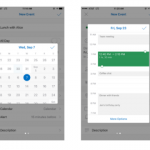
Sunrise is dead, long live Sunrise! Once considered the best mobile calendar app to ever grace us with its presence, it got acquired by Microsoft and is now officially retired.
But Microsoft has taken its best features and reincarnated them into its Outlook app's calendar, and the general feeling is overall quite positive. The updated Outlook, which is available now, comes with a couple of changes. Interesting Calendars is one of the new features, which allows Outlook to connect with businesses, TV shows and similar.
Microsoft Azure Service Fabric coming to Linux

Microsoft has announced that it will be bringing Azure Service Fabric, which allows developers to run and manage microservices, to Linux.
Azure's CTO Mark Russinovich is very enthusiastic about microservices, which the company has been using internally for seven years. Russinovich believes that the vast majority of apps even including enterprise apps will soon be built using this technology.
6 steps for defending against DDoS attacks

If your business hasn’t already faced a distributed denial-of-service (DDoS) attack, brace yourself: fake traffic is coming.
Your DevOps team and IT service desk need an action plan to handle these threats. This article will take you step-by-step through the process of identifying, stopping, and responding to DDoS attacks.
LG and Samsung facing class action lawsuit over alleged 'no poaching' agreement

A civil lawsuit filed in a Northern California federal court has accused Samsung and LG of having a clandestine agreement not to poach each other's employees in the US.
The suit was filed by a former LG sales manager who is accusing Samsung and LG of antitrust violations and believes the two South Korean companies have worked together to drive down employee wages. This case is reminiscent of the one which was filed against Apple, Google and other tech companies last year that resulted in a $415 million settlement.
Dell EMC sells Enterprise Content Division to OpenText

Dell EMC continues to offload unwanted divisions within the new company, and the latest victim is its Enterprise Content Division (ECD), including Documentum. They have been acquired by enterprise information management company Opentext.com, for $1.62 billion (£1.22bn).
The transaction is still subject to regulatory approvals, and is expected to close within 90 to 120 days. All software, associated services, and employees of ECD will be integrated into OpenText. OpenText hopes to "further strengthen its vertical offerings, customer base, managed services, and geographical coverage".
IBM introduces new servers for AI workloads

IBM introduced a series of new servers dubbed "x86 killers". The devices, designed to give a significant boost to artificial intelligence, deep learning and advanced data analytics, were picked up by the Chinese telecommunications company Tencent, and IBM claims the results are basically out of this world.
"A large cluster of the new IBM OpenPOWER servers was able to run a data-intensive workload three times faster than its former x86-based infrastructure", IBM says in a press release. "While reducing the total number of servers used by two-thirds".
HP adopts Microsoft's Dynamics CRM

HP is turning away from Salesforce and Oracle software to run its sales processes and now plans to use Microsoft Dynamics customer relationship management (CRM) software exclusively in its sales and support departments.
The two companies have entered into a six-year contract and plan to roll out Dynamics CRM to 6,500 of HP's sales staff and 20,000 of its support personnel. Though the dollar amount of this deal is still unknown, around 50 percent of the company's workforce will now use Microsoft's software and services to manage their relationships with customers.
BlackBerry launches new subscription-based Android apps

Canadian telecommunications company Blackberry announced new services for its Android Hub+ platform this week. Besides the Hub, Calendar and Password Keeper, which were available earlier, another six apps are now available for Android users, for both Marshmallow and Lollipop versions of the operating system.
These apps include Contacts, Tasks, Device Search, Notes, and Launcher, all part of Blackberry's productivity suite. They are available for a free 30-day period, after which they'll cost 99 cents per month. Hub, Calendar, Password Keeper, and Launcher will remain free, but with ads.
The outdated business practice that's sabotaging your IT budget

As our world becomes more digital by the day, IT leaders are under ever-increasing pressure to perform in a measurable way. From the demands of cutting costs and modernizing workflows to bolstering security and optimizing cloud migration, their strategic and technical priorities extend into every aspect of the business. On a more comprehensive level, 70 percent of IT leaders regard digital transformation as a top priority within their organization. With so many initiatives demanding their attention, CIOs and IT managers must allocate their time and resources wisely.
Yet there are several challenges that can obstruct the path to modern IT success. In Gartner’s 2016 CIO Agenda Report, the technology research company asked 2,994 CIOs from 84 countries to identify their main barrier as an IT leader. Twenty-two percent of participants responded with skills and resources, while 15 percent pinpointed funding and budgets as their biggest obstacle. The fact of the matter is that IT departments don’t always have the funds and resources they need to truly drive digital transformation and stay on the cutting edge of technology. A company’s available budget reflects an abundance of tireless work and careful strategy, making the question of how to save and maximize hard-earned revenue one of the most pressing issues to affect enterprises across the globe.
Microsoft adds guest access to Office 365

Microsoft keeps adding new features to its Office 365 suite, and now it has made easier for people outside a group to collaborate on files. A new feature, for Office 365 groups, allows people who aren't staff members, or members of a particular group, to join in and collaborate.
Group owners can now use the web version of Outlook to invite non-staff members in.
© 1998-2026 BetaNews, Inc. All Rights Reserved. Privacy Policy - Cookie Policy.