


It's a team effort: The new cybersecurity stack


Last week marked the end of the 2016 Summer Olympics and this year we witnessed several impressive moments. The image of Usain Bolt, giant smile and legs a-blur, is hard to forget. But equally memorable are the times that team efforts outshone those of any individual. This concept of building a cohesive, top-performing team that is more than the sum of its parts is echoed in an emerging security trend: the new cybersecurity stack.
Like the Olympics, the security industry is a highly-visible playing field, with all the fanfare and expectations and often failed dreams. Security hopes are pinned on New Gen "superstars" that are highly hyped yet don’t deliver the promised gold. However, the failure isn’t necessarily the product, but the expectation that one solution can keep endpoints secure.
Passwords are dead

If someone told you passwords were a thing of the past, you might well laugh in disbelief.
Undoubtedly, passwords have been the cornerstone of digital security for a long time. As technology has improved, however, passwords have become increasingly easy to hack, forcing the IT community to search for new solutions. Most people regularly use weak passwords -- in fact we’re getting worse at this -- but with the constantly expanding list of websites and services, the demand for us to remember unique usernames and passwords for is growing all the time.
Security experts want passwords to be put out to pasture

Russian internet giant Mail.ru has been hacked once again, and some 25 million accounts associated with forums run by the company have been compromised.
Among the data that was stolen are usernames, passwords (easily crackable, according to Secure CloudLink), email addresses, phone numbers, birthdays and IP addresses.
Intel unveils 3D NAND SSDs for data centers, IoT devices and PCs

Intel has just announced a series of new 3D NAND SSDs, aimed at PCs, data centers and Internet of Things devices. The company says the new array offers a "cost effective replacement for traditional Hard Disk Drives".
From the consumer side, there are two new devices: Intel SSD 600p Series, and Intel SSD Pro 600p Series. It uses PCIe Gen3x4, NVMe interface, resulting in a 17 times faster performance over HDD, and three times faster performance over SATA SDDs.
Google slows down Fiber deployment, may switch to wireless

Google is scaling back a project because it's too expensive for the company. No, really, something is too expensive for Google. The project in question is Google Fiber, the fiber-to-the-premises service currently being developed and deployed in the US.
According to a report by The Information, Google has basically failed -- it only has 200,000 subscribers at the time, and knowing that it set a goal of five million by the end of 2015, it's obviously not enough. Instead of fiber, the company will shift its focus towards wireless technology, as it's much cheaper. It was also said that the unit, previously called Google Fiber, and now called Access, will have to cut its staff in half, from 1,000 down to 500.
Mozilla wants EU copyright law reform

Mozilla has called out the European Union, asking it to reform its copyright laws. The current one, according to the organization, is holding innovation and economic development down. Writing a blog post on the topic, Mozilla CIO Katharina Borchert says EU’s copyright laws are stopping great ideas in their tracks.
"The internet brings new ideas to life every day, and helps make existing ideas better. As a result, we need laws that protect and enshrine the internet as an open and collaborative platform", Borchert says.
Cyber criminals using insiders to carry out telecommunications attacks

Cyber criminals are frequently turning to insiders to gain access to telecommunications networks and subscriber data, according to a new report from Kaspersky Lab.
According to the report, 28 percent of all cyber-attacks and 38 percent of targeted attacks now involve malicious activity by insiders.
Windows, Mac or Linux... Which operating system best suits your business?

With all the options out there, organizations may be having a hard time deciding which operating system to go with. The three most common are Windows, Mac, and Linux systems. But which is the best for your business?
An OS should have a robust set of characteristics to serve the diverse needs of a busy office. It should be reliable and secure, yet flexible enough to scale with business demands. The user interfaces should be feature-rich and easy to navigate for both end-users and IT administrators. Windows remains by far the most popular, used in around 85 percent of businesses, with Mac a distant second and Linux operating systems hanging in at over 5 percent.
Ransomware: 3 seconds to encryption

Imagine how you would feel if everything on your entire PC hard drive was encrypted, and somebody was demanding a large sum of money from you to make it accessible? This scenario is exactly what happens to thousands of people every day when they are infected with ransomware, and it is essentially a digital hold up. Though your life is not in danger, you face the imminent threat of catastrophic consequences from the loss of irreplaceable data.
Much of the attention in the industry is focused on the damage caused by ransomware. The common belief is that most ransomware infections are caused by human carelessness, so there is no guarantee that you will never get infected. So the focus really needs to be about how to detect and respond to a ransomware infection.
Will we ever be able to go entirely laptop free?

In a world that is fast producing new technologies every year, it’s interesting to read what technologies are reported to being on the decline. For example last month, a study from comScore has shown that desktop browsing is fast becoming a thing of the past.
In the article, from April 2016, it was stated that over the past four months, desktop use for Internet browsing has been consistently below the recorded amounts for the same time period last year. Alongside these figures, it is also stated that desktops are losing share to mobile, which now accounts for 65 percent of digital media time spent. As a result, mobile devices seem to be replacing the traditional PC -- in the age of being connected anywhere and at any time, this is hardly surprising, but what lies ahead for the other devices we hold dear?
Biometrics are less secure than passwords -- this is why

Many technology pundits talk about biometrics as the ultimate authentication solution -- the technology that will make the 'imperfect' password obsolete. Despite the hype, most companies are approaching with caution. In fact, CEB found that there are varied degrees of biometrics adoption globally, as around 20 percent of firms have actually deployed the technology.
A big reason for low adoption could be that they are less secure. And while many are touting the security of biometrics, there are four issues to consider when evaluating the technology.
Is it time to say goodbye to spreadsheets?

CFOs and Finance Directors have long been warned against the inaccuracies of spreadsheets when it comes to financial planning and analysis. However, as with everything in life, change can often be difficult to accept and this is often the case when it comes to businesses and their financial tools. Sometimes this is because they are reluctant to try something new, but alarmingly, more often than not, it is because the businesses are not aware of the different options available.
Research from Accountagility shows that 72 percent of CFOs consider their firms to be too reliant on spreadsheets. The larger the company, the more spreadsheets are deployed, and the greater the issues and headaches that occur. While Excel is clearly a central tool in many offices, businesses must also consider finance-friendly alternatives that address these risks whilst also respecting the need for control.
This is why gigabit internet is such a big deal
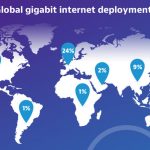
You’re watching the Game of Thrones episode you’ve been looking forward to all week, and just when you get to the pivotal scene, the stream cuts out, forcing you to adopt the salty language the show itself is known for. Your slow internet connection and your modem might face your wrath! Deep breath. Keep calm. Changes are afoot and internet connections are getting faster. How much faster?
Gigabit internet is the next generation of broadband technology and it is 159 times faster than the global average of 6.3 Mbps. A cross section of wired and wireless operators are all racing to deploy gigabit connectivity to feed our insatiable appetite for bandwidth. After all, Game of Thrones is renowned for building whole new worlds that were hardly possible on a television show just a few years ago, and communication service providers realize they’ve got to keep up.
Why encrypting virtual machines is so challenging

Virtual Machines have been mainstream for some time, and many IT managers think they have good management processes in place; they know where their machines are, their status, and the function they are performing. But is that enough? Whilst virtual machines (VMs) allow an IT infrastructure to be extremely agile in Private, Public and/or Hybrid Cloud environments, they also create opportunities for weak points, where data can be compromised.
Encryption is one of those major weak points, where VMs can be deployed without an encryption policy being followed, subverting compliance, and leading to machines in a live environment that lack the required protection. More often than not, those VMs will contain sensitive data.
US internet speeds lag behind the rest of the world

The United States Has a Speed Problem! If you’ve spent any time checking your email or surfing the internet while traveling in other countries, you probably noticed the internet was faster. When it comes to internet connection speeds, the United States doesn’t even crack the top twenty.
The fastest internet in the world is found in South Korea, where the average connection speed is 26.7 Megabits per second (Mb/s). Countries like Romania, Thailand, and Bulgaria all offer faster speeds than the United States. Incredible as it seems, if you rely on the internet for your work, you may be able to get more done on that beach vacation in Thailand than in your office at home.
© 1998-2026 BetaNews, Inc. All Rights Reserved. Privacy Policy - Cookie Policy.