


Best portable power solutions

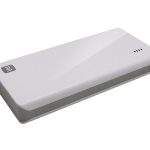
Is your smartphone battery sucking the fading fumes of its final milliamps? If it is, there is absolutely, positively no reason whatsoever for you to be frantically foraging for an AC outlet. None. Zero. Not when there are literally hundreds of portable power options in a wide variety of sizes, form factors and capacities to be had at surprisingly low prices.
For instance, you can buy a battery case for your phone. Or, you can buy a compact charger to stash in your pocket or purse. You can buy a slim battery just slightly larger and thicker than a credit card to slip in your pants. You can buy a thicker brick to tote in a bag able to recharge your dying phone multiple times. You can buy portable batteries that'll charge multiple gadgets simultaneously, portable batteries with extra memory to store photos or other files, even portable batteries with built-in flashlights.
Most UK tech workers against Brexit

The tech industry is not really hyped about the UK’s potential abandoning of the European Union, according to new reports by market analysts.
Juniper Research just released a new report which says that almost two thirds (65 percent) of UK’s tech employees believe Brexit would not have a positive effect on the global tech industry.
DoD's Hack the Pentagon will include more systems and networks

In an effort to find more security flaws in its defense systems, the US Department of Defense (DoD) has decided to expand its Hack the Pentagon program to include more of its systems and networks.
The program pays hackers to find and report the vulnerabilities in exchange for payment from the US government. So far the program has proven to be quite effective with the the first bug in the DoD’s systems and networks being discovered a mere 13 minutes after its launch.
Most UK workers don't want company-issued wearables

Despite the fact that three million Britons bought wearables during 2015, the majority of UK office workers are unwilling to wear them at work. After conducting a survey of 2,000 workers across the UK, PwC found that only 46 percent of respondents would accept a free wearable device from their company if their employer had access to the data it recorded.
In the past few years, wearables from companies like Fitbit and Jawbone have taken the consumer market by storm as a means of tracking one’s health and fitness. PwC’s survey found that two-thirds of those surveyed want their employer to take a more active role in their health and well being, and a company-issued wearable would be a good first step at doing just that.
UK government wants to fine companies for data breaches

Even though the TalkTalk hack happened last October, it’s still sending ripples through the cyber-security world. The Department for Culture, Media and Sport has given a number of recommendations, following the breach.
Among the recommendations is the idea of fining companies that fail on cyber-security, as well as the idea of linking the CEO’s pay to effective cyber-security.
Majority of consumers will embrace digital assistants like Google Now and Siri

Like it or not, we’re all going to have Batman’s Alfred Pennyworth soon. In a digital format, that is, but nonetheless an assistant.
This was concluded by research specialists Gartner, which said that by 2019, at least a quarter of households in developed countries will use the services of a digital assistant, either on a smartphone, or in a standalone device.
The top three ways to learn from data

For as long as I’ve been involved with the field, the hard-headed school of "we need a cost benefit analysis" or "build me an ROI justification" has defined the business-benefit of BI as mainly its ability to "speed up and improve decision making".
With the rise of self-service BI, the first part of that aspiration has been successfully satisfied. People are getting decision-relevant data quickly. However, the second outcome -- improved decision making -- is a less certain result (and also much harder to model in an ROI calculation than is agility).
Oracle's cloud business skyrockets, but software sales dip

The success of Oracle’s cloud computing business this year allowed the company to post better than expected results during the fourth fiscal quarter.
The company’s cloud business is made up of two parts: software as a service and platform as a service. Oracle’s customers pay to access its applications online as well as to have access to tools that allow them to program and manage apps and analyze data. Its software as a service segment added 1,600 customers and its platform as a service segment added 2,000 customers during Q4.
CCleaner Business Edition: A useful tool for companies with limited support resources [Review]
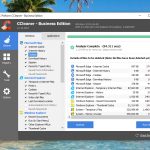
You’re probably familiar with the free version of the CCleaner system clean up tool. What you might not know is that there’s also a Business Edition aimed at ensuring small and medium business endpoints run efficiently.
Like the standard version it can remove unneeded files, recovers hard drive space, speed up Windows, reduces crashes and helps protect privacy and security. Business Edition adds the ability to clean multiple user profiles, it updates itself automatically, supports scripting, and comes with priority technical support.
Hackers selling more than 70,000 compromised servers

Pssst! Hey, kids, wanna buy a remote desktop protocol server, cheap? I guess I should say "Вы хотите купить сервер?"
Security researchers from Kaspersky Lab say they’d found a global forum, run by a Russian-speaking group, where hackers could buy access to compromised servers for as little as $6 (£4.25) per server.
Microsoft Azure will get blockchain through Project Bletchley

While many companies have been hesitant to adopt the cryptocurrency Bitcoin, the blockchain technology that made it possible is now being sought after by a number of companies due to the way it acts as a decentralized ledger that can be used to store data and keep track of how assets are exchanged.
Microsoft has just released the first details into how it will use blockchain in its upcoming Project Bletchley, which will add the technology into Azure services through some new middleware.
Samsung buys cloud company Joyent

In a continued effort to strengthen the software and services behind its mobile division, Samsung Electronics has decided to purchase US cloud services company Joyent for an undisclosed sum.
The company plans on integrating Joyent into its own mobile business, but it will continue to operate independently with its top management remaining in charge of its day to day business. This is Samsung’s third major acquisition of a US-based startup over the last two years after acquiring SmartThings for its connected home technology and LoopPay for its contactless payment service.
Hackers steal 45 million forum account credentials

The Canadian media company VerticalScope, which operates a number of support forums on a range of topics, was targeted by hackers who were able to obtain user information from around 45 million accounts.
Although news of the massive security breach has just surfaced thanks to LeakedSource, which collects information on data breaches, the actual hack took place in February when over 1,000 support forums and websites on tech, sports and other topics were infiltrated by unknown attackers.
The app generation wants to work in an office

A new report by business communications provider Fuze challenges everything we think we know about the office of the future.
While there’s been much talk about mobile and flexible working, and how the office is essentially dead, Fuze’s research states the exact contrary -- office will remain strong, if not stronger than before.
Average data breach cost rises to $4 million

The average cost of a data breach has jumped 29 percent since 2013, a new report by IBM Security and the Ponemon Institute says. This brings the figure up to $4 million per breach.
The number and the severity of these incidents keeps on growing, the two companies said in the report.
© 1998-2026 BetaNews, Inc. All Rights Reserved. Privacy Policy - Cookie Policy.