


Responsive websites trump mobile apps


GovInsider recently did an interview with Ben Terrett, the former head of design at the UK Government Digital Service (GDS), about the GDS’s success in the digital realm. The two discussed mobile apps, why websites are better, and what needed to be done in order to have a successful digital project.
Terrett said the problem with mobile apps is that they are a huge undertaking -- not only is it expensive to make an app (or multiple apps, or an app ecosystem) but also to support it and update it following various software changes.
Bing now gives malware and phishing warnings

Microsoft has changed the way it displays malware warnings in its search engine Bing to help users distinguish between the various forms of attacks that can appear in its searches.
The company has decided to replace its generic warning for websites that could be potentially dangerous for users, and instead offer separate warnings for sites that are known to contain malware and phishing sites.
Researchers remotely disable car alarm thanks to weak Wi-Fi security

Security researchers at Pen Test Partners have discovered a vulnerability in Mitsubishi’s plug-in hybrid electric Outlander that could allow potential car thieves to disable the car’s anti-theft alarms.
The security researchers investigate potential vulnerabilities in connected devices through the use of penetration testing and found that the Outlander’s Wi-Fi module can be accessed by anyone within range of the vehicle by connecting to it with their smartphone.
Microsoft releases SQL Server 2016

Microsoft has announced the general availability of its SQL Server 2016 product, after releasing a preview build late last year. The offering comes with a couple of novelties, including the updateable in-memory column stores and advanced analytics through deep integration with R Services.
SQL Server 2016 also offers advanced analytics and machine learning models in the database, which Microsoft says will have a hundred-fold speed-up in time to insight, compared to similar deployments outside the database.
Microsoft has no plans to build a self-driving car

Microsoft won’t be building its own autonomous vehicle, but it will be present in the market, it was confirmed at a conference recently.
Speaking at the Converge Asia conference, Microsoft’s head of business development, Peggy Johnson, made these claims. Instead of building its own car, the company will team up with existing car makers and see to it that the devices get powered by Microsoft’s products.
Self-driving vehicles can’t operate alone -- they haven't got the brains

It seems that the not so distant future will soon resemble a scene from I, Robot with everyone from car manufacturers to tech companies developing their own model so they can take a stake in an industry that is expected to be worth $2.81 billion by 2022.
While the prospect of a sci-fi fantasy becoming reality is whipping up excitement for many, the driving industry has been thrown into uncertainty with many predicting that fully automated vehicles will push millions into unemployment, but how realistic is this vision? Considering the current roadblocks ahead, it would appear that the idea of implementing automated only vehicles will soon be parked.
Ransomware emails see incredible jump in Q1 2016

PhishMe, a security company providing anti-phishing solutions, has released a new report, analyzing the state of phishing attacks worldwide, and the numbers are staggering, though expected.
The first quarter of 2016, compared to the last quarter of 2015, has seen an incredible 789 percent jump in the number of phishing emails containing malicious code, mostly ransomware.
There's no confidence in Internet of Things security

During the IOActive IOAsis event in San Francisco, security professionals were asked on their opinion on the state of security among Internet of Things (IoT) devices, and the results are not encouraging.
According to the IOActive Internet of Things Security Survey, based on this poll, almost half (47 percent) of respondents felt less than 10 percent of IoT devices have appropriate security measures. Almost nine out of ten (85 percent) believe less than half of IoT devices are secure.
Apple Pay struggling outside of US
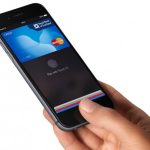
Apple Pay may be doing well in the US, but a new report from Reuters suggests that Apple’s mobile contactless payment service has not seen the same success rate outside of its home territory.
The service became available for US consumers in October 2014 and has since gained a great deal of traction and users in its home country. Outside of the US, Apple Pay is currently available in the UK, Canada, Australia, Singapore and China. However in these countries technical issues, resistance from banks, and consumer indifference have plagued the service from the start.
Human error and data breaches go hand in hand

There have been significantly more data breaches this year, compared to the year before, new figures from Egress Software Technologies suggest.
The company cross-checked data from security breaches in the past three years and says that 66 percent of the business sectors surveyed reported an increase in data breach occurrences. It would have been even higher if healthcare organizations haven’t had "just" a 13 percent increase.
Microsoft wants to build a blockchain-based identity solution

Leveraging on possible opportunities on identity systems, Microsoft is looking into building a blockchain-based identity system and it has recently sealed a partnership to further this goal.
The tech giant has made an open source collaboration with companies Blockstack Labs and ConsenSys for their current Bitcoin and Ethereum-based identity solutions, together with various developers globally.
Server shipments increase, revenue declines

Gartner has released new figures about the state of server shipments worldwide, and even though growth has been recorded, that’s not real a success story yet.
According to its figures, global servers shipment increased 1.7 percent year-on-year, but revenue declined 2.3 percent. The research company says this means that servers which were being sold same time last year were more expensive than the ones being sold now.
Internet of Things devices will surpass smartphones by 2021

Before we reach 2021, there will be more internet-connected devices (IoT) than smartphones, Ericsson said in its latest Mobility Report.
Projected growth of these devices is 400 percent in the next five years, with a total of 16 billion devices expected by that time.
Cyber risk management -- Is your company ready for anything?

In late 2013, news of a massive data breach at Target surfaced. Hackers stole personal and credit card information of nearly 70 million shoppers, and the breach ended up costing Target $162 million and the resignation of the CEO and CIO. While this was one of the largest and most widely publicized data breaches, it’s by no means one of few.
Just recently, LinkedIn came clean about its 2012 data breach – a few days after it was discovered some of the information was being sold online. While LinkedIn originally reported the email and passwords for 6.5 million people were compromised, it just admitted the real number is as high as 117 million accounts. Though LinkedIn advised people to change their passwords when the attack was first made public, it wasn’t until four years later that the company decided to cancel passwords that were affected.
Salesforce buys cloud commerce solutions provider Demandware

Salesforce has announced that it has agreed to purchase enterprise cloud commerce solutions provider Demandware in a $2.8 billion cash deal.
Salesforce will commence a tender offer for all outstanding shares of Demandware -- which boasts the likes of L’Oreal and Marks & Spencer as customers -- for $75.00 a share, with the transaction expected to close at the end of July 2016.
© 1998-2026 BetaNews, Inc. All Rights Reserved. Privacy Policy - Cookie Policy.