


Is MasterCard's 'selfie pay' too much of a security risk?


Biometrics were the talk of the town last month in Barcelona. As the world’s mobile technology companies gathered for their largest annual event, Mobile World Congress 2016, talk centered firmly around authentication and identity.
Whilst MasterCard announced it will accept selfie photographs and fingerprints as an alternative to passwords when verifying IDs for online payments, security company Vkansee was demonstrating how easy it was to create a spoof finger with clay and a pot of Play-Doh.
Malvertising campaigns now use fingerprinting techniques

Cyber-criminals are now using fingerprinting techniques in their malvertising campaigns, researchers from security firms Malwarebytes and GeoEdge have reported.
Fingerprinting is an evasion technique in which crooks, through snippets of code, check if the targeted machine is a honeypot set up by malware researchers or an actual machine belonging to a potential victim.
In Apple vs FBI, it's our freedom at stake

Ever since it was announced that all iPhones would be encrypted by default with no reasonable way for Apple to unlock them, the FBI has been locked in an ever more acrimonious deadlock with the company. In the latest and most explosive development, the FBI has chosen its battle well: could there be a more emotive subject, or seemingly good reason for Apple to comply, than a demand to decrypt a single phone that belonged to a known terrorist?
By drawing its battle-lines in this way, the FBI achieves two things. On a basic level, it makes Apple look unreasonable for refusing, and therefore makes it easy to paint Apple as the "bad guy" who is preventing the "good guys" from protecting the American people against terrorists. This is a powerful argument, and certainly seems to have persuaded all front-running politicians.
Four things I'll never forget from MWC 2016

It feels like just yesterday, I was standing in the crowded show floor at Mobile World Congress shuttling back and forth between sales meetings, customer dinners, panel sessions and media interviews. But it’s all over now and there was so much that I saw, heard and experienced at the conference that’s earned itself a reputation for being the "Oscars of the Mobile Industry".
Amidst all of it, there were four things that I’ll never forget from this year’s event.
Cloud solutions offer intangible benefits to businesses and customers

There are ways cloud-based solutions are improving businesses that are easy to spot and monitor, such as faster and more flexible access to technology, as well as less spending, but it’s the changes that you can’t see, or measure, that are transforming businesses, eg solutions says.
The Cloud Industry Forum has done the research, and here’s what cloud-based solutions can do to your business that’s basically intangible: 60 percent have reported improvements to both customer and employee propositions, and 29 percent have reported improvements in customer service.
Some smartphone users would not be 'upset' by data theft

There are two kinds of people in this world, and I don’t mean those who can read binary and those that cannot. I’m thinking about those who are aware of the security risks smartphones pose, and those who aren’t.
And according to a new survey by security firm Norton, the world is literally split in half over this -- 56 percent of those surveyed say the prospect of the financial and banking information stored on their phone being hacked is "upsetting". Meaning, for the remaining 44 percent it’s not upsetting.
Your business doesn't have a website? A DDoS attack can still happen

Just because your business doesn’t have a website, that doesn’t mean it can’t be a victim of a DDoS (distributed denial of service) attack. This sentence might not make much sense at this point, but keep reading.
Security firm Kaspersky Lab and researchers B2B International looked at what cyber-crooks go for when attacking businesses and enterprises, and here’s what they came up with:
Android Pay coming to UK
The payments industry is in the midst of something of a revolution at the moment. Leading banks such as HSBC are introducing biometric security and high-profile companies such as Samsung are ready to get rid of cash for good by focusing on digital payments.
Contactless solutions that use near-field communication (NFC) to enable payments on mobile devices are growing in popularity and, following in the footsteps of its rival Apple, Google has announced that Android Pay will be coming to the UK by the end of March.
More than half of UK businesses will embrace flexible and remote working in 2017

Next year will be the tipping point for flexible and remote working in the UK, with more than 50 percent of businesses adopting it by the end of next year. That number will grow even more, to 70 percent, by the time we get to 2020.
Those are the results of a new survey produced by Lancaster University’s Work Foundation, and commissioned by Citrix. The survey, entitled Working anywhere: A winning formula for good work?, asked 500 employees at a managerial level about the pros and cons of flexible working.
Ransomware is the biggest threat to Android users in UK

Ransomware was the biggest threat to Android users in the UK last year, a new report by security company Bitdefender says.
Even though it’s not as dangerous or prolific as its Windows counterpart, ransomware still played a major role in the overall mobile security landscape for last year.
Most consumers don't like to be tracked, but few are doing something about it

Most users know their online activity is being tracked. They’re not OK with it, yet most of them do nothing about it. Those are the general conclusions of a new quiz entitled Are you cyber savvy?, made by Kaspersky Lab.
The security firm says consumers don’t know how to protect their privacy online.
Malware spreading through cloud apps

There’s a good chance the cloud apps you use at work are laced with malware. Those are the findings of the latest report by cloud access security broker Netskope. In its February 2016 Netskope Cloud Report, the company says the usage of cloud apps in enterprises has never been this high -- ever.
In Q4 of 2015, employees used on average 769 different cloud apps, representing a 26.5 percent increase from the previous report. But (there’s always a but) -- 4.1 percent of enterprises have sanctioned malware-infected cloud apps.
Dragon Anywhere dictation app now available on Android, iOS

Dragon Professional, the dictation program from Nuance Communications, is now available on mobile platforms, both Android and the iOS.
The mobile dictation app, called Dragon Anywhere, is available in UK English for mobile phones and tablets, and it’s powered by the cloud.
Passive Wi-Fi promises major energy savings for mobile and Internet of Things devices

Researchers at the University of Washington have found a way to lower the power consumption of Wi-Fi significantly. They have dubbed the new form of low power wireless internet "passive W-Fi". It could be harnessed to power IoT devices or to help improve battery life in mobile phones.
Passive Wi-Fi will require just 59 microwatts to transmit data between devices which is 10,000 times less than the power used by traditional Wi-Fi chips in personal computers and mobile phones.
Major cities to become 'smart' by 2020
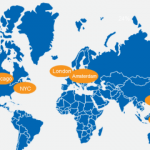
Within the next four years, a bunch of cities around the world will be transformed into smart cities, technology research firm IHS Technology suggests.
By becoming smart, they will offer operators $25 billion (£17.96bn) in opportunities.
© 1998-2026 BetaNews, Inc. All Rights Reserved. Privacy Policy - Cookie Policy.