


Yahoo will keep Alibaba stake under its name


Yahoo has decided against selling off its $32 billion stake in the Chinese e-commerce company Alibaba. Instead the company will shift its focus towards creating deals centered around its core business.
Originally the company had planned to place its 15 percent share of Alibaba into a separate company named Aabaco. Yahoo’s desire to spin-off its stake in Alibaba stemmed from the idea that this move would unlock shareholder value and increase the company’s business. Uncertainty over a possibly massive tax bill might have also influenced Yahoo’s decision to abandon its former plan.
EU signs its first cyber-security rules

European legislators have reached an important agreement, as they sign first cyber-security rules for the Union.
The rules, comprised in the Network and Information Security Directive have, among other things, asked tech giants such as Google and Amazon to be more open and transparent about their security, as that will help protect EU’s essential infrastructure, such as air and road traffic control systems and the electricity grid, from cyberattacks.
Global companies expecting fines over new EU data rules

A new report has revealed that around 52 percent of global companies expect to be fined for non-compliance with the upcoming General Data Protection Regulation (GDPR), a new ruling within the European Union.
The study commissioned by SaaS provider Intralinks and conducted by analyst firm Ovum showed that, this, too, is the average response among top nations such as UK, US, and Germany, where, 53 percent, 58 percent and 62 percent respectively may face a fine.
Working remotely: Rewarding, but also challenging

Stack Overflow has published a report that found nearly half of developers (44 percent) value the opportunity to work remotely. It’s well known that developers value the perk of remote working, but these days geographically disparate teams can be found in all sectors.
Companies with a remote workforce are among some of the most successful in the world -- WordPress, AirBnB, and Buzzfeed allow at least 50 percent of their workforce to operate remotely. For a decade or so, remote working has been for most an aspiration rather than a reality, and despite the availability of fast internet, laptops and smartphones, it’s never become the norm for most businesses and employees.
New Year's resolutions for those in IT

Ah, yes. Nothing like the crushing pressure of New Year’s resolutions to finally address everything we’ve been doing wrong for the past 12 months! (Or 24 months or 36 months or 48 months... who’s counting?) For many, the resolutions for the upcoming year will undoubtedly include healthier diets, more exercise, and less time staring at smartphones.
Of course, if joining the panicked masses overtaking the elliptical machines at the gym isn’t your style, think about the 'digital fitness' of your enterprise instead. Here are some things to keep in mind for better data practices in 2016 that won’t feel like pulling teeth (and speaking of dentistry, flossing regularly is always a great resolution too).
Patch Tuesday December 2015: The most-important patches

There we are: the last Patch Tuesday of 2015. It turns out to be about average, with maybe a bit more severity in the bulletins than usually. We have eight critical bulletins in the total 12, including one that fixes a 0-day vulnerability, currently in use by attackers to escalate privileges in Windows. 0-days used to be very rare occasions, but this year they have become almost mainstream.
After all the year started off with a string of 0-days in Adobe Flash and since then we have seen almost every month a patch for a vulnerability that is already under attack. Definitely a sign of the increasing technical capabilities that attackers are wielding and a reminder that IT Managers should not only patch their systems promptly, but also look for additional robustness.
McAfee's enterprise security software can be bypassed with a 'specially crafted username'

A kind word will open any door, but a special kind word will open all doors to an otherwise safe computer system, a McAfee advisory says.
The advisory has said that "a specially crafted username" can get past the Security Information & Event Management logins without authentication, and without a password, "if the ESM is configured to use Active Directory or LDAP".
Myths and facts about backup, restore and disaster recovery

With the rise of digital data, changing technology, and common usage of personal devices, the IT world has become ever more complex with new challenges around every corner. In the wake of such quick changes and complexity, many individuals end up exaggerating the difficulties found within these new systems and thereby begin spreading some major falsehoods within this vast IT sphere.
Even though the influx of information and discovery has given way to the creation of several urban legends, below you will see what is true and what is not.
Why not use open source encryption?

There’s a lot of talk about encryption these days. Often the issue arises when moving data to the cloud, using solutions like Dropbox or Box. We start to wonder if our information will be safe if it’s no longer stored locally on computers in our offices. We are confident that Dropbox and Box store everything in a secure way -- we have little reason to believe that they don’t, right?
Next, we think, "OK, what happens when information leaves or enters the cloud? Is our communication safe? Maybe that information should be encrypted, too". Actually, there’s no question about it. Data should be encrypted when it moves in and out of a network and when it’s stored in the cloud.
Panda Internet Security 2016: Good protection, small performance impact [Review]
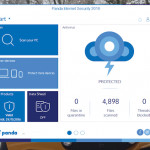
We already know the importance of defending endpoints to keep business systems secure. The latest release of Panda Internet Security offers protection for PC, Mac, iOS and Android devices, and aims to provide a wide spectrum of security in an easy-to-use package.
For businesses looking to help staff protect their BYOD devices or smaller organizations looking for desktop protection, what does it have to offer?
Toshiba may spin off its PC business following weak sales

Toshiba may be looking to spin off its PC division, and merge it with that of other computer manufacturers. The company has already stated that it plans to sell part of its semiconductor unit to Sony Corp.
Toshiba is aiming to cut out the least profitable units of its operation after an accounting scandal that occurred earlier this year.
How cloud technology benefits the healthcare system

The cloud is growing every day. It is not the clouds in the sky that people are talking about. It is the cloud of information that is being stored on the World Wide Web.
There was a time when people were limited in how much information they could store on a computer. There were also limits as to how that information could be accessed. The cloud makes information available to anyone at any time as long as they are allowed to see it. This is changing the way that people communicate and the way that business operates. Healthcare is one of the areas where cloud technology offers many benefits.
Most mobile apps have encryption flaws

Encryption is not all it’s cracked up to be according to a recent security report, with coding flaws introducing a number of vulnerabilities into smartphones and their software.
Seven in eight Android apps and 80 percent of all iOS apps have encryption flaws, claims Veracode’s State of Software Security report.
Microsoft releases new Office 365 SMB plans

After announcing the subscription-based service in 2014, Microsoft has now made available three new Office 365 small/mid-size business plans to its existing business customers.
The three plans -- Office 365 Business Essentials, Office 365 Business and Office 365 Business Premium -- are replacing the current Office 365 Small Business, Small Business Premium and Midsize Business plans.
Share files using public cloud and you might get fired

"You’re fired!" is a line we only really expect to hear from Alan Sugar these days, and even then, only for entertainment. Yet recent research reveals that file sync and share challenges could be putting UK employees at risk of hearing these words, or at the very least, of receiving a written warning.
It’s a familiar situation for most employees working in office environments -- you have some urgent files that need to be sent to a customer or partner on a tight deadline. The files are too big to be emailed and the person administrating the FTP-Server is, of course, on holiday. Being a hands-on, solution-oriented employee who is well versed with modern technology, you decide to share the files through a cloud-based file sharing solution like Dropbox or Box. With the job done and the customer happy, you might be expecting a pat on the back as a reward not a written warning, or even worse, a letter of termination, but that is the hidden reality for most UK employees.
© 1998-2026 BetaNews, Inc. All Rights Reserved. Privacy Policy - Cookie Policy.