


Why the password is still here to stay


With everything from your local takeaway to fashion retailers and airlines now requiring an account, it is expected that within five years we will have, on average, over 200 accounts requiring passwords.
Managing passwords has become a nightmare for almost all internet users. In the face of this, people respond differently. Some of us use the same passwords for all our accounts. This is naïve -- each password acts as a gateway to our valuable personal data and using a single password means that one breach results in vulnerability on all fronts.
The best methods for transferring data between computers to ensure an efficient migration

There are currently more than 600 million personal computers in use that are at least four years old and ready to be replaced, according to research from Intel. That is a huge number of people who are going to buy new computers in the near future, and they will all need to migrate their applications and data to their new PC. However, moving into a new PC can be a challenge. Most users have spent years shaping a comfortable PC environment -- its "personality". Getting a new PC similarly configured and setup, with all the applications and data, can be a daunting task -- one that is time-consuming and often difficult for non-technical consumers.
The good news is that migrating data and applications between computers doesn’t have to be an arduous, dreaded, fear-ridden process. A new computer typically means faster computing speed, more memory and enhanced new features. It also represents an opportunity to start fresh by organizing your computer’s content (i.e. archiving old files and cleaning up folder structures) before the transition. Transferring files and data between systems or via the same platform doesn’t have to be a complicated undertaking if you know the proper steps to take. Here are the three stages of an efficient and convenient migration.
Microsoft Excel: 7 top tricks that you should know [Infographic]
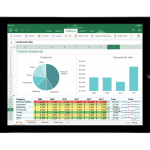
Microsoft Excel has been around for 30 years, it’s one of the most popular programs in the world and it’s likely that most of us at some point or other have used spreadsheets at work.
Recent reports show that, 78 percent of middle-skill jobs require digital literacy and 67 percent of office roles require expertise in Microsoft Excel. So sharpening up your Excel skills really can help improve pay and job prospects.
8 early warning signs of problems in your data governance plan

Unfortunately, at any given time, almost every company has data issues, ranging from the minor to the severe. In almost all cases these issues tend to go neglected until problems arise. The fallout can range from unforced errors, such as inaccurate sales forecasts resulting from data redundancies, to public relations disasters caused by data breaches.
The key is having an effective data governance plan in place so that data issues are addressed before such crises arise. Here are eight common signs that there may be trouble on your data horizon.
Maximizing IT budgets to achieve better business outcomes

According to global analyst firm Gartner, global spending on IT products and services is forecast to hit $3.5 trillion in 2015. Spending on IT is an initiative undertaken not just by CIOs, but by CMOs and other line of business managers that need solutions to drive growth. More and more, technology has become linked to business outcomes, and this has inadvertently led to the uptick in IT purchasing.
It has never been more important for IT professionals to gain control of budgets and think of new ways to help their organizations make more informed decisions, especially when it comes to allocating budget resources. Here are four tips on how IT professionals can maximize their budgets to achieve business ends:
Moto X Play review

Motorola’s Moto range for 2015 includes two variants on the standard Moto X. The Moto X Style is focussed on how it looks, and this phone the Moto X Play is aimed at providing a good entertainment experience.
To that end it has a large 5.5-inch 1080p screen, a standard version of Android and a 3,630 mAh battery that promises plenty of use between charges. There’s a 1.7 GHz octa-core processor, 2GB of RAM, 16GB of onboard storage (a 32GB version is available too), plus 21 MP rear and 5 MP front cameras. Naturally it’s 4G and has dual-band Wi-Fi.
Apple gives you the middle finger

Apple in its operating system update to iOS 9.1 in autumn, is set to give users not only a better user interface. It is also set to add new emojis, which will include the "hotly-anticipated" middle-finger image.
The Unicode Consortium, the industry body which sets the standard cross-platform options, has approved a new batch of emojis in June 2015. Some of these designs, as well as previous approved lists, can be used in the iOS 9.1 update, which has just been made available in beta.
The rise of telecommuting: 45 percent of US employees work from home

The traditional 9-5 working day of driving to an office, sitting in a cubicle for hours and then forgetting all about work at the end of the day is all but extinct.
Thanks to telecommuting and the rise of millennials on the workplace, employees are now able to work from pretty much anywhere at any time of day, with little or no disruption or sacrifice in productivity.
Health insurer discovers hack half a year too late

A health insurer in upstate New York was hacked, and more than 10 million of its members might have had their data stolen, Reuters reported on Thursday.
The Rochester-based insurer Excellus BlueCross BlueShield said it and its affiliates had been the target of a sophisticated cyberattack. It is offering free identity theft protection services to the affected.
SMBs in the cloud -- managed services or in-house IT?

The cloud has become a truly winning innovation for companies of all sizes, causing a significant upturn within the IT sector and business as a whole. Previously, companies went to great lengths to scale their own in-house IT infrastructure, as it was seen as a great benefit to run the business through technology maintained on-site. Now however, there is a push toward an online service delivery model, leaving organizations wondering which setup is best for them.
In many aspects, small and medium-sized businesses (SMBs) stand to benefit the most from cloud-based technologies. Dealing with limited budget, it has not always been easy to for small companies to take advantage of information technology -- the purchase, upkeep, and eventual replacement of hardware is extremely expensive, not to mention the salaries paid to the IT professionals that maintain it. Fortune 500 companies can afford this type of capital costs, whereas SMBs could have travel outlaying that much cash.
Apple's shares expectedly drop after 'Hey Siri' event

Apple’s shares went down some two percent following Wednesday's event which saw the unveiling of a couple of new products.
Apple unveiled the iPhone 6s and the iPhone 6s Plus, as well as the new iPad Pro, Apple TV and a couple of new features for the Watch.
Enabling a global workforce to realize their potential with technology

An organization is only as good as its talent. As companies become more global they find themselves having to manage a distributed workforce across many continents and time zones, while speaking many languages. Whether gender, age or race based, a workforce’s diversity contributes to a variety of insights and advantages to general corporate culture. Most leaders would agree in principal that it’s imperative to create an environment where employees are able to play to their strengths, while supporting their areas of challenge to achieve mutually beneficial goals. One immediate way to leverage the diversity of a global workforce is through selecting and adopting a common business language.
Many companies have publicly expressed their choices; The Le Tour de France’s official language is English, Rakuten in Japan publicly committed to a new strategic initiative, "Englishnization", or the process of using English to break down linguistic and cultural boundaries. Getting your team to learn how to communicate and collaborate in business English might be a golden opportunity. The question isn’t so much about if this is a good idea, but rather how do you do it when your workforce is spread around the world, and when talented native trainers are so rare in developing countries.
The challenges facing modern sports venues

Today’s modern sports venues have many operational challenges. They often host multiple activities including sporting events, concerts and even the circus and rodeo. Most venues are designed to quickly change in layout and function for these different events. The faster and more efficient these changes can be made, the lower the operational costs and maybe even the more events it can host.
Fans have high expectations for using their mobile devices when visiting arenas. Almost everyone has a smartphone and expects to be able to upload pictures or even shop if the event gets boring. We all expect our mobile devices to work as data devices and be able to access all that the world offers all the time, and being at an event is no exception.
Intel wants you to forget what it's like to use a password
Intel wants you to buy new PCs and laptops based on its latest, 6th generation Core processors. They were released last week, and power some of the latest Windows 10 devices.
Intel’s selling point? With the new processors, you can forget about passwords and use facial recognition software and other methods for logging in because hey, no one likes passwords any more.
Samsung Pay attracts 25,000 new users every day

Following Samsung Pay’s launch in South Korea last month, the company is now seeing that an average of 25,000 people are signing up to use the service daily.
Samsung Electronics executive vice president and the development lead for Samsung Pay Injong Rhee, says that the payment platform’s usage has increased rapidly since its launch and is bringing in daily transaction volumes of KRW 750 million (~$630,000) on average.
© 1998-2026 BetaNews, Inc. All Rights Reserved. Privacy Policy - Cookie Policy.