


How to make life difficult for Internet of Things hackers


The "Internet of Things" is a buzzword which is becoming more and more prevalent in today’s society. This is mostly due to the rise of crowd funding schemes and an insurgence of low power, highly capable microcontroller platforms such as Arduino.
The Equity Kicker expects 33 billion devices connected by 2020 with a large portion of them falling under the IoT umbrella term and Forbes are predicting some pretty mind-bending revenue estimates over the next few years. Many of these devices are greatly enhanced by increased connectivity to the internet where they have access to large amounts of cloud based computing power.
Alibaba has to expand globally, or it 'won't be able to last'

Even though it reigns supreme in one of the world’s largest markets, China, Alibaba wants to expand globally. If it fails to do so, it might not survive, the company’s new CEO said recently.
In a speech given to employees on Wednesday, the new Alibaba CEO Daniel Zhang said Alibaba will heavily invest in "new and existing overseas operations".
Our attention span is shorter than that of goldfish

The results of a recently conducted study have shown that our attention span is... oh wait, I lost you.
That’s right. Our attention span has dropped from 12 seconds back in 2000, to an alarming eight seconds today. To put things into perspective, a goldfish’s attention span is nine seconds. So yes, a goldfish can read this article longer than you do without getting bored to death and opening Facebook.
Apple is the greenest tech giant according to Greenpeace

Internet companies might not seem like major contributors to pollution, but Greenpeace is not letting them have a free ride, in a new report showing how some companies are much cleaner than others when it comes to energy.
For those that don’t know, most large-scale Internet companies invest heavily in data centers. These data centers run on electricity 24/7, meaning companies like Google, Oracle and Amazon are indirectly pushing the rate of pollution.
China military bans smartwatches to lower security risks
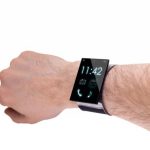
China has warned its soldiers not to use smartwatches and wearable gadgets as they could be in breach of army security protocols.
The country’s military issued a statement against the use of Internet connected devices after a recruit attempted to take a photograph using a smartwatch. Restrictions surrounding mobile phone use are already in place.
How technology helps Nepal relief efforts

The earthquake that struck Nepal two weeks ago has claimed the lives of more than 8,000 people, while a second has caused the death toll to rise further still. Natural disasters such as these shine a light upon the fragility of human life when faced with powerful tectonic forces.
Despite advances in earthquake prediction, it is still nearly impossible to say exactly where and when an earthquake will strike. Experts have been predicting that a huge quake would hit Nepal eventually, but when it did there was still little that anyone could do.
Intermex allegedly fires employee for removing privacy-infringing app

A Californian woman is suing her former employee after being fired for deleting an app that was tracking her movements at all times. The company instructed her to run the app, which monitored her via GPS, 24 hours a day.
According to the lawsuit, plaintiff Myrna Arias alleges that her employer, money transfer firm Intermex, fired her after she uninstalled job management app Xora. She also alleges that her boss John Stubits boasted about being able to monitor her during out-of-work hours.
The Top Gear we love could return as Netflix's House of Cars

Netflix might be looking to revive Top Gear, following Jeremy Clarkson’s BBC outing after punching a producer in the face over a cold steak.
That is not the weirdest part of the rumor, it is what Netflix is planning to rename Top Gear, since it cannot use the BBC’s brand. The Mirror is reporting that Netflix plans to name the show House of Cars, and it will feature a similar format to Top Gear.
Worried about damaging your Apple Watch? Get a case for it!
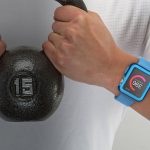
Our smartphones might need protection, as their displays can be scratched by keys in our bags and pockets. We might also drop them in a moment of inadvertency, or we might slip whilst texting and go down, bringing the expensive device down with us.
But what about a smartwatch? Does the smart wearable device which has no contact with car keys and has close to zero chance of falling to the ground need protection?
The main obstacles to BYOD mass adoption

After nearly two decades of having smartphones and other devices that are exclusively for work purposes, there has been little headway in making Bring Your Own Device, or BYOD, a standard practice in the work place. In fact, it is nearly unheard of as a standard accepted business practice.
What exactly is preventing this convenient solution from becoming the norm? Here are a few of the major reasons why BYOD has yet to take off.
AI to humanity: Open the box or suffer endlessly

You may remember the allegory of the cave, or Descartes’ "veil of perception". If not, you probably remember the Matrix. Whether the method is pop culture or philosophy, you’re most likely aware of the concept of the universe you live in being a mere simulation of reality.
Eliezer Yudkowsky of the Machine Intelligence Research Institute has put forward a scenario to consider the effectiveness of trapping an AI to study it. But could humans hope to outsmart an AI which is hopelessly beyond them? He suggests that any sufficiently advanced intelligence would be irresistibly persuasive, making them impossible to safely study.
Smartwatch sales set to boom over the next five years
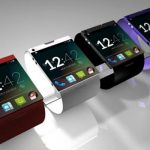
The smartwatch frenzy has just started and is expected to continue to boom in the next five years.
According to a new analyst report by research firm IHS Technology, the 3.6 million smartwatch shipments in 2014 will grow to 101 million in 2020.
Internet of Things cannot remain a security blind spot
The network is more exposed than ever before with the expanded attack surface IoT brings, leading to increasing support for securing interconnected devices. As the Industrialization of Hacking evolves, so does the number of vulnerable end points on the network including physical systems, mobile devices and wearable technologies.
The biggest challenge is a lack of visibility. The key to seeing an attacker’s every move, from control networks to the data center to the cloud, is contextual visibility by monitoring events and actions across the entire threat landscape before, during and after an attack. Only then will IT be able to continuously detect threats and address them in real time, decreasing the risk that the malicious activity will go undetected.
What the new Conservative government means for the UK's digital economy

Following the Conservative Party’s election win last week, David Cameron, somewhat unexpectedly, is now able to form the first all-Tory cabinet since 1997.
The officials appointed by the returning Prime Minister will have a huge impact upon government policy over the next five years and may well shape the future of the country’s education, health care and economy for many more years beyond that.
The best (and more affordable) Apple Watch alternatives
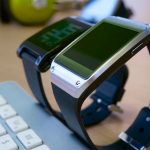
The Apple Watch is only a couple of weeks old, but there have already been a few reported issues with the device. Its health sensors struggle when users have dark tattoos, some have criticized its long load times and the launch period did not go entirely to plan, with consumers having to wait longer than expected to receive their smartwatch.
However, perhaps the biggest hurdle for some consumers is the price of the Apple Watch, which ranges from $349 to more than $15,000. Of course, that hasn’t stopped the wearable gadget from racking up impressive pre-order figures, but if you are looking for an alternative wearable, we’ve listed the best below.
© 1998-2026 BetaNews, Inc. All Rights Reserved. Privacy Policy - Cookie Policy.