


Network monitoring: A Day in the Life of an IT Pro

Sometimes I feel a bit sorry for the network administrator.
End users who don’t really know much about technology always lay their problems at their door first -- "I can’t access my emails, is the network down?", "My Word document is typing really slowly, is the network down?" "I’ve forgotten my password, is the network down?"
Apple's App Store outage cost $25 million in lost revenue
Apple’s App Store went down for over 11 hours on Wednesday, alongside iTunes, iBooks, iCloud and even its Mac App Store.
It is the single largest outage Apple has faced, and happened due to an internal issue with its DNS [domain name system].
Apple Pay is the reason Apple Watch won't fail
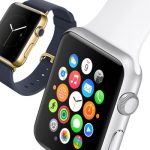
If you watched the Apple keynote, then you got a great view of the Apple Watch. While I’m definitely not one of the few who will buy the $10,000 version of the watch, I do believe it will be a success, largely due to one feature: Apple Pay.
Samsung, Motorola, and Pebble already have watches with similar features to the Apple Watch. In fact, I thought it was funny to listen to Apple employees talk about how they can’t live without their Apple watch because of all the notifications the watch sends to their wrist.
Samsung Galaxy S6 has the best smartphone display ever
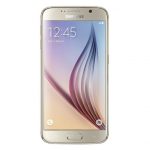
The Galaxy S6 is getting a strong reception from critics, and another tick in the box is the latest rating from DisplayMate, the screen testing experts.
Indeed, DisplayMate has just crowned the Galaxy S6’s display as the best in the smartphone world -- albeit tied with Samsung’s own Galaxy Note 4.
LG: Apple has it right -- smartwatches should be a fashion item first, gadget second
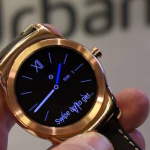
During the Wearable Technology Show in London, LG’s head of business development Justin Jungsup Lee spoke about smartwatches, early adopters and sales.
Speaking in front of a packed out room in the LG keynote, Lee said that smartwatches should be more of a fashion item, and less of a gadget. And least of all, a smartphone accessory.
Nest looking to make a move into home audio
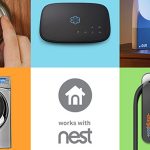
Nest, the home automation company that designs and manufactures sensor-driven, Wi-Fi-enabled, self-learning, programmable thermostats and smoke detectors, is making a move into home audio.
A recruitment add appeared on the Nest website, seeking a "highly technical Head of Audio to lead the development of Nest Audio across hardware and software, present and future".
The future of Ethernet looks brighter than ever
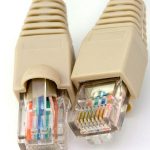
Ethernet has become not just the dominant standard, but the universal technology of local area networking. If you plug a networking cable in at work or at home, it’s almost certainly going to be using Ethernet. Over its 40-year history, Ethernet has risen from contender to unopposed winner in the LAN.
But its abilities now stretch well beyond the building at hand. In this feature we look at how Ethernet is far from having a mid-life crisis now that it’s past 40, and could be about to enter an even more dominant era than it has enjoyed over the last few decades.
Why Apple Watch could be doomed
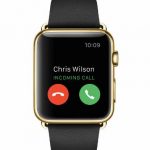
"The most advanced timepiece ever created". This is how CEO Tim Cook described the Apple Watch at his firm’s official launch event.
However, will the device’s flashy exterior and high-tech internals be enough to ignite the wearable market? Will it even be enough to tempt consumers to pay the $349 for the basic edition, let alone the $10,000 for the 22-carat gold model? These are the questions that Apple execs will surely be pondering, even with the launch event being well-received for the most part. There are many hurdles that Apple will have to overcome if its first foray into the wearable market is a successful one and we’ve listed a few of them below.
The next generation of CryptoWall malware emerges

After a short-lived hiatus, the creators of CryptoWall have re-emerged with the next generation of the devious malware, coined "CryptoWall 3.0". Just as security experts thought they had a handle on the original threat, the emergence of version 3.0 sparks debate as to what signals to look out for and how to protect against the rise of ransomware variants.
So what's new? Since making its debut last fall and wreaking havoc on thousands of businesses and individuals globally, CryptoWall is the biggest name in ransomware threats. Its predecessor, Cryptolocker, started the snowball effect in 2013 as one of the first ransomware strains to enter the marketplace.
How to thwart spear phishing attacks

Many of the recent, large data breaches such as Target, Anthem, and Sony started with a sophisticated spear phishing attack: an email targeted at specific individuals within a corporation that is engineered to look legitimate and fool even tech-savvy users. The email either has a malware-laced attachment or a malicious link that when opened installs malware in order to attempt to gain system access and steal data.
Unfortunately, since stealing data is lucrative nowadays, these spear phishing attacks are often very sophisticated and hard to spot since they have been composed with considerable effort and target only a small number of individuals. The emails look legitimate so regular spam filters cannot identify them and not all anti-malware engines will always be able to detect the malware in the attachment. So what can companies do to protect themselves against spear phishing attacks?
All aboard the Internet of Things bandwagon
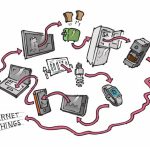
If you’re a sports fan, you’re likely familiar with the term "bandwagon fan" -- we all know someone that has "jumped on the bandwagon" based on a team’s recent success. Often, these "fans" face backlash from diehard followers due to a perceived lack of prior support and limited knowledge of the team.
However, in the technology world, being a bandwagon fan can be the difference between success and failure. Think back to the introduction of the Internet -- from the beginning there were skeptics who believed it was just another fad that wouldn’t amount to much in the end. As the Internet gained momentum, it became clear that those who didn’t jump onto the bandwagon would soon be left in the dust.
How crowdsourcing in Japan is changing ideas about work

Crowdsourcing has become something of a phenomenon in recent years. It has usurped traditional ways of finding work, gathering information and getting projects large and small off the ground.
The category can be segmented into sub-categories like "Crowdfunding" (Kickstarter, IndieGogo, Crowdcube), "Cloud Labor" (Elance, oDesk) and "Distributed Knowledge" (Wikipedia).
How cloud solutions can meet the needs of the on-demand economy

You may have heard the term "on-demand" before, but what exactly is it? The on-demand economy is defined as economic activity facilitated by technology companies that fulfill consumer demand via the immediate provisioning of goods and services. In an on-demand situation, the supply of the goods or services is driven by an existing technology infrastructure that provides speed, accuracy and most importantly access to the product when the customer wants it.
This on-demand economy is revolutionizing commercial behavior. With years of technological investment and shifting consumer behavior, it’s not surprising that the numerous companies, across a breadth of categories, are driving industry growth at an alarming pace.
Wearables are perfect for the enterprise
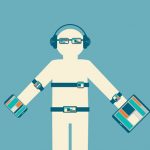
In recent years, we have seen that wearable technologies such as smart glasses and smart watches have been met with a flat response.
However in the enterprise space these technologies can provide real benefit in key areas such as ones that require speed, safety and working with large data which a consumer is not exposed to.
Driverless car tech could lead to better robots
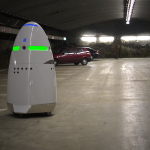
We’re only a few steps away from real-life Transformers. Or Terminators. Or both.
A recent report from the consulting firm McKinsey says the technology used to build the self-driving cars could end up in robots, benefiting the human race in many ways.
© 1998-2026 BetaNews, Inc. All Rights Reserved. Privacy Policy - Cookie Policy.