


Xiaomi: Hand over your iPhone, get a Mi Note flagship for free


Xiaomi is going hard against Apple in 2015. CEO Lei Jun recently gave several shoutouts to the Apple's inferior design quality on the iPhone 6 when compared to the Mi Note.
And now the next step in the battle will focus on swapping iPhones for Xiaomi Mi Note and Mi Note Pro at no extra cost, according to a new report citing Xiaomi's media development director.
What Back to the Future II's vision of 2015 got wrong

To celebrate the fact we are now in the year Marty McFly was teleported to, yesterday we had a look back at what Back to the Future II creator Robert Zemeckis got right in his look forward to the year 2015 where he envisaged everything from smart homes and wearables to hoverboards.
There was, of course, also a whole lot he got wrong about the future, and here’s a rundown of the things that didn’t go according to his vision.
5 reasons your company won't incorporate BYOD

The debate on both sides continues: the pros and cons of incorporating the BYOD concept into the workplace. BYOD has, indeed, become a hot topic where debates on both ends of the discussion-spectrum range from 'lower business costs and happier employees' to 'security hazards and added burdens on IT departments'. Even though proponents would argue that the benefits of incorporating BYOD into business environments outweigh any risks, one only has to examine those very risks to realize their potential for harm is too concerning and cannot just be swept under the proverbial rug.
Here are five reasons your company would want to think twice before adopting a BYOD strategy:
Let's talk about SaaS

It's hard to track down the exact origins of the phrase "Software as a Service" (SaaS), although it seems that it dates as far back as 2001.
When most people think of SaaS, they think of web-enabled applications like Gmail and Salesforce, which is not surprising. The public cloud and advancing web technologies created a popular trend of building web-apps hosted by a particular vendor and delivered (streamed?) over the Internet. Subscriptions make logical sense since you never really download the software, and instead access it on demand. So instead of buying a perpetual license to *Version X* of the software, you buy a monthly/yearly/etc subscription and in exchange get an always up to date version of the software and support.
What Back to the Future II's vision of 2015 got right

Marty McFly visits the year 2015 in Back to the Future Part II, the sequel to Robert Zemeckis’ 1985 masterpiece "Back to the Future".
Now that we’ve finally hit the year portrayed in the film it’s time to give them a report card on the things they got right.
What retailers need to do to take advantage of the Internet of Things

If you have ever visited your local electrical retail chain only to discover that you know more than the salespeople do, get ready for a whole new era of dissatisfaction.
Internet of Things buzz at the Consumer Electronics Show reached fever pitch this month. Smart home and wearable gadgets like thermostats, kettles and watches represent the first new product categories technology retailers have seen in years. Interested customers will expect retail staff to be knowledgeable experts, able to educate us and answer questions that guide us through purchasing decisions. Their managers will expect them to have sufficient knowledge to make the sale. But, while buyers nowadays are arming themselves with highly detailed product information found online to ask ever-more complex questions, busy sales staff often only seem knowledgeable about a few characteristics of each of a store’s wide product offering.
How to remove embarrassing photos from social networks

Sharing photos and videos online has never been easier. Internet access is available practically anywhere and everywhere, and interconnected wearable and portable devices with photo and video recording options are omnipresent.
In such a world, getting the wrong material posted online can become a huge problem, especially for teenagers unaware of the consequences.
UK government tries sneaking previously rejected snooping laws into Counter Terrorism bill

The UK government has been trying to impose new surveillance laws on the internet at large, but for the past four years privacy activists have thwarted attempts by Labour and the Conservatives.
In a recent push, the government secretly added 18-pages to the Counter-Terrorism and Security Bill (CTSB), including a mirror image of the Communications Data Bill, rejected in 2012 for the potential of national surveillance on every person.
When cybersecurity makes the difference in protecting life

We can always learn from the public and nonprofit sectors. Many times these organizations must work virtual information technology miracles, without the means available to the enterprise sector. In fact, some of their IT security lessons are particularly important, given how nomadic data has become in the age of the "cloud".
One such standout organization is Lawyers Without Borders (LWOB), a nonprofit based in New Haven, Connecticut. LWOB marshals together hundreds of volunteer lawyers from the world’s most prestigious firms to work on cases worldwide. These legal pros offer their varied services pro bono, in the interest of supporting the rule of law, economic development, conflict resolution, and the promotion of peace.
The effect Obama's new cyber laws will have on UK firms
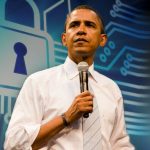
President Barack Obama made clear in his State of the Union address earlier this week that he intends to push through new legislation aimed at tightening corporate cyber security standards across the US. Just as the US’s Sarbanes Oxley Act of 2002, designed to improve the accuracy and reliability of corporate disclosures in the wake of the Enron scandal, effectively forced companies wanting to partner or do business with US corporations to comply with its rulings, so Obama’s proposed cyber laws are likely to have a global ripple effect across businesses outside America. Companies based in countries like the UK will need to tighten their own cyber security if they expect to do business with American firms which might otherwise see them as a weak link and potential vulnerability in their communications and data networks.
In his address to the nation on Tuesday (January 20th 2015), Obama said: "I urge this Congress to finally pass the legislation we need to better meet the evolving threat of cyber-attacks, combat identity theft, and protect our children’s information. That should be a bipartisan effort. If we don’t act, we’ll leave our nation and our economy vulnerable".
We hate spending too much time on our smartphones, but do it anyway

Approximately two-thirds of Britons hate how much time they spend using their smartphone, according to a new survey by Voucher Codes Pro.
A poll of 2,500 UK adults found that 62 percent resent the fact that they find it so difficult to stop using their phone.
Five iconic phones that came before iPhone

It’s weird to think that this time 10 years ago we still hadn’t been interrupted from our feature phones to grasp hold of Apple’s smartphone revolution, which in fact didn’t take place until mid-2007. Those gray (or off-yellow) and black tinged days when all we wanted to do was type a text that was longer than 161 characters and play games about slithery animals on small screens.
So grab a hold of your eBay account details as these five beauties will have you bidding on bricks to help you relive those days.
Why I couldn't care less about smartphones

Smartphones make me fed up. There. I said it.
Every year since Apple released its paradigm shifting iPhone 3G and pushed the industry into the stratosphere there has been nothing to get truly excited about in a sector that should be just that: exciting.
Brits are ready to be 'digital by default'

A new study from Fujitsu has revealed that UK consumers are ready for a nation that is digital by default.
Over a fifth of us will always opt for a digital-first approach, when a digital service is offered. Driven by a desire to speed up (66 percent) and simplify (62 percent) everyday processes, the results show a digitally confident nation, one that is seeking to move faster towards a digital future (39 percent) and that would vote for a political party if it focused on digital policies (20 percent).
5 main reasons why Google Glass failed
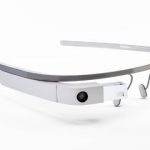
Google pulled its wearable headset last week after under two years in the wild that saw it aim to revolutionize the way we use technology.
In truth, people were writing the obituaries for Google Glass way before it finally got canned. Google says it eventually intends to bring out a new version of the Glass, but let’s look at the five reasons why it didn’t prove a success this time around.
© 1998-2026 BetaNews, Inc. All Rights Reserved. Privacy Policy - Cookie Policy.