


Apple files a patent for a phone that bends -- wait, doesn't it already have one?

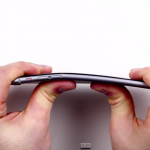
Apple has filed a patent for a flexible phone (or more broadly a flexible portable device), which can be bent or even folded up without damaging its internal components.
Given the bendgate controversy of last year, whereby Apple’s new iPhone 6 models were found to bend slightly (as pictured above) in some cases -- but then, as was later proved, so can any thin metal phone -- there are bound to be a few jokes cracked about this one.
The battle of the translators: man vs machine

Once, machine translation was only possible in a galaxy far, far away -- from Star Trek’s Universal Translator to Hitchhiker's Babel Fish. But now that Microsoft’s Skype Translator enables callers speaking different languages to converse in real-time via machine translation, that science fiction fantasy has become a non-fiction reality. But in the battle of the translators, who wins -- man or machine?
Skype’s new translator is an impressive technological feat that is able to take spoken words, convert them into text, translate the text, and then synthesize it back into spoken words in the language of the person on the other end of the call, all in a fraction of a second. All-in-all a platform that will be enormously helpful for breaking down barriers and enabling business and social conversations across the planet -- If you haven’t tried it, find a Spanish-speaking friend and check it out. You will be muy soprendido.
Sony unveils SmartEyeglass Attach and Smart B-Trainer headset

Sony has announced a couple of new products over at CES which are exploring new concepts in wearables -- though it hasn’t got a huge deal to say about them at this stage.
Specifically, Sony has been talking about its SmartEyeglass Attach, a new concept that further builds on the prototype SmartEyeglass Developer Edition. The Attach is basically a single lens display which can be attached to a normal pair of glasses to provide a small heads-up display for the user, which will work with various sport apps (a number of apps are underway).
The banking loyalty conundrum: security versus convenience

Online banking feels like an accepted channel for today’s consumers, especially compared with its latest mobile incarnation. Yet, with online attacks becoming more sophisticated, banks must remain vigilant by implementing technology defenses while enabling the online channel to provide the convenience that customers now expect. However, with their technology defenses, banks must be wary of putting both existing and prospective customers off with tedious password-enabled security measures. Creating a delicate balance between strong security and convenient access is an ongoing challenge.
Recent independent research commissioned by Ping Identity discovered that more than a third of customers would abandon their bank altogether for an experience that combined both security and convenience. Furthermore, only 28.7 percent of respondents described themselves as 'very loyal' to their bank. Banks are clearly walking a fine line with their customers.
Microsoft looking to do much more with Kinect

Microsoft is expanding its Kinect team in order to push the boundaries of what is possible with motion sensor technology.
The Redmond-based firm posted a job listing online, hinting at some of the innovative features likely to be included in later versions of Kinect.
5 major modern network headaches for IT managers

Identity, access and governance issues remain a priority or many, yet create a number of hurdles for organizations worldwide. But these are not their only pain points. Various systems and multiple networks often stand in opposition to a streamlined approach, but are vital to the automation of a workplace.
Saving time for IT managers from floods of password reset calls, for example, allows these teams to focus on more important priorities, but this is not their only headache. In fact, there are several modern headaches that IT manager unfortunately must face. But there are simple solutions. Let’s take a look.
The key IT trends to expect in the year ahead

Now that 2014 is done and dusted, it’s time to look ahead and start thinking about what this year has in store.
We recently had the chance to hear from Getronics CIO Tim Patrick-Smith, who shared his thoughts on what will be some of the key IT trends in 2015.
Top social networking regrets include immature comments, boring updates and vain selfies

The average Briton has 15 'internet regrets' -- things they wish they hadn’t done online -- according to a recent survey.
Everyone has in the heat of the moment posted something onto the internet without realizing the possible consequences. From rants about work and the boss to compromising photos and soppy status updates about the ex.
Montblanc enters the wearables market with new smartwatch strap

Luxury brand Montblanc has unveiled an innovative watch strap that will provide smartwatch features without compromising on style.
The strap comes with a small display that lets the user see any notification, as well as controlling their music and smartphone camera remotely.
Cloud computing in 2015

It’s been a fascinating 2014 for the cloud. Some very niche technologies are hitting the mainstream, while the debate over data protection and governance clearly isn’t going away any time soon.
So, we predict the cloud will rise high in 2015 -- but how (and where) it is tethered to the ground will matter more than ever:
What to expect of FinTech in 2015

Ever since the global economic crisis led customers to question the previously unrivaled traditional banking system, we have seen a wave of innovative players rising up and re-shaping old-fashioned banking models. Over the past few years a host of new companies have shot up, offering alternative methods to everything from loans to foreign exchange services to investments.
While this FinTech revolution has been gradually gaining momentum, 2014 will forever stand out as a landmark year for the industry.
Upp's hydrogen fuel cell charger can power your smartphone for a week
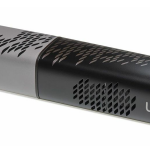
A new way of powering your smartphone has been released that can provide a week’s worth of charge using renewable energy sources.
Upp is a portable power solution utilizing hydrogen fuel cells that should charge any USB-compatible device.
iPhone 6 wins Christmas

A new report has revealed that Apple devices were a hugely popular Christmas gift this year, trumping smartphone rivals.
Flurry’s annual Christmas report found that 51.3 percent of new devices activated on Christmas Day were manufactured by Apple, compared with 17.7 percent by Samsung and 5.8 percent by Nokia.
The most pirated movies of 2014

A list of this year’s most pirated movies has been revealed online, with most of 2014’s blockbuster releases featuring.
Director Martin Scorsese’s The Wolf of Wall Street, starring Leonardo DiCaprio, claimed the title of most illegally downloaded film in 2014.
Facebook liars can start losing their grip on reality

If you have a habit of lying on Facebook, you’re only storing up problems for yourself, a new piece of research has concluded.
The new poll has pinned some numbers on a fairly obvious truth, and specifically, found that lying about how great your life is on the social network could induce paranoia and actual memory problems.
© 1998-2026 BetaNews, Inc. All Rights Reserved. Privacy Policy - Cookie Policy.