


Don't overlook the most important cloud storage feature: Security


The craze in the world of cloud storage today seems to be rolling out lists of additional features that match the features of every competitor out there, and presenting them as new and improved. Every company strives to be appear as the best possible cloud option on the market by continually adding "new" features right alongside competitors, and in all of the competition it can be a simple mistake to overlook what these features actually mean.
Before you let these lists of newly-added features dazzle you into choosing one specific cloud storage option over another, do a little research into what these features actually do. You might be surprised to find that many aren’t precisely new ideas, and they don’t increase the most important cloud storage aspect of all: secure file storage.
Forgetting a password is more annoying than your phone dying or losing your keys

A new survey has revealed that forgetting online passwords is one of the most annoying things imaginable -- as setting and remembering passwords becomes an increasing burden.
This is according to a survey of 1,000 UK consumers, commissioned by Centrify Corporation, which found that forgetting a password was more of an annoyance than having a mobile phone battery run out of juice, losing your keys, or getting a spam email.
Public cloud security flaws: who’s viewing your files?

Secure cloud storage is a challenge facing many professionals today, especially small and mid-sized businesses. It’s clear that the cloud is going to stick around for a long time, and so everyone is looking for a way to get on board with it while still protecting their professional data.
But, the unfortunate truth about public cloud storage is that you can’t control who handles your data or how it is protected. If you choose the wrong service, your company files are exposed to the dangers of hackers, data leaks, seizure, and nosy cloud employees. It’s difficult to know who is looking at your data, but if you know the risks and costs that come with different services and cloud functions, you can better protect your privacy.
Apple iPhone 6 Plus: Beautifully made, but expensive [Review]

Here it is, then, the iPhone 6 Plus. Apple's biggest handset to date, and a competitor for all those phablets that some people swear are the perfect device for them. It's big, it's bold, it's beautifully made. Does it do enough to justify its exorbitant price? My review sample came from Three in the UK, from whom you can get the iPhone 6 Plus in any of its three colors -- gold, silver or gray -- in its 16GB variant starting from £44 a month. At that price there's a £99 up-front price for the handset.
Other operators also sell it, of course, and if you want to go SIM free you are looking at £619/$749 for the 16GB version, £699/$849 for the 64GB and £789/$949 for the 128GB. That's a lot of money, and there are plenty of other large-screened handsets that will cost you much less.
Apple's iPhone 6 and 6 Plus heading to 36 more countries by the end of the month
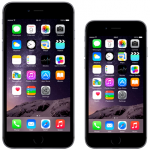
Apple is boasting that it is conducting its fastest ever rollout of a smartphone, with the iPhone 6 and 6 Plus set to arrive in 36 more countries during October.
That will mean the devices are available in a total of 69 countries come the end of October -- though consumers are still having a tough time getting hold of the phablet version, with the maximum three to four week wait listed at Apple's UK online store currently.
WordPress sites are a massive draw for hackers
According to research by Imperva, WordPress websites were attacked 24.1 percent more often than websites running on all other CMS platforms combined.
WordPress websites suffer 60 percent more XSS incidents than all other CMS platforms, and the research found that while WordPress is more likely to suffer fewer numbers of incidents for each attack type, it also suffers a higher traffic volume for each attack type.
How developers can build apps quickly, without writing any code

Recently, LV=, a UK insurer, built a broker workflow app that combined three processes on three systems into one application with an automated tracking and reporting feature. Given the complexity, you might guess that the project took a large team of highly skilled developers months to complete. But here's the thing: two developers built the production-ready app in just one week -- without writing a single line of code!
Enter the power of a low-code development platform. The term has been gaining traction in the market to categorize platforms for rapidly building and deploying custom apps without the need for low-level coding. This is made possible through visual development tools where users can easily define the various elements of an application (database, application and process logic, user interface, security, etc.). Other common features include an App Store with reusable templates, widgets and components to further accelerate productivity, as well as social collaboration, enterprise integration and one-click deployment.
Six ways consumer software can revolutionize your IT

Not too long ago, the phrase "consumer-friendly" was something of a scarlet letter as it applied to business technology. Consumer tech was always viewed as dumbed-down and less capable than anything used in the enterprise setting, so it was practically unthinkable to bring consumer-grade software into the workplace.
Fast-forward to today, and platforms like Salesforce and Yammer and Workday are consistently demonstrating that consumer-level accessibility doesn’t require a decrease in technological capability. We can have our cake and eat it too. Here are six ways you can consumerize your own IT -- without dumbing it down.
Jony Ive accuses Xiaomi and others of copying Apple

Apple may still be the number one brand in the world, but it's no longer head, shoulders and torso above the competition.
The likes of HTC and Sony have caught up with (and arguably surpassed) the firm in the smartphone market, while Lenovo and Microsoft are absolutely hounding the iPad and MacBook with their terrific Yoga and Surface products.
British criminals are remotely wiping mobile devices while in police custody

Offenders are using software to remotely wipe tablets and smartphones confiscated by the police so they cannot be used as evidence in criminal cases.
Police forces in Cambridgeshire, Derbyshire, Nottingham and Durham all admitted to the BBC that seized devices have been remotely "wiped" of all data to prevent it being used as evidence in court.
Flashback Friday: How two Stanford University whiz kids accidentally built Google

Second in a series. Google is everywhere. It's behind the world's most popular mobile operating system and map, one of the most successful email services ever, and has even expanded into the finance, wearables and transport sectors. What's more, it probably still serves as your browser home page (or just a means of finding out whether you're connected to the Internet or not).
The still-relatively-young company has come a hell of a long way since its inception in the late 90s, and looks well capable of dominating each and every avenue it decides to enter. However, the company had very humble, and indeed slightly odd, beginnings.
Sony Xperia Z3 Compact: Small and perfectly formed [Review]

There's a trend these days for handset makers to stick everything but the kitchen sink in their flagship phones and make those phones large, then make their smaller phones a bit less feature rich. This can backfire. We've previously reported about 'mini' versions of handsets not selling as well as the full-fat ones.
Sony doesn't do that. The Xperia Z1 Compact was a small version of a full-fat handset, and the Xperia Z3 Compact is the 4.6in companion to the full-blown 5.2in Xperia Z3. In case you are wondering, there wasn't a Z2 Compact.
How many times a day does the average person check their phone? 221, apparently

A new piece of research has looked into the amount of times that British smartphone users check their handset and carry out a task on it every day -- and the answer is 221 times, on average. Which begs the question: how many times a does a true smartphone addict check their device?
At any rate, the survey of 2,000 UK smartphone users, courtesy of Tecmark, found that most folks first look at their phone at 7:30 in the morning, to check emails and then the Facebook app (no surprise there). Early morning tasks which are still carried out in bed by many are reading recent news updates, and looking at the weather forecast -- as well as sending a couple of texts.
How to protect your business from Internet phone hackers

Once considered an alternative telephony solution, VoIP (Voice over Internet Protocol) is now a mainstream technology used by an increasing number of businesses due to its superior features and competitive pricing.
However, with VoIP technology comes a far bigger price for your business to pay should your phone solution remain vulnerable to potential security risks from clever Internet hackers.
Mobile devices now outnumber people across the globe

There are now more mobile devices than people in the world, according to the latest statistic released by GSMA Intelligence.
According to the stats, there are now 7.229 billion mobile connections across the globe -- a growth of 6.1 percent year-on-year -- compared to a world population of 7.197 billion (going by the US Census Bureau's world population clock).
© 1998-2026 BetaNews, Inc. All Rights Reserved. Privacy Policy - Cookie Policy.