


The Internet of Things -- Chasing the waves

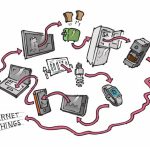
Few people have heard of microcontrollers, but a great many people own them. They are found in household appliances such as fridges and TVs. They are small computers that, for example, manage the dials and display on a washing machine, open and close the taps, start and stop the drum, and perform other functions for the user's selected wash program. More complex devices have several microcontrollers. A car, for example, might contain 30 of them.
Manufactured by the million, and costing a few dollars each, they have been a standard feature of product design for years. What is new is that they are becoming connected to the Internet. The result is the Internet of Things. What does this mean for consumers? Some eye-catching possibilities have been widely advertised, such as the ability to turn up the heating in your home on your way back from vacation. But less spectacular benefits, such as higher reliability and lower maintenance costs, could be more important.
Why the football Premier League needs to go digital

The use of technology within the sporting world is extensive. Players on the pitch or court, or in the pool, make the most of sports science in their diets and training. Strength and conditioning equipment is state-of-the-art, with some of the biggest names in professional sport investing huge sums of money in training facilities.
Even the kit worn by athletes uses technological innovations to provide every advantage possible. For teams, an inch or a split second can prove vital and kit needs to reflect this.
SwiftKey is a massive success on iOS 8

SwiftKey has hit the top of Apple’s App Store charts just hours after launching on Apple iOS 8 devices bringing with it the swipe-to-type features that have become second nature to Android users.
The swipe-to-type app is number one among all free "Utilities" apps in the Apple App Store and comes out in second overall for all free apps on the entire Apple App Store.
Apple Watch could distract drivers more than smartphones
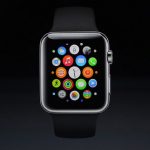
Apple Watch is off to a rather shaky start, as some folks feel it isn't as smart looking or svelte as we were expecting, and others don't believe it has enough functionality, and doesn't do anything different from existing smartwatches.
And now UK motoring organization the Institute of Advanced Motorists (IAM) is putting the boot in -- on all smartwatches, mind, although the organization’s press release highlights Apple's -- and the risks of using such a gadget while driving.
Political infighting may stifle your Internet speed

New analysis shows that the increase in the average Internet speed over the past five years is generally much smaller in politically divided states than in states controlled by a single party.
Democrats and Republicans both have stats to point to when touting their policies about high-speed Internet, but just because America’s two biggest political parties have had individual success with their high-speed Internet policies, doesn’t mean they’ve learned how to work together.
Automate processes for a sustainable supply chain
Meeting twin goals of sustainability and efficiency is big challenge for supply chain professionals everywhere. Bill Leedale, Senior Advisor for Manufacturing and Engineering for IFS North America explains the situation: "For sustainability to take hold at many firms, management has to reconcile conflicting objectives all the way down the chain. Too often, the top-level message is about sustainability, but it is also about low cost, so you have to be really disciplined to reach both objectives, otherwise the lowest-cost option will win".
In fact, what may appear to be a low-cost option at one point in the supply chain may actually be more costly at later stages in the process, or expose an organization to increased risk over time. Sustainable processes maintained consistently across the entire supply chain are not only environmentally, socially and ethically beneficial -- they're economically wise choices, too. Deloitte says that "a green supply chain is good for society and the planet, but it's also good for your bottom line and brand". Top supply chain executives know that it's true. In a recent survey more than two-thirds of them said that sustainability is an important part of their strategy for the future. Still, the question remains as to exactly how they will apply it.
LG's efficient OLED light panels set to arrive in November
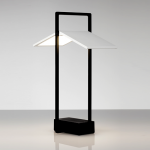
LG plans to bring OLED technology into the commercial lighting sector, challenging existing LED bulbs with a range of new products in November that are capable of matching the performance of current options.
The firm’s LG Chem arm has created OLED panels that have an efficacy of 100 lumens per watt and a life of 40,000 hours that is far greater than the 60 lumens per watt that current OLED panels can achieve.
Smartphone users sticking with the same apps rather than downloading new ones
Research has shown that smartphone users are spending more time on their favorite apps rather than downloading new ones, illustrating how difficult it is for new apps and developers to break into the industry.
The study, carried out by Boston-based firm Localytics, also found that consumers are now using apps 21 percent more than they did last year. This rise is apparently down to users opening applications more often, rather than simply spending longer within them. App session length stayed constant at 5.7 minutes, whereas the average amount of app openings increased by 22 percent from 9.4 to 11.5 times a month.
The near-future technology that will have the biggest impact on our lives
So what arenas of technology are going to make the most impact on the world over the next three years?
That's a question the 2014 KPMG Global Technology Innovation survey posed to some 768 technology business leaders, and according to the results, three of the top five disruptive technologies which should "change the way we work and live" are the Internet of Things, 3D printing, and biotech/healthcare.
Tag Heuer wants to get in on the smartwatch action

Luxury watch brand Tag Heuer has announced plans to follow the likes of Apple and Samsung into the smartwatch industry.
The Swiss watchmaker, now part of French luxury goods group LVMH, recently lost its vice president of global sales, Patrick Pruniaux to Apple and is seeking revenge by going into direct competition with the tech giant.
How a startup's largest obstacle turned into its next venture

Beginning my journey in the FinTech industry over twelve years ago, and now as CEO and co-founder of Pollen VC, a company that allows developers quicker access to their app store revenues, there have certainly been many twists and turns of start-up life along the way. My entire career has been characterized by moving into areas of business that interested me, but which I seemly knew nothing about. It was that curiosity and inherent desire to challenge existing thinking that gave rise to my co-founding of Pollen.
As a bond trader with UBS and leader of short credit trading for the company, I received my first taste of how technology could disrupt traditional financial services in 1998, when I helped UBS put its commercial paper business online. Naturally, there were many obstacles in implementing such major change at an organization of this size, but this was an early lesson to stay steadfast, and find ways around the inherent red tape of a large bank’s IT department.
Amazon Kindle's new old bug could expose your account credentials

A security flaw in Amazon's Kindle software could allow hackers to access your Amazon account details.
Benjamin Daniel Musser, a security researcher, discovered the issue, which arises when downloading e-books from websites other than Amazon itself.
3 million comments prove people care about net neutrality
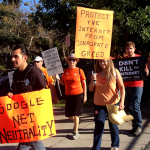
More than three million comments, from consumers, businesses and other organizations, have been submitted in response to the controversial US debate over net neutrality.
The controversy has arisen over whether Internet service providers, such as Comcast and Verizon, should be allowed to introduce fast lanes, delivering paid-for traffic to users more quickly.
How Transport for London has embraced new technology over the years
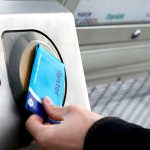
Transport for London (TfL) has announced that a new contactless payment system is in operation across all London transport services, allowing customers to pay their fare with bank cards, smartphones, or even wearable technology.
While some commuters may be concerned that the news marks the beginning of the end for the Oyster card, transport in the capital has never stood still when it comes to technological improvements.
Ant-sized chip could pave the way for the 'next wave of wireless devices'
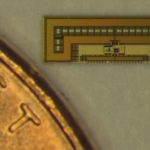
Engineers at Stanford University have developed a radio the size of ant that they claim could make a big impact on the fledgling Internet of Things (IoT) market.
The computer chip, which is just a few millimeters across, is powered by harvesting radio signals and so requires no external power.
© 1998-2026 BetaNews, Inc. All Rights Reserved. Privacy Policy - Cookie Policy.