


Top 10 Facebook scams to avoid


With Facebook's popularity rocketing, the social network became a target for scammers and malware peddlers, and social engineering attacks have only increased massively since it became a phenomenon.
So it's always handy to be aware of what current major scams are doing the rounds, so there's no danger of you being tempted into clicking and ending up with something nasty on your machine.
Must it always be Windows?

Many companies use Virtual Desktop Infrastructure (VDI) environments to enable their employees to work with mobile devices or from a home office. With VDI, employees remotely access hosted solutions and work securely on corporate servers. What sounds like the perfect answer unfortunately turns out to be, in reality, an aggravating, eye-opening experience for the users.
The reason for this is that these hosted apps usually run more slowly than local apps and require a steady, high-performance online connection, which is not always available in home offices. Thus, the work in a home office often goes slowly and is not accepted by the users. They would much rather work with their local applications on their desktop, especially since Microsoft Office applications are available on almost every computer.
Internet.org brings free online access to Africa
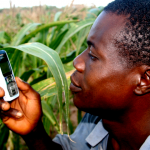
Facebook is teaming up with mobile operators in Africa in order to bring the Internet to millions of people without online access.
The project, which is being headed up by an organization called Internet.org , is starting in Zambia and could bring benefits to millions who have no experience of the digital world, while also increasing Facebook's user base.
Endpoint management is very much alive

There are plenty of IT managers who would argue that device management -- for PC, laptop and tablet fleets -- has long gone the way of the Dodo.
In fact, Info-Tech analyst Mike Bassista agrees, recently suggesting that "organizations should treat IT as utility; any endpoint should be able to access the applications and services needed by its user. And like the power company doesn't need to manage light bulbs receiving electricity, IT doesn't need to manage endpoints receiving IT services". Whilst there is some merit to his comment, I really believe device management is more important now than ever before.
How to overcome the main challenges faced by IT departments

IT departments always used to be the butt of jokes. Perhaps this was because being nerdy and geeky wasn't hip and cool until social media took the world by storm and made multimillionaires out of self-confessed geeks like Facebook's founder Mark Zuckerberg and Twitter co-founder Biz Stone.
Technology firms like Apple and Google are partly responsible for making consumer IT cool, but the IT department is still often viewed as an impenetrable world only inhabited by geeks and boffins that are often arrogant, rude and obstructive.
Google Glass: The pinnacle of wearable technology? [Review]

Begin a sentence with the phrase "most anticipated gadget ever" and tradition dictates the words "Google" and "Glass" must follow shortly after.
Unceremoniously launched into public consciousness from a plane hovering over Google I/O, Google Glass has been one of the hottest topics in tech since 2012. Two years on and the smart specs are still the gadget every technical guru desires; to some it's "an overwrought headband", to others it's the wearable future of modern technology.
Big data is transforming every industry, from health and education, to farming and energy

Big data is already making a big impact all over the world. Large corporations, world organizations, and governments have hopped aboard the big data bandwagon, hoping to utilize new sources of data to improve operations and increase productivity among many other reasons.
It's easy to see from the latest technology news how such massive organizations can benefit from big data considering their available resources and history of using the technology. Finding ways big data is impacting life outside of large, urban areas may seem a little more difficult.
Microsoft’s Sharks Cove is a Raspberry Pi-style mini-PC with Windows 8.1

Microsoft is entering the development board market made famous by Raspberry Pi and Arduino.
The firm is collaborating with Intel and hardware manufacturer CircuitCo to develop the $300 board, called Sharks Cove. Available now for pre-order, the project is described as a "development board that you can use to develop hardware and drivers for Windows and Android".
In Europe, Apple and Samsung are losing ground to 'home-grown' mobile makers
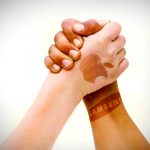
A few years ago it would have been unthinkable, but whispers that Apple and Samsung are losing their stranglehold on the market are growing louder.
It all stems from the fact that customers are becoming increasingly frustrated at the mobile market mono-culture. In the West especially, we've developed a sort of smartphone East Anglia: hedgeless, featureless and planted as far as the eye can see. This is the Samsung strimmer, the Apple Inc. lawnmower, cutting all other competition out of the market.
Rival smartphone makers are no longer afraid of Apple

There was a time when Apple was the undisputed king of mobile. Since the release of the first iPhone in a barnstorming speech by Steve Jobs, the company went from strength to strength, dropping better models every year, and absolutely dominating the high-end mobile market.
Apple sold out of the launch shipments of the brand-new iPhone 5s in under two days, and sales of the iPhone have maintained Apple's profits despite a recent drop in iPad sales. But since Steve Jobs' death, Apple's competitors have been getting bolder. With the launch of the upcoming iPhone 6 coming in September, a number of high profile rivals have been snapping at Apple's heels with aggressive marketing, attack ads and a general lack of respect for the venerable giant of mobile technology. Here are a couple of hints that Apple's competitors are sensing a weakening of the giant.
No BYOD policy? Now is the time to prioritize user-oriented IT

Halfway through 2014 and the use of personal devices in the workplace is very much common practice across most workforces in the US and UK. However, whilst many people are still talking about the effect the "bring your own device" policies (BYOD) are having on staff productivity, the cost-saving discussions have remained on the side-lines.
According to recent research, having the latest consumer device to use in the boardroom or replacing a notepad for a tablet is proving to be so popular with employees that 39 percent not only purchase their own device for work purposes but also spend more of their own money on devices than on tea and coffee.
Tech startups working to protect your privacy

Addressing the Hackers on Planet Earth (HOPE) conference over the weekend of 18 July, Edward Snowden entreated hackers, engineers and activists to fight surveillance by building a new generation of privacy tools for everyone to use. In fact, privacy startups are already hard at work building tools to help web users protect their privacy in areas such as analytics, encryption and search.
However, there is still much work to do to put these tools into the hands of the ordinary web user.
Russia offers a $112,000 bounty to anyone who can crack Tor

Russia's government has issued a 4 million rubles (about $112,000) bounty to anyone who cracks the Tor anonymity network's encryption protocols.
Tor, which began as a secret project from the US Naval Research Laboratory, works by piling up layers of encryption over data, nested like the layers of an onion, which gave the network its original name, The Onion Router (TOR).
The trick to making a great 'mobile first' app

There are now more than one million apps in the Apple app store but a study by Deloitte's showed that 80 percent of apps get less than 1,000 downloads each. If we assume (very, very conservatively) that those apps cost an average of $10,000 to develop -- that is at least $8 billion being wasted making apps no one uses.
In reality, the cost is often over $100,000, which makes the wastage around $80 billion. That is a lot of marketing and development dollars being spent that could have been better used on something else.
BlackBerry: Apple and IBM partnership is like 'two elephants dancing'

BlackBerry isn’t losing any sleep over the recent enterprise tie-up between IBM and Apple as their CEO John Chen compared it to a couple of large mammals taking to the dance floor.
Chen, talking to the Financial Times, likened the partnership to when "two elephants start dancing" and thinks that the firm he is slowly rebuilding has enough in the bag to compete with anyone that challenges it in the enterprise market.
© 1998-2026 BetaNews, Inc. All Rights Reserved. Privacy Policy - Cookie Policy.