


China leaks $2bn of secret Microsoft Android patents


Microsoft has maintained for the last three years or so that every Android phone ever made infringes on patents locked away somewhere in Redmond. High-profile legal cases, like Microsoft's suit against the Android-powered Barnes & Noble Nook e-reader, and its successful lawsuits against five major Android smartphone manufacturers, have fueled a huge amount of public speculation as to what exactly those patents are.
The problem is, Microsoft hasn't been saying, and with only a few exceptions has taken every measure possible to keep them hidden from the public.
88 percent of Brits believe their phones are tapped

A new piece of research has looked into attitudes and beliefs about privacy when it comes to mobile phones, following Vodafone's dramatic revelations about state surveillance and tapping mobile conversations earlier this month.
Predictably enough, the study, conducted by OnePoll and sponsored by Silent Circle (the private comms firm and outfit involved with the Blackphone) found that most people were cynical on the matter. Only 12 percent of the 1,000 UK respondents believed their mobile calls and texts remained private -- in other words, almost nine in ten think they're being listened in on. Indeed, 35 percent admitted they were "careful what they say" during a mobile call, assuming their conversation will be heard by flapping intelligence agency ears somewhere.
Hacker discovers a way to double your money on PayPal

A former hacker once convicted for hacking into NASA and the Pentagon claims to have found a way to reliably double your money by exploiting a loophole in PayPal's system.
Razvan Cernaianu, who goes by the nickname TinKode, claims scammers need to open three PayPal accounts in order to pull off the scam. One is a legitimate buyer, another is a disposable seller and the third is a mule. The latter accounts need to be linked to virtual credit cards.
The future of open source: speeding technology innovation

As one of the contributors to Black Duck’s eighth annual Future of Open Source Survey, the industry’s leading indicator of open source software (OSS) industry trends, JFrog was pleased to be able to help show the world the true impact of open source software. This was the first year that we decided to take part in the survey. We felt that it was a natural partnership, since our work revolves around regularly interacting with the OSS community to help create and distribute open source software.
As the survey reported, 56 percent of corporations expect to contribute to more open source projects in 2014 -- something we’ve already seen firsthand. By working directly with software developers, we have been able to witness the next wave of open source. We’re seeing companies like Twitter, Netflix, and Ericsson actually willing to pay developers to participate in the OSS community, and both develop and use open source in their own frameworks. With 55 percent of this year’s respondents also indicating that OSS helped create new products and services, there has clearly been a change in the way enterprises look at open source; it has truly become a crucial element in the development of new, innovative technologies.
18th century Swedish biologist Carl Linnaeus is bigger than Jesus (on Wikipedia anyway)

Being bigger than Jesus is something that no one in the world can claim -- until now.
A new study of Wikipedia has found that Carl Linnaeus is the most influential person on Wikipedia and it means the 18th century Swedish biologist is more influential than a clutch of personalities such as Michael Jackson and Jesus Christ.
How to avoid threats like Cryptolocker when browsing the web

Malware has, of course, been around for ages, predating the web itself by a long mark. Indeed, the first viruses were spotted way back in the early 1970s, on networks such as ARPANET, the forerunner of the Internet.
However, as the worldwide web grew, so did the ability to more effectively spread malware. Then the explosion in social networks led to social engineering, and increasingly more sophisticated scams came about -- for example, targeted spear phishing and ransomware -- leading us to the densely populated malware landscape of today, full of big bad nasties like Cryptolocker.
.uk domain registrations exceed 50,000 on opening day

.uk has become the fastest selling new general top level domain [gTLD] after seeing registrations surpass 50,000 in opening 24 hours following its launch.
Nominet, the UK domain name registry, reports that the likes of Sainsbury’s, Bentley and Burberry have all already snapped up .uk domain names and it represents just a small proportion of the 10 million that are expected to register.
Banish annoying 'allow fullscreen' messages in Google Chrome

You know those annoying messages that say "Press ESC at any time to exit fullscreen. Allow fullscreen?" Here's how to never, ever see those again.
To stop the messages, simply head to Google Chrome's "content settings" section of the settings tab, scroll down to Fullscreen and click "Manage exceptions". Or you can just copy chrome://settings/contentExceptions#fullscreen into your address bar, if you don't want to go rummaging through all the confusing settings.
Know your network

At any given time, can you see and understand the devices, applications, users, operating systems and vulnerabilities on your network? What about malware? Where is it hiding? How long has it been there? What information is it accessing?
Threats are able to circumvent and breach existing security because today’s cyber attackers often know more about a network and its protection technologies than you, the network’s owner, and use this information superiority to infiltrate and compromise networks, accessing proprietary data and risking cyber security.
There's so much more to health tech than wristbands
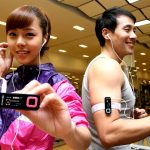
The technology and health arena has seen massive growth over the last couple of years. Wristbands are everywhere you look. Mobile phones are getting pedometers. Apps that can monitor activity abound. We're becoming a society which is focused on the concept of wellness. Heck, even Apple, the great god of all things stylish, might be getting in on the act.
But the relationship between technology and health goes a lot further than a wrist or pocket-friendly gadget that can count your steps.
Apple device hijackers arrested in Russia
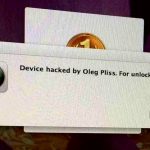
You may recall that at the end of last month, a number of iOS users were locked out of their devices by ransomware, being faced with a message that their iPhone or iPad had been "hacked by Oleg Pliss", and a demand for $100 to unlock it.
Well, the Sydney Morning Herald (via MacRumors) is now reporting that the device hijacking miscreants behind this scheme have been arrested by the Russian authorities. Some Russian folks were affected by the security incident, as well as those in Australia (and a few other countries such as the US and Canada).
Smart TVs can be hijacked using a $250 antenna

Smart TVs are the latest product to be exposed to dangerous vulnerabilities that can be exploited by burying malicious code in signals sent to the connected devices and even able to attack other devices in the home.
Researchers have found a loophole in the technology used in the advanced sets that allows attackers to hijack TVs in a straightforward way, leave no trace, and do anything that the owner of the TV can do.
HTC Desire 610: A not-so-good Android smartphone [Review]
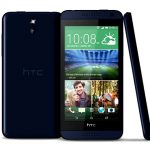
HTC has been extremely busy recently in terms of unleashing handsets upon us. Over a period of just a few weeks I have reviewed the flagship HTC One M8, the smaller format HTC One mini 2, and the HTC Desire 816. Now, with barely a pause for breath following those last two reviews, here comes the HTC Desire 610.
Styled by HTC as a good value, entertainment-focused handset, the Desire 610 costs around £235. It shares a lot of design features with its more expensive, higher specified cousin the Desire 816, which will set you back close to £300. So, if you need to save money but like what the Desire 816 has to offer, is this handset a good buy?
Box wants IT to be more user-focused

Companies must think more about end users and the way technology is used in terms of the cloud and mobile or risk the failure of projects according to one prominent cloud storage firm.
Box gathered together a range of different technology CEOs and IT executives to discuss how to put user requirements at the centre of planning and design with a list of principles already out there forming a model that will "lead to higher adoption, agility, and success" for organizations.
Kim Dotcom offers $5m reward in Megaupload piracy lawsuit

Megaupload founder Kim Dotcom is offering $5 million to whistleblowers willing to help him fight his online piracy case. The German national believes that the information being used against him by the US and New Zealand governments was obtained illegally.
"We are asking for information that proves unlawful or corrupt conduct by the US government, the New Zealand government, spy agencies, law enforcement and Hollywood," he said in an interview with TorrentFreak.com.
© 1998-2026 BetaNews, Inc. All Rights Reserved. Privacy Policy - Cookie Policy.