


Need to know: Answers to the questions that every first-time app developer asks


Apps are increasingly becoming a vital part of how businesses deliver services and goods to consumers, in fact Gartner predicts that by 2017 apps will generate more than $77 billion in revenue and be downloaded more than 268 billion times. For anyone that wants to capitalize on this massive growth market, where do you begin, what resources do you need? Is there a DIY solution or must you spend exorbitant amounts of your resources on creating a professional app?
Whether you’re an entrepreneur, small business owner, or you just have an idea for an app, your first course of action should be to determine whether or not there is market demand for your app, and you can do this through your own primary research with little to no cost incurred save for the effort you devote to educating yourself. Speak with your customers and trusted associates, visit online marketplaces and determine if there is an existing app that is similar to what you have in mind; how many downloads does it have, how are people using the app, what are they saying about in the comments, are there pitfalls or gaps that can be exploited? You can take all of these cues and more in determining whether or not you or your business should pursue the development of your app.
Nokia Lumia is a life saver -- literally

As the military invests millions of pounds into developing world-class body suits formed from Kevlar, ground up quartzite and the sweat of Arnold Schwarzenegger, it is perhaps time someone just told them to buy every member of the armed forces a Nokia Lumia smartphone.
According to the Brazilian newspaper Globo.com, an off-duty Sao Paulo policeman's life was saved by his Nokia Lumia 520. The affordable smartphone was resting in its back pocket when it deflected a bullet aimed directly at the 24 year old officer's derrière -- quite literally saving his ass.
A tale of two bugs
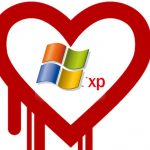
Recently we were greeted by Heartbleed, a bug in software used by websites to encrypt data. Now there’s a flaw in Internet Explorer (IE) that allows a malicious website to run any program it desires on your computer. One can debate which is the more serious, but both can be devastating. In light of the risks from the IE bug, the Department of Homeland Security (DHS) recommended that people not use that browser until it is patched. However, there is a serious problem with that advice: Windows XP is susceptible to the IE vulnerability, and Microsoft discontinued support for that OS version earlier this month.
Because the Heartbleed code was in an Open Source component (that is, a piece of software whose source code is openly available), a fair amount of discussion has focused on whether distributing security-related code as Open Source increases or decreases the risk of such bugs. That's indeed an interesting debate. I happen to come down on the side of it decreasing the risk, but the DHS recommendation reveals a completely different security problem in using programs that are not Open Source.
Microsoft, Apple and Facebook will inform users of data requests
Apple, Facebook and Microsoft are ready to empower users with more information regarding secret data demands in the shape of a new notification system that still won’t inform users when the agencies such as the National Security Agency request data.
The notification system will cover various police requests for email records and other online data that won’t be private unless a gagging order is approved by a court.
Productivity in the workplace could get a boost from wearable technology

Rackspace has revealed the results of research into how wearables will fit into the workplace, and what impact these devices will have -- and the news is largely positive.
The Human Cloud at Work study, headed up by Dr Chris Brauer of the Institute of Management Studies from Goldsmiths, University of London, found that productivity was boosted by 8.5 percent through the use of wearable devices. That data was determined by evaluation over a month long period, against a control group which saw no increase in productivity levels.
Samsung Galaxy S5 vs Sony Xperia Z2 vs HTC One M8

Over the last few weeks Samsung has launched its Galaxy S5, Sony has revealed its Xperia Z2, and HTC has released the One M8. Each of these top flight handsets has its own plus points, and the uniting factor is that they are all vying for your attention if you want to be at the cutting edge right now.
Of course, that will change soon enough. We’re hearing about a possible HTC Prime, and Sony has recently started launching a second flagship handset in the latter part of the year. And other makers will come along with new top of the range phones, too. But for now, those who are after the very best phone they can get have a three way choice. So, is there an obvious best or an obvious worst phone among this trio? Let’s find out.
Oculus Rift launch date officially confirmed for 2015

If you can't wait to start hurling yourself down virtual sled slopes and exploring full 360 environments, an Oculus Rift spokesperson has revealed the company expects to ink a launch date for some time next year in 2015.
Saying that the company would be "disappointed" if the virtual reality headset wasn't on shelves by 2016, the unnamed spokesperson confirmed to Business Insider that after months of waiting we're one step closer to an official retail release.
The consumerization of software development in business

For far too long, enterprise software has lagged behind its consumer counterparts.
When compared to the progress in digital media and consumer software, some of the applications used to power the world’s biggest companies look as if they are stuck in 1990. Yet this is no longer the case thanks to the growth in expectations from business users who spend hours a day on high end devices and mobile apps.
How social media makes people in a relationship jealous

While social media allows people to connect with each other, it can also create jealousy. If a man discovers his new girlfriend has 250 male friends, it is potentially going to create lot of stress for that guy. He is going to feel that he has a lot of competition that he would not have known about if social media did not exist.
It is also going to make him feel insecure in the relationship, and make him feel jealous over his new partner. A person likes that feeling of exclusivity, that he is the one who matters to his partner first and foremost. Social media interferes with that feeling because it makes the person feel that his new flame has many social contacts who could compete with him. Furthermore, when the partner spends a significant amount of time on social media sites engaged in contact with members of the opposite sex, the person is likely to feel jealous and that will lead to trust issues. He may become suspicious of his girlfriend and her activities on those sites.
Why SaaS vs. on-premise doesn’t have to be an either/or decision

Much has been written about the pros and cons of Software-as-a-Service (SaaS) applications versus on-premise software. Although SaaS is clearly the driving trend for a wide range of compelling reasons, does every organization need to be forced into making a choice? For some there are still very good reasons for keeping an application in your own data center.
Depending on your business needs, choosing an application that you can deploy in either model and that gives you the option of moving back and forth between a SaaS environment and on-premise may give you the best of both worlds.
Your repeat offenders aren't the insider threats

Almost every organization today has employees that regularly violate standard security policies and protocols. However, oftentimes these violations aren’t the work of a malicious insider -- they’re usually the actions of an employee trying to do his/her job or taking a shortcut to get the job done. Corporate information security teams have the challenge of determining the motive behind these violations. While network monitoring security tools and InfoSec point-solutions are designed to help catch these infractions, they can, and do, unintentionally create an immense volume of work by flagging every policy violation as a threat -- creating thousands or even hundreds of thousands of security events to sift through daily. To make matters worse, these events are often labeled as high-urgency alerts.
The challenge is empowering your IT security teams to identify and respond to the most urgent threats while maintaining compliance with industry regulations.
Don’t waste another $6 million on your financial close -- Automate for better accuracy and efficiency

Every member of the finance department knows the importance -- and the effort it takes -- to perform the monthly, quarterly and year-end close in order to create corporate financial statements. The tabulation and documentation demand complete accuracy and coordination between all the moving parts of an enterprise.
For large organizations, it's a tremendous process challenge just to consolidate information from so many geographic locations, departments and corporate silos in a relatively short period of time.
I think we’ve seen this before... Why 'incident intelligence' is imperative

Lately, I’ve had a lot of conversations about how threat intelligence can enrich organizations’ incident response processes and how the right intelligence can make them more effective. As a note, I’m a former full time lead incident responder for a massive organization and now a researcher.
I can confidently say that when you’re dealing with literally hundreds of malware incidents per day, the minute differences in identified indicators can all start to blur together. Being able to very quickly and efficiently answer the question of whether or not a particular indicator of compromise has been seen before (and in what context) is crucial. Let’s call this "incident intelligence". Incident responders always need to have a clear picture of what they are dealing with and how it may relate to something already encountered during previous incidents, but unfortunately for most teams, this is easier said than done.
Are hosted cloud storage providers heading down a slippery security slope?

The Bring Your Own Device (BYOD) trend shows no sign of slowing; in fact, 38 percent of companies expect to stop providing devices to workers by 2016 according to research from Gartner. As such, some hosted cloud storage providers, such as Dropbox, are making it possible for users to manage both work and personal accounts from a single mobile device using their software. Products like these, which focus heavily on the user experience, are indeed commendable. However, they often ignore the entire IT side of the equation for data management and risk management, something that could cause serious security issues down the road.
There are security and control issues inherent in allowing "rogue users" -- users that find ways around network security policies -- to use consumer accounts at work without IT oversight, as this greatly increases corporate risk. IT must be able to centrally manage and backup all corporate information regardless of whether or not it’s synced or shared via a personal or business account.
Malware’s journey from hobby to profit-driven attacks

The history of malware is a fascinating topic that provides insights into the current landscape. As one of the authors of the Avien Malware Defense Guide, I contributed to the book's chapter on history and will be leveraging and expanding on some of that content here to give context to where we are today.
First what is malware? Malware is a merger of "malicious" and "wares," meaning malicious software. It can range the gamut from traditional viruses and worms to botnets, potentially unwanted Programs (PUPs), adware and spyware. Generally speaking it's software running on your system that can cause unwanted side effects that can be as minor as slow downs and resource utilization, to as severe as data corruption, compromise and leakage of sensitive information.
© 1998-2026 BetaNews, Inc. All Rights Reserved. Privacy Policy - Cookie Policy.