


Card fraud in the US: How EMV technology will change everything


In recent months, the US has been at the root of the global EMV discussion (the name EMV comes from Europay, MasterCard and Visa). With adoption of the new standard slow-going, the US is one of the last major economies to make the transition. As a result, it has found itself on the receiving end of fraud migrating from mature EMV markets, exposing itself as a point of weakness for fraudsters.
In 2012, 20 US states reported an increase in ATM fraud via skimmed cards according to analytics vendor Fico. Meanwhile, EMV in the UK has seen overall card fraud decrease from $275 million in 2009 to just $68 million in 2012, according to Financial Fraud Action UK. Despite this, the UK is still plagued by skimmers, with attempts to steal card holder data from ATMs almost tripling, from 2,553 to 7,525 incidents over the past year. Fraudsters can use data from the mag-stripe, which remains on Chip-enabled cards, to then clone cards and use them where mag-stripe payments are still accepted. Therefore, as long as regions such the US continue to accept mag-stripe cards to withdraw cash, there will remain a global issue of fraud migration.
Microsoft's Office oxygen supply problem

Google, OpenOffice, LibreOffice and my company Zoho have all offered free office suites for years, and on Tuesday, Apple announced that its productivity suite iWork will now also be available for free on all new Apple Macs and iPads.
Given that Microsoft Office has long been the de-facto monopoly, none of these rival companies have anything to lose in commoditizing the office suite market. That is the nice thing about facing a monopoly in an adjacent market -- every player other than the monopoly would win if they get a non-zero share of a massively shrunk market. If the $20 billion market shrinks to $2 billion, we at Zoho would celebrate it, as long as we can hope to get a share of that shrunken market. In fact, competitors would win even if they don't get any share of the shrunken market, because it denies the monopoly the ability to use its cash cow to dominate adjacent markets they do have an interest in.
Crossing the hacktivism line

Recently, I was a guest on the CNBC program, Squawk on the Street. The discussion centered on the possible outcome of a limited strike by the US on Syria, and I had the opportunity to provide my opinion on the retaliatory cyber implications for US interests. During the program, I disagreed strongly with the position taken by McAfee Worldwide CTO, Mike Fey: that the Syrian Electronic Army is no more than a hacktivist group. In my opinion, this is a dangerous assertion based on industry group-think and marketing rhetoric.
Two books that I have co-authored have examined attack sophistication in terms of categorizing a threat actor. Ultimately, I am not concerned with which organization or entity carries out an attack. I am, however, concerned with identifying and stopping malicious activity. For example, were a nation-state to engage in industrial espionage against a defense industrial-based contracting firm or critical infrastructure, such as a power grid, this typically would be classified as advanced persistent threat (APT).
Backup in the cloud -- peace of mind and protection against hacking

As a growing number of businesses migrate to the cloud to manage their most important information, and an increasing number of cyber vulnerabilities are identified on a daily basis, the integrity of cloud security has become an important and ubiquitous concern.
However, smart companies are putting panic mode on hold in favor of educating themselves on how best to protect their vital data. No solution by itself can make your business hacker-proof, but there are several precautionary measures that help to minimize risk. One important step is backing up your cloud data.
Downloadcrew Giveaway: $5,599 of Nitro Pro 9 codes, System Mechanic 12, MAGIX Music Maker 2013

Great news: Downloadcrew Giveaway is back! We’re providing a number of free serial codes for the latest software -- all you have to do is enter and you might win one! Winners are picked at random by the system after the giveaway promotion expires. Closer to Christmas we also hope to offer a number of full, unrestricted downloads too.
The current offer is Kaspersky Internet Security 2014, worth $59.95. We have 10 licenses to give away. Hurry as this offer ends midday (GMT) Wednesday.
Cloud computing: Is it right for your business?

In response to an increasingly competitive digital marketplace, companies all over the world are moving their operations from local servers to the cloud. The ubiquitous access offered by cloud computing allows employees to access their files when and where they need, and lets businesses focus on what they do best, instead of devoting precious resources to IT maintenance.
But what about your business? Is making the transition to cloud computing right for you?
Google Authorship: What You Need to Know

In early September, Google announced that it would be integrating Google+ sign-in with its authorship program, making it even easier to make sure you get the credit for the content you create. This most recent development is just one in a long line of moves by Google toward integration of its existing products both with one another, and with the new products it continues to release.
If you're not familiar with Google Authorship, it's a markup that authors can use to link the content they create for their blog or website to their Google+ profile, and by extension their online identity. When setup correctly, an author's Google+ profile photo as well as a homepage address (when applicable) will be displayed next to their content's entry on the search engine results page (SERP).
Apple's low-cost iPhone will strengthen the reputation of the brand

The release of the latest Apple iPhones has financial experts questioning whether or not Apple's reputation is at stake due to the offering of a lower-end product. Contrary to previous years, Apple will be offering two different types of phones this month: the 5s and the 5c, which both go on sale September 20.
The iPhone 5c comes at a smaller price tag of just $99, ideal for those who are on a budget, as opposed to the 5s which is priced at $199 as the starting point. Some investors initially warned against the idea, saying that it may weaken margins and potentially tarnish a brand that has been linked to premium quality since 2007. However, a lower-end iPhone could prove to be a smart move for Apple.
The Start menu -- cause or effect?
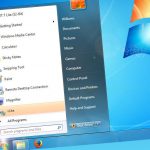
When Windows 95 was released there was a lot of fuss about the Start menu and debate about whether it would catch-on. It was a significant departure from icon shortcuts in program groups; or superficially at least. In reality, it was simply the program groups (folders) put in a hierarchical order and rather wisely, the option to place folders, icons and shortcuts on the desktop remained (to this day).
The Start menu developed; it grew out of the logic of the program shortcut and built upon that logic. It was not intended to abruptly impose a new paradigm but to slowly replace the shortcut as customers became comfortable with the concept. That journey never really ended, as the icon shortcut was not phased-out -- why would it be?
Keep IT flying under the radar

The Information Technology (IT) department is the oxygen of the business world. It’s crucial, but, many times, invisible. In fact, many of the complex processes that IT supports are most successful when nobody notices them at all. They just happen, and all is well. When something goes wrong, IT goes into fire-fighting mode and people start scrutinizing, asking questions and second-guessing.
The problem takes center stage and pushes all other IT priorities aside. It costs time, money and focus. Problems can cost reputations and customers, too.
How the Ubisoft hack shows the password model is weak, and why device-based authentication is the answer

Just over a week ago game maker Ubisoft revealed that hackers had breached its database and accessed customer information including usernames, email addresses, and passwords. This is the latest in a series in hacks revealing that the outdated password authentication model is weak and does not provide adequate security for user information.
It’s time for a network architecture that considers new access models -- including the device itself. We need a shift to device-based authentication that provides the same added security, but is completely transparent to the user. The cable industry has used this model for years, assigning cable boxes a unique identity so that users do not need to enter a password to change the channel (since the service is delivered to box, not the user). Applied to computing, device-based authentication means that even if a hacker steals your password, they still need your device to log into the website. The foundations of this model are already in place, but there is still work to do.
Politicians Don’t Understand PRISM

PRISM enables the NSA to categorically violate your right to privacy and reach far beyond the boundaries typically enforced by courts. So why aren’t the politicians furious about this?
They instead seem to be focused on Edward Snowden. Since his leak of the PowerPoint slides detailing the NSA’s surveillance program, politicians from both parties -- including the liberal Nancy Pelosi and Republican House Speaker John Boehner -- have called his arrest.
Will the NSA Scandal Change Online Security?

Edward Snowden’s revelations about what data big companies like Facebook, Google or Skype give to the NSA -- and therefore to the US Government -- confirm what many already know: the internet is not a safe place.
Snowden’s leaks set alarms off in the business world, too. Even though people think our personal conversations and what we post online is monitored, many were unaware that company communications are also intercepted for espionage purposes. The USA and UK take the lead in this practice, but recent news suggests these governments aren’t the only ones. Other countries -- such as France -- have their own intelligence projects.
Microsoft's experience shows us what to expect from Oracle's Java 'security push'

It has been a very rough year for Java from a security point of view.
Two-thousand thirteen started with a number of zero-day attacks targeting Java, including those that resulted in breaches at Microsoft, Facebook, Apple and Twitter. As the year went on, the Department of Homeland Security and others recommended disabling or even uninstalling Java. Apple went so far as to effectively block the Java 7 web plugins twice in one month on OS X. As the security situation around Java seemed to deteriorate, the criticism of and frustration with Oracle continued to increase.
The rise of the Chief Automation Officer

In 1986, when BusinessWeek introduced "Management’s Newest Star," inviting us to "Meet the Chief Information Officer," the idea of adding anyone else to the C-Suite was not only revolutionary, it was frightening. Business computing was still a burgeoning field. Typewriters and paper files were the status quo. A CIO wasn’t just a new officer: a CIO was a new way of doing things -- everything.
And yet, less than 30 years later, it feels as if the CIO role has always been there: making decisions on key hardware and software purchases, working with his business-side counterparts to determine how to align software and strategy, monitoring new trends and technologies to determine which are worth implementing and which should be ignored. It’s hard to imagine any mid- to large-sized businesses without a CIO on board.
© 1998-2026 BetaNews, Inc. All Rights Reserved. Privacy Policy - Cookie Policy.