


Hauppauge HD PVR and Windows Media Center: Is it the working-class TiVo?

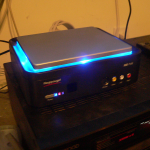
The promise of Hauppauge's HD PVR digital recording device is that it will enable you to use the expensive television signal being piped into your house, on your own terms. Just a few years ago, it seemed, it was easier for most folks to be able to use that signal however and whenever they wanted, and TiVo blasted open the doors for people with busy lives to start, stop, restart, collect, and re-watch the programs that made the intervening hours between crises somewhat enjoyable.
But since then, the restraints and constraints started re-appearing -- the same-room recording restrictions, the "broadcast flags," the availability constraints, the second-run and third-run limitations that make lower-class viewers wait for upper-class viewers to be served first. As studios and content providers act on their second thoughts about opening up digital availability, "on demand" is becoming more of a misnomer. Perhaps "on plea" is more appropriate.
Firefox in the dust: Opera poised to reclaim browser performance lead

Exactly what is it that convinces a Windows 7 user to drop the Web browser that came with her operating system - Internet Explorer - and try one of its many free competitors? The very name "Firefox" implies both speed and savvy, two factors its predecessor - Netscape Navigator - did not always possess. "Faster" and "better looking" are the two factors that make folks trade up for a sports car, though with a Web browser, "free" is a nice incentive you don't find in the automotive market.
Last month, Microsoft demonstrated that it is indeed capable of robbing Firefox of all its persuasion points, with a public beta of IE9 that is faster and smoother than anything Mozilla has ever produced. If IE9 is already fast, simple enough to use, and even good looking, the incentive for consumers to try not just Firefox but any other alternative, could evaporate.
Firefox 4 beta loses to IE9 beta in browser speed, efficiency tests

The latest wave of upcoming changes to the world's two most used Web browsers, jointly responsible for easily three-fourths of the Internet's HTTP requests, has nearly everyone in the business rethinking the meaning of "quality" as it pertains to browser architecture. While their arguments start with the usual reminders that folks just want to see their pages load faster, before too long, they wander into dissertations about the methods architects use to achieve the appearance of loading faster. . . especially when they actually don't.
In preparing to test Microsoft's first Internet Explorer 9 public beta, released last week, and Mozilla's public Firefox 4 beta, released late last month, the advice I received most often fell into two departments: 1) Pay more attention to graphics rendering, since new browsers will be spending more time processing Web apps than just displaying pages; 2) start paying attention to how browsers utilize memory and CPU cycles. Since my smarter readers are typically right, that's what I've done in crafting my all-new browser performance test suite.
Firefox 4's bold, browser-specific move with HTML 5 audio API

With the HTML 5 crowd increasing in volume - both in terms of
numbers and noise - Mozilla is looking to regain sole possession as
standard-bearer for Web standards. Last Tuesday, with the
release of Beta 5 of its upcoming Firefox 4, the organization
opened up public comment on its own experiment with a possible
browser-based API for audio, which may later open up doors for a
video API as well. If it gains traction, it could enable Web
developers to develop on-screen tools for visualizing and accessing
the data contained within an audio stream.
This could become one of the key distinguishing factors between
HTML 5-based multimedia and add-on codec-based multimedia, should
the idea catch on. Essentially, it enables the Web page to
access the browser's multimedia data, opening up a treasure trove
of possible new Web apps. Imagine an Audacity-like audio
editor, but entirely in HTML, CSS, and JavaScript. Or imagine
Pandora without Flash.
Europe says 'No' again to ACTA secrecy

This morning from Brussels, the European Parliament issued a
formal declaration - its second official legal statement of the
season - calling upon participants in negotiations for the global
Anti-Counterfeiting Trade Agreement to share the status of their
proceedings with the public at large. At issue is whether
governments can decree that Internet Service Providers (most of
which are private businesses) keep track of IP addresses that
copyright holders believe are involved in infringement and
unauthorized distribution, without officially notifying their
citizens they're about to do so.
In fact, the very secrecy of the negotiations themselves could
be in violation of an essential tenet of European law, called the
principal of subsidiarity. That principal mandates
that no law can be passed without it first meeting the test of
whether it infringes upon the rights of citizens, and that those
rights supersede the needs of government. Keeping the
negotiations secret implies that no such test ever takes place.
New iPhone 4 is slimmer, faster, super high-resolution, and lasts longer
VoIP picks up and moves to the cloud

Voice-over-IP technology is getting a makeover, and service providers hope it will reinvent the industry. There's a shift away from VoIP toward hosted unified communications -- that is, integrated voice, instant messenger, e-mail, workflow applications, and procurement.
Eight companies formed the Cloud Communications Alliance at the Cloud Computing Expo held last month in New York City, banding together to help drive the development of cloud-based unified communications.
Straight from Sony Chairman Sir Howard Stringer: Here's why Google TV is a huge deal for Sony

Sony Corp. Chairman Sir Howard Stringer concluded a press conference about his company's forthcoming Android-based Internet TV yesterday with a widely quoted declaration: "This really is a very big deal." But it wasn't until his 50-minute sit down with an exclusive group of a dozen journalists and analysts did he get down to explaining why.
The alliance is one of strange bedfellows. Sony and Google are competitors in mobile phones and supporting services. In addition, consumer electronics companies have typically resisted the advances of high-tech companies. Sony also stands apart from many other consumer electronics companies, by pushing its own technologies and standards rather than embracing others. So Sony's Google embrace is surprising and foreshadowing: Sony is changing its ways.
Technological advances keep Intel's Atom a contender in handhelds

Intel's next-gen Atom processor-based platform (formerly "Moorestown") caused quite a stir in the news and among mobile computing aficionados. On the technical side, Intel seems to have delivered the goods. The platform includes Intel's Atom processor Z6xx Series Family (formerly "Lincroft"), the Platform Controller Hub MP20 (formerly "Langwell") and a dedicated Mixed Signal IC (MSIC) (formerly "Briertown").
It adds 3D graphics, video encode and decode, and memory and display controllers into the single system-on-chip (SoC) design. Also included are the MP20 Platform Controller Hub and a dedicated MSIC, integrating power delivery and battery charging, and consolidating a range of analog and digital components.
Flash forward: Can Adobe leave Apple behind in the dust?

Flash, sharply rejected by Jobs and Company, has moved on to Apple's competitors, hoping for a warm welcome and the promise of a place in the mobile market. While Apple CEO Steve Jobs' recent open letter deploring Adobe's Flash managed to do little in terms of settling the argument as to who was right in the debate, it did point out many of the problems with the oft-buggy software that may indeed plague the smartphone experience.
With Flash Player 10.1 set to debut later this year and a slew of Flash alternatives moving into the forefront, the need for compatibility between third-party developers and designers has grown significantly. In 2009, Avi Greengart, the research director of consumer devices at Current Analysis, predicted that if Apple were to leave Flash out of its lineup, then it must be coming up with its own video support setup since it would end up being a disadvantage.
Avoiding the next crash: The threat from outsourcing teaching aides

Modern "American dream" stories often start with a romantic phase: A young couple struggles through graduate school, starving on measly stipends covering ramen noodles and cheap wine. Unfortunately, that story is about to disappear, following American manufacturing jobs. College professors are now outsourcing grading, The Chronicle of Higher Education reported in April.
Teaching assistants (TAs) have provided that service for generations, but now it is going overseas. Recession-hit universities get even better deals outsourcing than they did with notoriously underpaid graduate students. Now, this work often ends up in the hands of credentialed Indian stay-at-home moms eager to work part-time.
Virtualization and the cloud team up: VMware with Salesforce.com

Last week, VMware and Salesforce.com announced a new partnership around VMforce, a Platform as a Service (PaaS) offering aimed at enterprise Java developers. The companies' CEOs Paul Maritz (VMware) and Marc Benioff (Salesforce) described VMforce as an enterprise cloud designed to serve the needs of more than six million enterprise Java developers, including some two million who are using the Spring framework VMware acquired last August when it purchased SpringSource.
According to Maritz and Benioff, by harnessing the VMforce cloud, enterprises and developers can dramatically simplify Java development "without compromising the flexibility, control and choice they require." In plain English, VMforce is a for-pay service whose cloud-based elements are designed to attract Java-loving enterprises and vendors.
Two Linux-based text editors reveal a market for Notepad work-alikes

Download gedit text editor for Linux from Fileforum now.
Text editors are becoming more essential in today's Web-based computing world. Gone are the days when users need hard-copy versions of their documents. Also gone are the days when documents need to be gussied up with fancy fonts and fanciful page formatting.
Second site: Making the Web more accessible to the visually impaired

As the population ages, financial institutions and other service providers will have to learn to adapt their marketing approaches to appeal to a sector that has high disposable income and substantial spending power. In some cases, they will also have physical limitations that will impede online activities, including vision loss.
Besides the fact that an aging population brings with it a growing number of people with vision loss, the business and legal case for making Web content accessible to the visually impaired is becoming increasingly strong.
How long can Unix hang on? What three high-end platform launches tell us

Recent IT industry events have created a field day for those who think the news tend to come in "threes":
During a five-hour-plus long event highlighting the conclusion of its Sun Microsystems deal, Oracle discussed plans for the company's hardware division, and said it would continue investing in Sun's Sparc- and X64-based systems and storage hardware. The company provided a Sparc road map and said it was planning upgrades for systems based on both the Sparc T series (now made by Oracle) and the Sparc64 chips made by Sun partner Fujitsu. However, there was no discussion of the status of UltraSparc-RK "Rock" processors and related "Supernova" systems, which are rumored to have been discontinued.
© 1998-2026 BetaNews, Inc. All Rights Reserved. Privacy Policy - Cookie Policy.