


Clicker.com cuts through the Web video chaos

Safari on iPhone gets competition from a $1 browser app


If you search for "browser" in the App Store, you'll get dozens of applications, each purporting to be an alternative to the iPhone and iPod touch's built-in Safari browser. In a sense, they are alternatives, since they look different and might have a few unique features. But they're really all Safari underneath -- Apple will only approve browsers that are basically built with Safari guts using a reworked user interface.
On the down side, this means we won't be seeing alternative browsers from the likes of Mozilla or Opera any time soon, and there's no official challenger to Safari in terms of speed or compatibility with various Web standards.
Microsoft's .NET Micro Framework is now free and open source

Microsoft announced at its Professional Developer Conference on Tuesday the release of version 4.0 under the Apache 2.0 license. The license transfer makes good on a longstanding promise from Redmond that it would make the popular .NET code base available as open source.
The gift to the open source community, however, does come with some strings attached -- or, rather, removed from the gift wrapping. Microsoft reduced some of the framework's functionality in making the Software Developer's Kit open source, according to Peter Galli, the Open Source Community Manager for Microsoft's Platform Strategy Group. In his blog post last Tuesday, Galli revealed details about the code release.
Five improvements for IT managers in 2010

Every year around this time, everyone from antimalware companies to analyst firms line up to tell us about the top IT and security trends -- what they are and why we should care. This year, chances are they'll tell us all about cloud computing, virtualization, and social networking, and why these technologies are the new best (or worst) friends for security folks in 2010.
Now if you're sensing a bit of snarkiness here, you're right -- I find these lists a bit frustrating. That's not because of inaccuracies in the lists themselves (to the contrary, many of them are dead-on), but instead because they sometimes inappropriately drive how IT managers make budgeting decisions. Don't get me wrong, keeping abreast of the new areas is always valuable -- and I'm always fully on board with keeping us and our staff up to date and capable of reacting to new types of threats. But it's also important to keep in mind that what's new isn't always what's most critical. Where should you be investing budget dollars? At critical areas, not just what's new and shiny.
Apple's house rules won't be the death of app development
So Facebook developer Joe Hewitt tweets that he's ditching the super-popular Facebook iPhone app, and TechCrunch, clearly sensing there's more to the story here, reaches out to learn why.
"My decision to stop iPhone development has had everything to do with Apple's policies," Hewitt told TechCrunch. "I respect their right to manage their platform however they want; however, I am philosophically opposed to the existence of their review process. I am very concerned that they are setting a horrible precedent for other software platforms, and soon gatekeepers will start infesting the lives of every software developer."
The Samsung Intrepid: A nice phone, if you can accept Windows Mobile

Business users whose lives revolve around their mobile phones won't be disappointed with Samsung's Intrepid smartphone. The handset, which uses Sprint's 3G network (EV-DO Rev.A) domestically and also connects to 3G networks abroad, is packed with features aimed at the pinstripe crowd.
Intrepid (USD$149.99, excluding taxes, with two-year service agreements, $50 instant savings and $100 mail-in rebate) runs under the latest version of Microsoft's cellphone operating system, Windows Mobile 6.5 Professional.
Ubuntu 9.10 upgraders report frustration

Following the Karmic Koala's joyful reception last week, sentiments toward the FOSSy marsupial have become distinctly less enthusiastic in recent days -- at least for some.
"Early adopters bloodied by Ubuntu's Karmic Koala" was the headline on a piece that ran in The Register last week, which chronicled multiple cases of frustration among some users upgrading to the new version.
The iPhone's China syndrome: Sales of 5,000 and climbing

The iPhone went on sale last week in China, and it landed more or less with a thud. Cupertino's carrier partner in that country, China Unicom, announced on Tuesday that only 5,000 customers had purchased the phone thus far. At this rate, the handset may have trouble meeting sales expectations. China Unicom had pledged to sell 1 million iPhones per year.
Price could be one deterrent -- the iPhone starts at around the equivalent of USD$730. Add in monthly subscriber fees, and you're soon looking at a rather pricey phone in a country where the average income of urban workers in 2008 was less than $4,300.
Is AES encryption crackable?

In the field of computer technology, some topics are so frequently and fiercely disputed that they almost resemble religious feuds -- Mac vs. PC, for instance, or open source vs. proprietary software.
Other topics, though, don't see nearly the same level of high-profile debate. Take the invulnerability of the Advanced Encryption Standard (AES) encryption, for example. Governments and businesses place a great deal of faith in the belief that AES is so secure that its security key can never be broken. However, a team of researchers from Germany, France and Israel has recently demonstrated what may be an inherent flaw in AES -- theoretically, at least.
A taste of Android's freshly baked Eclair
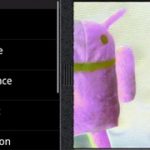
When the Verizon Droid from Motorola arrives next month, it will include a new version of the Android Operating system. Android 2.0, also known as "Eclair," will no doubt show up in lots of other new smartphones over the coming months.
Android 2.0 ushers in a host of new features. Perhaps the one that sparks the most interest is its native support for Microsoft Exchange.
How to solve the net neutrality issue

The Federal Communications Commission (FCC) recently voted to move forward on a rule-making process that could lead to new government regulations for the Internet. That is what the FCC and some activist groups want, although they claim to be supporting only "neutrality." Even key players seem confused.
The Open Internet Coalition (OIC) says neutrality "is about keeping the hands of several powerful network operators -- AT&T, Verizon, and Comcast -- off the Internet, preventing them from taking steps to change the basic open nature of the Net that has led to its success."
A better Bing? Betanews 'Name That Search Engine' contest winners

It's not as easy as it looks, is it? The key here was to come up with not only a better name for a search engine than "Bing" (among those who believe there is one), but a tagline that would help frame a marketing campaign for the product. We didn't care whether the .com name for the URL was already taken. That's never stopped Microsoft before, including with Live.com -- if the name's good enough, it would have the resources to put down serious money for it.
Six Betanews staff members cast votes for first, second, and third place, with first place getting three points, second place two, and third place one. After a week of intense competition (I have to exhaust my bucket of superlatives somewhere), here are the final results:
Betanews contest: Re-doing Bing, or, 'Name That Search Engine'

Some of us would admit, Bing is a better choice for a big search engine name than "Kumo," which was apparently a serious candidate. But if Microsoft was truly listening to its customers to the degree it has been with Windows 7 of late, would it have come up with an even better brand? Could you Name That Search Engine in four notes or less?
We thought we'd give you a shot at it. Here's your chance to out-ping Bing. The Betanews staff will judge your submissions for a possible better name. But we're going to throw a monkey wrench in the equation: Along with your name, we're challenging you to create a 140-character-or-less tagline, which you would imagine would appear on the front page of the site to replace Windows Live Search, as well as in TV, radio, and Internet display ads.
Steve Ballmer's memo about Windows Azure, Live Mesh plans
Microsoft CEO Steve Ballmer sent the following memo to partners and customers about the Windows Azure platform that was announced at PDC 2008 this week and the company's software plus services vision. It's a long read, but important if you want to stay on top of where Microsoft is headed.
Subject: A Platform for the Next Technology Revolution
Sirius CEO Karmazin looks to 2010 for handling 2009 debt
[M.E.'s NOTE: This story includes updated information that corrects a previous edition that was posted earlier this afternoon, with information that reflects a response that BetaNews received directly from Sirius XM Satellite Radio. This version corrects an earlier misinterpretation of CEO Mel Karmazin's remarks.]
Prior to the merger between XM and Sirius, investors and even the companies' executives wondered whether there could be enough revenue to offset the debt. This week, the merged entity's CEO presented his plan, and asked investors to have faith.
© 1998-2026 BetaNews, Inc. All Rights Reserved. Privacy Policy - Cookie Policy.