


Why ransomware attacks steer clear of the cloud


Ransomware made news headlines worldwide earlier this month after a successful attack against one of Toyota Motor Corp.’s parts suppliers forced the automaker to shut down 14 factories in Japan for a day, halting their combined output of around 13,000 vehicles.
That attack was the latest example of the threat ransomware poses to all industries. The most recent edition of SonicWall’s annual threat report states that the volume of ransomware attacks in 2021 has risen 231.7 percent since 2019. And an advisory jointly issued by the Cybersecurity and Infrastructure Security Agency (CISA), the FBI, and the NSA reveals the latest trend is ransomware as a service -- gangs of bad actors essentially "franchising" their ransomware tools and techniques to less organized or less skilled hackers.
Cloud application delivery: Still a work in progress for many

It’s hard to overstate the key role of application reliability and performance for today’s organizations. To compete effectively and grow in modern digital markets, businesses must meet high customer expectations for a great experience. Hybrid workplace strategies and work-from-home policies make it all the more critical to deliver a consistent high-quality experience wherever people work. Rising cyberthreats and an expanding attack surface call for a heightened focus on security. And agility is a must to support innovation and keep pace with fast-moving markets.
To address these needs, organizations increasingly host their applications in hybrid cloud and multi-cloud environments. In a recent survey, A10 Networks and Gatepoint Research asked senior technology decision-makers about their experiences delivering applications in the cloud, and what today’s organizations need to achieve the digital resiliency on which their businesses depend.
How to best serve your SRE and DevOps teams

Technology is critical to driving business growth and increasing revenue in our fast-growing digital economy. But the effectiveness of a technology is often determined by its performance and reliability.
DevOps and site reliability engineering (SRE) teams are behind this continuous availability. These teams ensure the top performance of an organization’s apps and vital services, especially as IT environments grow in complexity. Avoiding incidents and outages is only one aspect of the job though.
Bridging the governance gap -- the rise of Data-Governance-as-a-Service

Recent years have seen an increasing emphasis on data governance, with growing levels of regulation accompanied by a widespread awareness that data is an asset with -- potentially -- huge latent value.
But, with experience and skillsets at a premium, many organizations are applying an inexact set of methodologies and tools in an attempt to manage and exploit their data assets while staying compliant.
Standard virtual workspace security is improving but still not enough

The COVID-19 pandemic sparked a shift towards work-from-home or telecommuting arrangements, which many companies are saying they are likely to retain even after the pandemic. This new way of working or doing business has raised the demand for collaboration platforms and virtual rooms, which in turn create new cyber security challenges.
One recent flaw is referred to as a cross-site leak or XS-Leak and is linked to Slack's file-sharing feature. If exploited, malicious actors can potentially identify users outside of the workforce messaging platform. It allows cybercriminals to circumvent the web browser security feature called "same-origin policy," which stops browser tabs and frames of different domains from accessing each other’s data.
The automation revolution and the shift in labor

If you’re a college student and you’ve placed an online food service order, and let’s be honest, that pretty much covers all college students; the chances are high that the delivery was aided and abetted by robot technology. The future has arrived, and even though we’re still waiting for those Jetson’s-promised flying cars, robot foodservice delivery is here.
Robots numbering in the hundreds are buzzing about college campuses and some selected cities in the U.S., U.K., and beyond. The testing, which began pre-pandemic, went into immediate overdrive to fill in the gaps created by the labor shortages and need for social distancing created by Covid-19.
How AI revolutionizes retail and powers eCommerce customer journeys

Artificial intelligence (AI) technologies are unlocking new opportunities for brands and retailers to push the boundaries of online shopping and customer experience. As global retailers are expected to spend $7.3 billion on AI this year and the global market for AI software is expected to reach $126 billion by 2025, AI presents many benefits and opportunities within the context of the eCommerce industry including more targeted marketing and advertising, increased customer retention, efficient sales processes, better product development, and innovative shopping experiences.
Here are eight applications of AI in eCommerce that can take both backend processes and customer-facing experiences for brands to the next level.
5 ways to optimize your IT environment for the long haul

The widespread shift to working from home in 2020 forced many companies to rapidly adopt cloud technologies to enable remote workforces and customer connections. However, some important IT planning may have been overlooked amid the urgency to transition to the cloud. A long-term plan around data governance -- the approach to managing and using data securely in enterprise systems -- may not have been implemented when moving to the cloud.
Understandably, data governance may not have been a top priority for companies in the pandemic’s early days. But now, as companies review their cloud strategies and contemplate the next steps for maximizing value from the cloud, data governance plays a critical role in cloud optimization. This is especially true as the pace of data creation has rapidly accelerated since 2020. If not kept in check, the rapid creation of data can result in data sprawl, a staggering amount of unorganized data that leaves your IT environment in disarray.
Revamped Bitdefender Antivirus Free for Windows has a brand-new security architecture
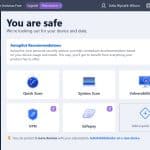
While security apps may not be the software that everyone gets excited about, there is no getting away from their importance. Despite this, there are a couple of things that stop many people from investigating security solutions. Firstly, modern version of Windows include protective features, and secondly there is the concern about additional cost.
With the newly updated Bitdefender Antivirus Free for Windows, both of these concerns are rendered moot. Not only is the software completely free of charge, the features and options it offers go far beyond anything Microsoft has provided with Windows. This latest version is notable for various reasons, not least of which is the fact that it has been completely re-engineered and re-architectured.
Extending detection and response -- why context is needed for security

The threat landscape is becoming more challenging from every angle. Security teams are understaffed and overworked and are still catching up after the wide-ranging effects of the pandemic. There’s unfortunately no end in sight as the skills gap widens and the complexity around IT management continues to grow with remote work programs going from sticking plaster to get through the initial lockdown to 'business as usual.' Bad actors are becoming more sophisticated each day. It has never before been this hard to keep your organization secure.
It’s no wonder that many security professionals fall into the trap of adopting numerous security tools to help them cope with these problems. In the hope of using the latest and seemingly greatest technology, CISOs think adding another security layer will reduce their risk exposure. If only it were that easy. Adding more technology can solve some of the issues, but it can also dilute team attention spans further, leading to more problems over time.
Hard truths from Ukraine: The government cannot save us in cyberwar

Amid our first global, multilateral, wholly unpredictable cyberwar, it is up to each of us to defend ourselves. No intelligence agency is certain how the cyber dimension of the Ukraine conflict will evolve; no military can stop a cyberattack. The situation catapults every digital organization into unknown territory.
If you think the battles on air, land and sea so far have defied expectations, consider the parallel cyber conflict. Three sober truths make this a perilous moment for us all -- especially as the Russian army’s logistical setbacks may make heightened cyber aggression against private interests more enticing.
Five steps for controlling cloud costs

With cloud costs accounting for nearly a third of IT budgets in 2021 and predicted to dramatically increase in the coming years as more companies undergo cloud migration efforts, the need for organizations to get the highest possible value out of their cloud spend is fairly obvious. Actually doing so, however, is an increasingly challenging endeavor due to the complex nature of public cloud environments, as well as the increasing reliance on containers and microservices.
When it comes down to it, the cloud promises speed, but it doesn’t necessarily guarantee that speed at a lower cost than traditional data centers. Maximizing the efficiency of your cloud spend requires buy-in from the entire organization, from the company leadership that makes buying decisions, to the finance teams that track and monitor that spend, all the way down to the developers, engineers and architects responsible for building and implementing those solutions. While there are those who believe that this is just not possible in the world of the public cloud, more modern and diligent approaches have proved that it most certainly is.
Ukraine conflict puts organizations’ cyber-resilience to the test

Russia’s invasion of Ukraine has provoked a massive rally of hackers to join both sides of the conflict and take up arms in the cyber-war. As has been the case in cyberattacks of recent years, the consequences of this will affect organizations way beyond the initial intended target. For example, in June 2017 French company Saint-Gobain was forced to halt its operations as a result of the NotPetya attack, a Russian cyberattack targeting Ukraine that resulted in over €80 million of losses in company revenue.
As a result of a sharp increase of cyber-attacks since the beginning of the conflict, from DDoS, new data wipers, phishing campaigns and malware, organizations worldwide should take immediate action to improve their cyber-resilience and limit the damages that any spillover could have on their business.
Accelerating the path to sustainability with digital transformation

Digital transformation has been one of the key industry themes for several years, but recently it has become a major strategic priority for most organizations.
As an impact of the pandemic, and the operational and IT weaknesses that were brought into sharp relief as a result, digital transformation of legacy systems and processes is now seen as a critical and urgent requirement. Indeed, many industry analysts and pundits suggest that we may see decades of innovation in this area occur over the next five years. But what is the situation like currently and what does the future hold?
Data protection: You don't get a pass with SaaS

Software as a Service (SaaS) is increasingly taking the place of traditional, on-premises software. In an analysis of the 2021 SaaS market, Gartner estimated that global end-user spending on public cloud services grew 23.1 percent to $332.3 billion. SaaS alone accounted for $122.6 billion and is projected to top $145 billion in 2022.
The drivers behind the success of SaaS are clear. There’s no on-premises equipment or software to buy or manage, pricing is lower and is more flexible than perpetual licenses. Less cost, less complexity, less aggravation for IT -- that’s a pretty convincing proposition.
© 1998-2026 BetaNews, Inc. All Rights Reserved. Privacy Policy - Cookie Policy.