

Minor update adds more languages to jAlbum 10.6


Web album creator jAlbum has been updated to version 10.6 with a range of bug fixes and feature enhancements. Mac users can now take advantage of a native file chooser that can be used to add folders and images to an album, but there are also numerous tweaks and updates to the Windows and Linux versions of the app to take a look at.
One of the great things about jAlbum is that skins can used to create a completely unique look for your online albums, helping to avoid the risk of looking like everyone else's. This minor update includes an updated version of the Turtle skin, but most of the changes are under the hood. Translators have been hard at work providing updated text in Brazilian Portuguese, German, English, Swedish, French, Spanish, Finnish, Slovak, Polish, Slovenian, Romanian and Korean, and language information is now added to published albums.
Macs may not get PC viruses, but they sure can spread them


What do sexually transmitted diseases and Mac viruses share in common? Surprisingly lots, according to security software developer Sophos. People can spread both without exhibiting symptoms, and the infection rates for "Macs carrying malware and level of Chlamydia infection amongst young people" are about the same.
Say what? That's the question asked in BetaNews group chat this morning about the seemingly strange correlation. But it makes sense to me. My colleague Tim Conneally gets it, too. He observed (after doing a little research): "One in 4 people with Chlamydia have no symptoms. They're saying it's spreading but not affecting the host". That's exactly Sophos' point. The firm found a shocking number of Macs infected with PC viruses, in a 100,000 sampling. The Macs are immune but can infect Windows PCs.
Samsung details Android 4.0 upgrade plan for U.S. tablets and phones


Though the newest version of Android, Ice Cream Sandwich, has been available for a little more than six months, its availability has been extremely limited. Only 2.9% of Android users were running it first week of April, according to the Android Developer Dashboard.
Samsung on Tuesday released an updated list of the U.S. devices that will receive an upgrade to Ice Cream Sandwich, bringing its total number of devices with the operating system version up to thirteen.
Suddenly I'm uneasy about Windows 8's release date

While I was sleeping -- and perhaps you, too -- Microsoft announced that one more public Windows 8 test build will come before the code is gold. Right now, Windows 8 Release Preview will be available the first week of June. What? Microsoft no longer calls these things release candidates? Timing is tight, unless Windows & Windows Live president Steven Sinofsky and his team exude absolute confidence they can finalize code in time for autumn launch.
It's a narrow path from early June release candidate to August release to manufacturing to October launch, unless there are no major changes from the Consumer Preview released in February or last-minute show-stopping bugs. You can read this as sign that Windows 8 is rock-solid ready and that Sinofsky and team are absolutely certain about the operating system's readiness or that they need to stretch out the time as long as possible. The Consumer Preview came at the last possible milestone for Microsoft to ship this year, and the next one follows similar tight track.
Opera 12 gets opt-in hardware acceleration

It is only a week since Opera 12 added support for cameras, and since then two new builds have been released that push the development of the browser even further. Performance is of utmost importance for every computer user, and the latest builds of Opera Next have been improved with the implementation of hardware acceleration. Interestingly, hardware acceleration is an opt-in feature.
A new DirectX backend is available instead of OpenGL and the hardware acceleration is used to not only improve the rendering time for pages, but also boosts the speed of the user interface. In addition to the performance gains that come from the implementation of this new feature, overall performance of the browser has also been tweaked and stability problems arising from the use of plugins have been addressed.
SkyDrive user? You're about to lose two-thirds of your storage space


Microsoft on Monday launched a new version of SkyDrive, bringing the cloud-file sharing service to the desktop. This move did not come without a cost -- new users will have far less space, and current users only have a "limited time" to keep the generous storage the Redmond, Wash. company provides. But more on that a bit later.
The enhancements address problems with SkyDrive's browser-based interface which irk critics and customers. With desktop integration, cloud storage becomes a drag-and drop-process.
What happens when your online game does too well?


Indeed, these are the kinds of problems we would love to have, but when they actually occur we need solutions nonetheless. So, how do you handle the issues that occur when audience demand overwhelms the infrastructure you have provisioned to serve your content?
A few years ago, my company was approached by Latin Interactive Network (LIN), a publisher of online games across Latin America, including countries like Peru, Argentina, Chile, Colombia, and Mexico. LIN handles several successful MMOs in these territories, including the Spanish-language version of Audition Online, a unique free-to-play dance battle game. Audition is a big favorite, and in Latin America alone, the game is now played by half a million players per month. This is welcome news for LIN, of course, but not always so welcome for Audition gamers who may be stuck using outdated and underpowered infrastructure...
You can use the new link to Dropbox feature like Megaupload (kinda)
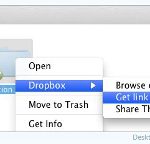
Popular file storage and sharing service Dropbox on Monday announced users can now share the contents of their Dropbox via a direct link that anyone can open, even if they're not a Dropbox user.
The feature is noteworthy because it deviates slightly from the traditional Dropbox sharing model. Instead of sharing files between Dropbox users, this feature simply links to content and makes it viewable.
Samsung Galaxy S III promo dares iPhone users to be different [video]

Samsung's new promo for next week's big mobile event is a real snoozer. It's nothing like those cheesy videos mocking iPhone users for being wannabe hipsters, who have such no lives they'll wait hours on end to buy a phone that looks exactly like the one owned now. Instead of chutzpah, galaxies pass before your eyes. Get it? New Galaxy device launch. Wake me, I fell asleep.
But wait for it. There's a pretty good punchline, if you can bear through the video's first 48 seconds. Be sure that if an iPhone user, Samsung means the dig for you.
Use your Windows 8 tablet as a mobile set-top box [video]

It's amazing what you can do with Windows 8. In this video demo I show how you can convert your Windows 8 tablet into a mobile multimedia set-top box for your TV. You could also turn your tablet into a game console, if you want.
I use an Acer W500 tablet -- running Windows 8 Consumer Preview, of course -- plugged into the TV, without additional power (that's good for about four hours battery life). In this configuration, the Windows tablet is like a mobile set-top box.
Adobe Creative Suite 6 takes to the cloud

Adobe took the wraps off Creative Suite 6 on Monday, introducing the largest release to date of the content-creation platform. CS6 now includes up to 12 programs and two companion applications, Bridge and Encore, and is available in four editions: Design Standard, Design and Web Premium, Production Premium, and Master Collection.
The CS6 beta is one of the most successful in the company's history, with one million downloads over the past month of availability alone, a record for Adobe. The move was slightly unusual considering the company typically does not offer large-scale betas of its products.
Mandiant Redline uncovers malware other apps won't

If your PC gets attacked by some previously discovered specimen of malware then it’s relatively easy to spot. Your antivirus package will scan the new file on access, realize there’s a match for something in its virus database, and the threat will be quarantined immediately, before any real damage can be done.
If you’re attacked by some brand new specimen, though, it’s a very different story. Every antivirus package claims it can also detect new threats by behavior alone, but this is vastly more difficult: there’s a good chance that it’ll be missed. And so if you think your system might have been compromised, then it’s a good idea to get a little third-party scanning help from the free Mandiant Redline.
Microsoft enterprise licensing changes favor Windows RT, put Android and iOS in their place

If you can't beat them, manage them. It's a strategy that has worked well for Microsoft in the past, and it is emerging as a key element in announcements last week about how Microsoft will license Windows 8 in all its variations, including the x86 consumer, Professional and Enterprise editions, the embedded Windows RT and the cloud-based Windows Intune.
While Microsoft's primary goal is to stop Apple's growth in the enterprise, which it will do by tilting licensing policies in favor of Windows tablets, the company has a Plan B that will help monetize Apple and Android devices in the enterprise through management.
PCs need model years, just like cars


Windows PC makers will start unveiling their first 2013 models from today. They are all desktops built around the maiden Ivy Bridge processors out of the chute, which Intel announced late this morning. Ivy Bridge is the working name for Intel’s 2013 models.
Intel decision-makers chafe whenever I refer to their processor generations as model years. In fact, executives throughout the PC ecosystem universally hate the term. They’d better all start embracing it, though. Because they’ll need to adopt a model-year mentality if they want to ensure continuing growth.
The hidden costs of poor technology purchasing

Poor technology purchasing happens when a company buys products that do not properly meet their requirements. It happens with things like enterprise software and cloud services, and sometimes even with things like datacenters, hardware and phone systems. It happens more often than you realize but you don’t hear much about it. People love to talk about their purchasing successes, but they are far more reluctant to talk about their purchasing failures.
The infrequent nature of these types of purchases is the root cause of the problem. While employees may have deep system experience, they are often not up to date with competing products in the market simply because these types of purchases happen so seldom. This can lead to a gap between what the selected product delivers and what the business requires. When this gap gets too large, you have a technology purchasing failure.
© 1998-2026 BetaNews, Inc. All Rights Reserved. Privacy Policy - Cookie Policy.