

Capture and securely store WiFi passwords with Lastpass 1.90.1


Online password manager Lastpass has been updated to version 1.90.1. The cross-platform, multi-browser plug-in, also available as a separate download for 64-bit versions of Windows, adds one major new feature to this release: the ability to capture and securely store WiFi passwords for transferring to other computers.
The password manager allows users to securely store all their various online login details through one convenient, central location, encouraging them to use strong, unique passwords for each site they frequent for security purposes.
When one desktop is not enough, there's WindowsPager


It doesn’t take long to fill your PC’s desktop. Open a browser here, a word processor there, keep a copy of Explorer running in the background, Notepad maybe, and soon it’s starting to take a real effort to locate and switch to the application you need next.
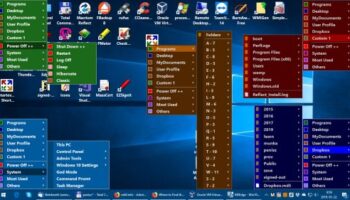
WindowsPager could make your life a little easier, though, with its lightweight support for virtual desktops. Launch the program and you’ll see four new buttons on the taskbar, one for each desktop, and simply clicking the one you need will switch to it right away.
We must blame Apple for China

Charles Duhigg and David Barboza’s recent New York Times article, "iEconomy: Human Costs Are Built Into an iPad", has created quite a firestorm. The article is a blistering expose of Apple and its Chinese manufacturing partners. For those that haven’t read it, please do. This is important, necessary journalism.
Apple apologists are quick to defend the company's behavior as "Me too". Critics call for boycotting Apple products. Holding Apple accountable is the right thing to do for all tech companies. We must see the apologist arguments for what they are -- fallacies that disempower us from action -- and hold up Apple as standard-bearer reformer for all Western technology manufacturing in China.
McAfee releases new security suite for Android, BlackBerry, x86droid


Intel may still be a rookie in the mobile space, but its security software subsidiary McAfee has got Intel's Android project covered. On Monday, the security company launched its second-generation McAfee Mobile Security suite for smartphones and tablets, which includes compatibility with Intel-based Android devices.
The $30 subscription-based application supports Google Android 2.1–4.0, BlackBerry 4.5, 4.6, 4.7, 5.0, 6.0, 7.0, and S60 3rd and 5th Edition, as well as Symbian ^3, and provides a suite of anti-virus, anti-spyware, and anti-theft, tools for mobile devices.
30 software downloads you need this week


We’ve reached the end of the first month of 2012 and this has been another busy week for software releases. If it seemed a little quiet on the browser updates recently, things changed this week with the release of Opera 11.61 FINAL as well as Opera Portable 11.61. Fans of cutting edge software may be more interested in Opera Next 12.00 build 1256, which is the first update to the beta channel of Opera for quite some time.
When browsing the Internet, speed is often the most important consideration, and Pale Moon is a speed optimized version of Firefox that includes support for extensions. This week saw the release of not only Pale Moon 9.1 and Pale Moon x64 9.1, but also portable versions in the form of Pale Moon x64 9.1 Portable and Pale Moon 9.1 Portable.
Apple, the enterprise, and the marginalization of the cultists


For a company left for dead a little over a decade ago, Apple's return to relevancy and in some cases supremacy is stunning. Love or hate the company, few others have accomplished a similar feat. Now one of the last dominoes left to fall -- the enterprise sector -- is set to embrace the platform.
Forrester Research finds that one out of every five IT employees use one or more Apple products at work. This is not completely by their own request: half of all corporations of 1,000 employees or more now issue Macs to at least some of their work force, with an average of a 52 percent increase in deployments slated for 2012.
That's a wrap: Jon Rubinstein leaves HP, Palm, webOS

According to a number of reports on Friday, the head of HP's mobile efforts, Jon Rubinstein, has left the company.
Hewlett-Packard acquired Palm in 2010 as a move to advance in the smartphone business. But after a little more than one year and a just a few new mobile devices, HP killed the Palm brand, dissolved its mobile business unit, and turned webOS into an open source project.
Suddenly 37M iPhones isn't so many


My reaction mirrored many others this week. Apple's big iPhone holiday quarter seemed simply unbelievable -- 37 million, up 128 percent year over year. But Samsung was close. Real close: 36.5 million smartphones, according to Strategy Analytics. Together, the two companies accounted for 47 percent of fourth-quarter smartphone shipments.
The horse race between the companies sours Apple apologist arguments about iPhone vs Android. Staunch iPhone defenders blow off Android competition as one against many. But on the one-to-one comparison, Apple isn't so high and mighty. Samsung is keeping pace just fine. Apple was market leader for the quarter -- 23.9 percent share to the South Korean company's 23.5 percent. But Samsung took the year -- 19.9 percent share to its American rival's 19 percent. Both companies had exceptionally good fourth quarters.
Manage Windows apps with Stardock Tiles

If the Windows Start bar doesn’t suit your application management needs then there are plenty of alternatives around. And the latest, Stardock’s Tiles, provides an intelligent sidebar that works as a program launcher and a tool for managing your running programs.
To get started you might say, launch an Internet Explorer window, then hold down Shift as you drag that window’s title bar, and drop it onto the Tiles sidebar. What you’ll then see is an active tile, a live thumbnail of the contents of that window, which updates as you browse from one site to the next. And if you open new browser tabs then thumbnails for those will also be displayed below the main tile; again they’ll show thumbnails of the site they have opened, and you can switch to any of them with a click.
Don't miss the end-of-January software sale

You can find plenty of bargains at Downloadcrew Software Store, but there have been even greater savings to be had this month. If you’re thinking about investing in some new software, now is the time to do so -- these special offers will end when we reach the end of January.
The holiday season is now a month behind us, so it’s time to think about organizing all of those photos you took during family get togethers. CyberLink PhotoDirector 2011 may be just what you’ve been looking for. This is a seriously powerful photo editing tool that includes support for RAW images and boasts a range of features to rival Photoshop. Buy the software now for just $44.95, a savings of just 55 percent off the MSRP, and you will receive a free upgrade to PhotoDirector 2012 v3 when it releases in February.
Twitter updates policies, will censor tweets on demand

World-famous microblogging service Twitter has changed its policies and will "reactively withhold" (read: censor) tweets deemed illegal or harmful in countries with laws concerning such things.
On Thursday, the policy change was announced in the official Twitter blog, where it said:
Sync multiple Google calendars to Windows Phone 7.5

I don't really use Google Calendar and don't have Windows Phone (sigh, on the latter). If you do, here's a tip. Google has enabled multiple-calendar sync with Windows Phone 7.5. It's now possible to select among the calendars and sync up to 25 of them. Gasp, who has two dozen plus one?
"Just navigate to m.google.com/sync on your phone’s browser and configure the calendars you would like to see", Li Yin, with the Google Sync Team, posts to Google+. "From that page, you can also configure which addresses you send mail as if you have custom addresses in Gmail. We’ve also improved search to look beyond the conversations that are stored locally on your device so that you are able to find more of your conversations, faster".
Who's doing what on that shared PC? History Viewer can tell you

Normally it’s best to allow everyone their privacy when using a PC. But there may be occasional exceptions. You might legitimately be concerned about the content your kids are accessing online, for instance, or want to confirm that a work PC really is being used for work purposes;d History Viewer may be able to help.
Launch the program and it’ll provide easy access to your various histories for Internet Explorer, Firefox and Chrome. You’re able to view cookies, URL histories, download details, maybe even form history in some cases, more than enough to give you a very good idea how the browser is being used (unless the key details have been deleted, anyway).
Microsoft invests $1 billion to sell a million Nokia Windows Phones

At face value, Nokia's results for Windows Phone are solid. One million Lumia devices sold in just its first quarter of availability. The sales add a bright spot to an otherwise gloomy Nokia calendar fourth-quarter earnings report, where smartphone sales slid 31 percent amid a 21 percent year-over-year drop in revenues.
The real story here though is the cost to Microsoft to ensure that success. Microsoft agreed to pay Nokia $1 billion to abandon Symbian as primary operating system for Windows Phone, according to reports soon after the deal was announced in February 2011. The Redmond, Wash.-based company paid Nokia $250 million in the fourth quarter for "platform support payments", meaning each device cost Microsoft about $250 before any royalty payments received. That's a run rate of a billion dollars per year. So just how much is Nokia giving back to Microsoft?
Nivio opens in beta, brings Windows to iPad, Android tablets

After a couple of private trial runs, nivio (the name is intentionally all-lowercase) has opened in limited beta to United States users. The service lets users have remote access to their own cloud-based Windows desktop, complete with app store-style access to premium applications for a monthly fee.
Nivio is made up of three parts: nDrive, nDesktop, and nApps. As the names may already suggest, they are a cloud storage platform, a cloud-based Windows desktop, and a platform for renting applications for your Windows desktop.
© 1998-2026 BetaNews, Inc. All Rights Reserved. Privacy Policy - Cookie Policy.